Rent or Buy in Dwarka 2026: Break-Even Math for Delhi-NCR Buyers
Should you rent or buy in Dwarka in 2026? This break-even guide walks through the full ownership cost, down-payment opportunity cost, and a worked example to find your real answer.
A Dwarka buyer I spoke with last year had done everything right on paper. He had a stable IT salary, a spreadsheet tracking his savings, and a builder brochure promising 9% annual appreciation. What he had not done was run the numbers on the 20-year cost of the loan against what he was already paying in rent for an equivalent flat two kilometres away. When he finally did, the picture was less clear than the brochure suggested, and it changed how he structured his down payment entirely. That is the gap this article is meant to close.
Dwarka sits in an unusual position among Delhi's sub-cities. It has the metro, the Dwarka Expressway linking towards Gurugram, a large stock of mid-rise and high-rise apartments built over the last fifteen years, and a rental market that absorbs a steady flow of IT and BPO employees, government staff and young families. Asking prices have moved up with the broader Delhi-NCR market, and rents have followed unevenly depending on sector and metro proximity. The honest answer to whether you should rent or buy in Dwarka 2026 depends less on headlines and more on arithmetic you can do in an afternoon.
This guide gives you that arithmetic. It covers the full cost of ownership beyond the EMI, the down-payment opportunity cost that most calculators ignore, a worked break-even example with real-looking numbers, a comparison of financing structures, a step-by-step method you can repeat for any flat, and the mistakes that quietly tilt the result. Numbers here are illustrative and you should replace them with current quotes from your lender and broker. The method is what carries over.
Key Takeaways
- Never compare EMI to rent directly. Compare total monthly ownership cost (EMI, property tax, maintenance, insurance, and lost interest on your down payment) to the rent for a like-for-like unit.
- Your down payment is not free money. At a 7% opportunity return, a ₹25 lakh down payment forgoes roughly ₹1.46 lakh a year, which belongs in the cost column.
- Break-even is usually a 6 to 10 year horizon in most Dwarka scenarios. If you expect to move within five years, renting almost always wins.
- Stamp duty, registration and brokerage can add 7 to 9% upfront in Delhi, so budget for it separately from the down payment.
- Choose a floating-rate home loan with a clear prepayment policy, and compare processing fees, not only the headline interest rate.
- Re-run the model with your actual lender quote before signing anything. The method matters more than any single number in this article.
Rent or buy in Dwarka 2026: what does the break-even math actually measure?
Break-even is the point at which the cumulative cost of owning equals the cumulative cost of renting, after accounting for everything each path costs you. Before any calculation, you need to be clear about what goes into each side, because most casual comparisons leave out the items that matter most.
On the ownership side you have the EMI, which is mostly interest in the early years, property tax, society maintenance, home insurance if you take it, and the repairs and replacements that a landlord would otherwise absorb. You also have a cost that never shows up on a bank statement: the return your down payment would have earned if you had kept it invested. On the rental side you have rent and its annual escalation, rental deposit (which is refundable, but ties up cash), and the savings you accumulate by investing the difference between what renting costs and what owning would cost in cash terms.
That last point is where most people go wrong. A renter who is paying less each month than an owner's EMI is not automatically ahead, and an owner who is paying a higher EMI is not automatically behind. The question is which path leaves you with more net worth at your chosen horizon. That is the real break-even.
The cost items people forget
- Down payment opportunity cost. If you put in ₹25 lakh of your own money, that money could otherwise sit in debt funds, fixed deposits or equity. Use a realistic expected return, not a best-case one.
- Upfront transaction costs. In Delhi, stamp duty on registration runs in the range of 6% for women buyers and 6% for men in many cases (confirm the current slab with your registrar), with additional registration fees and brokerage on top. Budget 7 to 9% of the property value.
- Maintenance and society charges. These rise over time, and special assessments for lifts, pumps or repairs appear without much notice.
- Repairs and capital expenditure. A reasonable allowance is 0.5 to 1% of property value per year after the first few years.
- Property tax. Smaller than most people expect in Delhi, but it belongs in the calculation.
- Rent escalation. Rents do not stay flat. If you model renting with no increase, you will overstate the rental cost savings only if you assume rent rises faster than you think; if you assume zero growth, you understate the rental side. Use a sensible 4 to 6% annual escalation and test sensitivity.
Which costs should you count when comparing EMI to rent in Dwarka?
Start with a like-for-like unit. If a two-bedroom, 1,100 sq ft apartment in a Dwarka society rents for ₹32,000 a month, compare it to buying a similar unit in the same or comparable sector and frame everything against that. Comparing a rented 1BHK to an owned 3BHK tells you nothing.
Next, build the monthly ownership cost. Here is a simple structure you can copy into a spreadsheet:
- Monthly EMI (principal plus interest).
- Monthly society maintenance.
- Monthly property tax, spread across twelve months.
- Annual repair allowance divided by twelve.
- Monthly opportunity cost on the down payment: down payment multiplied by expected return, divided by twelve.
- Monthly share of upfront transaction costs, if you spread them across your expected holding period.
Sum items 1 to 6 to get your true monthly cost of owning. Compare that to rent. The gap between the two is the number that matters, and the time it takes for ownership's appreciation and principal repayment to close that gap is your break-even horizon.
One note on appreciation. Dwarka prices have risen, but appreciation is not guaranteed and does not arrive evenly. If you need a view on future price movement to justify buying, you are making a speculative bet, not a rent-versus-buy comparison. Run the model with zero appreciation first. If buying still wins or is close, your decision is robust. If it only wins under optimistic appreciation, treat that as a warning.
How do you calculate break-even step by step?
Here is a worked example with illustrative figures. Replace them with your own.
Worked example: a Dwarka 2BHK
Assume a 2BHK in a mid-tier Dwarka society priced at ₹1.10 crore. You plan to put in a ₹30 lakh down payment and take a ₹80 lakh home loan at 8.5% over 20 years. Assume rent for an equivalent unit is ₹32,000 a month, escalating 5% a year. Assume your down payment could earn 7% in debt instruments. Assume upfront costs of 8% (₹8.8 lakh), of which you pay them in cash from savings on top of the down payment.
The monthly EMI on ₹80 lakh at 8.5% for 20 years works out to roughly ₹69,000. Add society maintenance of ₹4,500, property tax and repair allowance of about ₹1,200 combined, and opportunity cost on ₹30 lakh at 7% (about ₹1.75 lakh a year, or ₹14,600 a month). Your total monthly cost of owning comes to roughly ₹89,300 in year one.
Rent is ₹32,000 in year one. The gap is about ₹57,000 a month in favour of renting on a cash basis, which is large. Owning looks expensive for the first several years, and the break-even horizon is driven mainly by how quickly the property's value and your equity grow relative to the rent you avoid.
This is why the honest answer in many Dwarka scenarios is that buying only breaks even over a long horizon, and the decision depends heavily on how long you stay. The break-even point shifts considerably if your down payment is smaller, your loan is cheaper, or your rent is higher relative to property value.
Running the calculation yourself
- Get a current rate quote from at least two lenders, including processing fees and prepayment terms, not just the advertised rate.
- Compute the EMI using the standard formula or a bank calculator.
- Build the monthly ownership cost table year by year, including maintenance and opportunity cost.
- Build the rent column year by year using your escalation assumption.
- Track the cumulative difference, and separately track the equity you build (principal repaid plus appreciation, net of transaction costs).
- Find the year where cumulative net worth under buying exceeds cumulative net worth under renting. That is your break-even.
- Run sensitivity: change appreciation, rent growth and interest rate by plus and minus 2 points each and see how the break-even shifts.
How do the main financing options compare for a Dwarka buyer?
Your financing structure changes break-even as much as the property does. The table below compares common options. Rates and fees change, so treat these as the kind of criteria to check rather than fixed quotes.
| Option | Typical rate structure | Processing fee pattern | Prepayment terms | Best suited for |
|---|---|---|---|---|
| Public sector bank home loan | Floating, linked to external benchmark | Often lower, sometimes waived in promotions | Generally no penalty on floating-rate loans for individuals | Buyers prioritising lowest total cost and stability |
| Private bank home loan | Floating, may be quicker to sanction | Usually a percentage of loan amount | Check for any foreclosure charges | Salaried buyers wanting speed and digital processing |
| Housing finance company (HFC) | Floating or fixed, sometimes higher spread | Varies, often higher than banks | May carry charges, read the fine print | Self-employed buyers with irregular income documentation |
| Builder-tied loan with subvention | Effective rate reduced during construction period | Depends on tie-up terms | Often restricted during subvention window | Under-construction buyers, but only after checking real effective cost |
| Balance transfer of existing loan | Usually lower rate after transfer | Transfer fee applies | Depends on new lender | Existing borrowers seeking a lower rate |
A recurring mistake is choosing a builder-tied subvention scheme because the monthly EMI looks smaller during construction. Ask for the effective cost over the full loan, including the period after the subvention ends, and compare it to a plain home loan on the ready property. Sometimes the subvention is genuine value. Often the premium is baked into the price.
What is a practical framework for deciding whether to rent or buy in Dwarka 2026?
Break-even is one input. Your life plans are another. A useful way to decide is to sort your situation into three questions.
How long will you realistically stay? If your job, family or relocation plans suggest fewer than five years in Dwarka, renting is usually the stronger choice because you will not reach break-even before you need to sell, and transaction costs will eat your equity. If you expect eight to ten years or more, buying becomes competitive.
How stable is your income and how large is your buffer? An EMI that takes more than 40% of take-home pay leaves little room for job changes or medical costs. Keep at least six months of expenses in liquid savings separate from the down payment. Many buyers stretch the down payment and then have nothing left.
How large is the gap between rent and true ownership cost today? If the gap is wide, as in the worked example, you need a long horizon or strong appreciation to justify buying. If the gap is narrow, buying becomes attractive sooner.
Pro Tip: model the rent you would actually pay, not the rent you see advertised
Listings in Dwarka often quote the best-presented unit in a building, usually a higher floor with better views and a bigger balcony. When you compare to a purchase, match the floor, facing and age of building. Ask a broker for two or three recent rental transactions in the same society, not only asking rents, because asking rents overstate what tenants actually sign at. That single adjustment often moves a break-even by several years.
What mistakes should you avoid when you rent or buy in Dwarka 2026?
The most expensive mistakes are rarely arithmetic errors. They are structural ones: taking the largest loan the bank will sanction, ignoring the cost of furnishing and interiors, and forgetting that the decision is reversible only at a cost. Selling a flat in Dwarka within three years usually means paying brokerage and capital gains tax on a thin margin, so the exit door is narrower than it looks.
Another common error is treating the builder's cost sheet as complete. Check for preferential location charges, parking, club membership, power backup installation and the car park allotment that some societies bill separately. Ask for a written, itemised cost sheet and reconcile it against your model.
Common Mistake: anchoring to the bank's maximum eligibility
Lenders will often sanction a loan well above what is prudent for your household. Calculate the EMI you are comfortable with first, then work backwards to the property price. Buyers who start with the bank's maximum eligibility tend to find that the first job change or child's school fee increase makes the loan painful.
How should you structure the paperwork and timeline?
If you decide to buy, the process usually takes between three and six months for a ready-to-move property and longer for under-construction projects. A rough sequence looks like this: pre-approval from lenders in the first two weeks, shortlisting and site visits in weeks two to six, legal due diligence on title and approvals in weeks four to eight, agreement to sell and loan sanction in weeks six to ten, and registration and disbursement after that. Under-construction projects add the construction timeline, which in Delhi-NCR has often run longer than promised, so build a buffer into any plan that depends on possession dates.
For due diligence, check title chain, the sanctioned building plan, occupancy or completion certificate where applicable, and encumbrance certificate. Ask the lender's legal team to review documents, and ask an independent advocate to review them too. The cost of that second opinion is small compared to the risk of a defective title.
Frequently asked questions
Is it better to rent or buy in Dwarka in 2026?
It depends on how long you plan to stay and the gap between rent and the true monthly cost of owning. If you expect to stay less than about five years, renting is usually stronger. If you expect eight to ten years or more and the gap is manageable, buying can make sense. Run the break-even model with your own figures before deciding.
How long does it take to break even on buying a flat in Dwarka?
In many Dwarka scenarios, break-even on a cash-flow and net-worth basis falls somewhere in the six to ten year range, but it varies with down payment size, interest rate, rent levels and appreciation. A smaller down payment and cheaper loan shorten the horizon. Test your own case rather than relying on a general figure.
What is the true cost of a home loan beyond the EMI?
Beyond the EMI, you should count processing fees, stamp duty and registration, brokerage, society maintenance, property tax, repair allowance, and the opportunity cost of your down payment. Together these often add a substantial amount to the monthly picture, which is why comparing EMI alone to rent is misleading.
Should I put a large down payment or keep cash for emergencies?
Keep a separate emergency fund covering at least six months of expenses, and do not drain it to increase the down payment. A larger down payment reduces your loan and interest cost but reduces liquidity. Balance the two so that a job loss or medical expense does not force a distressed sale.
Do rental yields in Dwarka justify buying as an investment?
Rental yield is only one component. Compare gross and net rental yield against your loan rate and opportunity cost, and remember that vacancy, maintenance and tenant turnover reduce the net figure. Buying purely as an investment is a different decision from buying a home, and it should be modelled separately.
What documents should I check before buying a flat in Dwarka?
Check the title chain, sanctioned building plan, occupancy or completion certificate where applicable, encumbrance certificate, society NOC, and the builder's approvals. Have a qualified advocate review the documents and confirm there are no disputed claims or pending litigation affecting the property.
Can a balance transfer reduce my cost if I already have a home loan?
Yes, if the new lender offers a meaningfully lower rate after accounting for transfer fees and the remaining tenure. Model the total interest saved over the remaining loan period, subtract all transfer costs, and only proceed if the net saving is material.
If you want help building this model for a specific Dwarka property, or need a second pair of eyes on the numbers before you commit, eDarpan can help you sort through the options. Our properties for sale in India listings and rental properties in India let you compare real asking figures side by side, and you can explore the wider eDarpan Properties range to see how Dwarka fits against other micro-markets. For a fuller view of the local market, read our companion piece Rent or Buy in Dwarka 2026: Break-Even Math Under Current Rates, and if you are weighing Delhi-NCR more broadly, Delhi-NCR Home Prices Up 12%: Rent or Buy in 2026? A Break-Even Guide covers the wider region. Buyers still deciding on timing may also find Property Prices Up in 2026: Should You Buy Now or Wait for 2027? useful, and India Real Estate to Hit $5.8T by 2047: What It Means for Property Buyers Now puts the long-term picture in context.
There is also a practical side to this that goes beyond real estate. If you are a small business owner in Dwarka who needs a registered address for GST or company registration before you decide where to live or operate, our virtual office address service can cover that without locking you into a lease. And if your property search is tied to running a business that depends on tools like customer messaging or accounting software, our teams can advise through IT consulting on setting that up sensibly. For anything else, contact eDarpan or learn more about eDarpan.
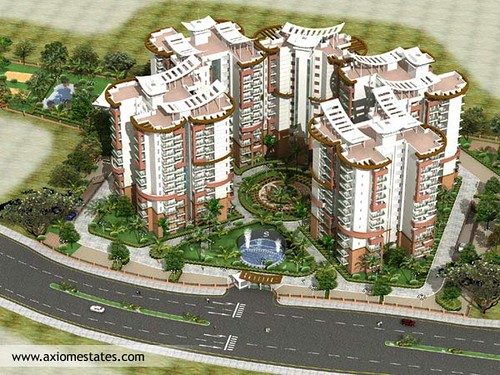
Image credit: Bangalore Properties - Real Estate India - Shriram Symphony by nancyarora2020 via flickr (BY-SA 2.0), sourced through Openverse.
Written by
Rajesh Tiwari
Real estate analyst covering property markets across Delhi NCR, Mumbai, and Bangalore. Rajesh tracks pricing trends, RERA compliance, and investment opportunities for residential and commercial buyers.
Looking for a technology partner?
From IT consulting to virtual office to custom software — eDarpan can help.
Continue reading
Delhi-NCR Home Prices Up 12%: Rent or Buy in 2026? A Break-Even Guide
Home prices are up 12%, but is buying still smarter than renting? A break-even guide to the real costs of owning in Delhi-NCR.
Property Prices Up in 2026: Should You Buy Now or Wait for 2027?
Property prices rose through 2026 while sales softened in some areas. Here's how to decide between buying now or waiting, using your own numbers rather than forecasts.
India Real Estate to Hit $5.8T by 2047: What It Means for Property Buyers Now
India's real estate could reach $5.8T by 2047. Here's how first-time buyers can judge projects, locations and timing without the hype, using RERA checks and real rupee numbers.