Delhi-NCR Home Prices Up 12%: Rent or Buy in 2026? A Break-Even Guide
Home prices are up 12%, but is buying still smarter than renting? A break-even guide to the real costs of owning in Delhi-NCR.
Last week a 14-person textile export firm in Okhla asked us a question that sounds simple and isn't: "Our finance head says the Delhi-NCR home prices are up 12%, so we should buy the director's flat now. But we also have a Noida office lease coming up. Which is the better use of the money?" That is a rent-or-buy question wearing a business costume, and most of the advice floating around on it is either a sales pitch from a broker or a generic spreadsheet that ignores the things that actually decide the outcome in NCR: stamp duty, the real cost of the down payment, maintenance charges, and how long you really plan to stay.
The 12% headline is real momentum, but it tells you very little about whether buying beats renting for your specific budget and timeline. A price rise cuts both ways. It increases the value of anyone already holding property, and it raises the bar for anyone trying to enter the market. This guide walks through a break-even method you can run yourself in an afternoon, shows how it plays out with real numbers, and flags the mistakes that quietly wreck the math. If you're weighing rent or buy Delhi NCR 2026 decisions, this is the framework to start with.
Key Takeaways
- Buying only beats renting if you stay long enough to recover transaction costs, typically 5 to 8 years in most NCR micro-markets, and sometimes longer.
- Your real cost of owning is not the EMI. It is the EMI interest component, maintenance, property tax, opportunity cost on your down payment, and the stamp duty and registration you pay upfront.
- Compare rent against the total cost of ownership, not against the EMI alone. Most first-time buyers make this comparison wrong and overestimate the benefit of buying.
- A 12% annual price rise is not a return you can bank on. Run the break-even with conservative appreciation (3 to 5%) and see whether the decision still holds.
- Business owners should keep the property decision separate from working capital. Using the company's cash for a down payment creates tax and liquidity problems that rarely show up in the first year.
- Run the numbers for your timeline, not the market's. If you may relocate within four years, renting usually wins in NCR.
Is rent or buy Delhi NCR 2026 a better decision once you count everything?
Yes, sometimes, but only when you count everything. The honest answer depends on three variables: how long you stay, the gap between rent and total ownership cost in your micro-market, and how much of your money is tied up in the down payment rather than earning a return. Strip away the emotion and the decision becomes arithmetic.
Start with the buyer's side of the ledger. Suppose you are looking at a 2 BHK in a Gurgaon sector, priced at ₹1.1 crore, with a loan of ₹88 lakh at 8.5% over 20 years and a 20% down payment of ₹22 lakh. Your monthly EMI would be roughly ₹76,000. That number looks like the cost of owning, and that is exactly the trap. A large share of your early EMIs is interest, and interest is a cost you pay whether you rent or buy the house. Principal repayment builds equity, but it is money you would otherwise have saved or invested. So the right comparison is between rent and the full set of ownership costs, not between rent and EMI.
The cost lines most buyers forget
- Stamp duty and registration: In Haryana (Gurgaon) stamp duty is generally around 7% for men, with a lower rate for women buyers in some cases, plus registration fees. In Delhi it is typically around 6% for men (with a 1% concession for women) plus registration. In Uttar Pradesh (Noida, Greater Noida) it is around 7% for men. On a ₹1.1 crore flat, that is roughly ₹7 to ₹8 lakh gone on day one. Confirm the current rates with the state registration department, because they change.
- Brokerage and legal fees: Budget 1 to 2% for brokerage and a legal title check if you are not using a reliable one.
- Home loan processing and insurance: Processing fees are typically 0.25 to 1% of the loan, and life or property insurance can add a few lakh over the tenure.
- Maintenance and society charges: In NCR housing societies, maintenance commonly runs ₹3 to ₹8 per sq ft per month depending on the project, amenities, and whether it is a builder floor or a gated society.
- Property tax: Municipal property tax is smaller than most people expect, but it adds up over a decade.
- Opportunity cost on the down payment: Money locked into ₹22 lakh of down payment is not earning a return. If that same amount could sit in a debt fund or FD earning 6.5 to 7% after tax, that foregone return is a real cost of buying.
How do I run a simple break-even calculation for buying vs renting?
Here is the method we use with clients. It takes about an hour with a spreadsheet and gives you a defensible answer you can explain to your family, your CA, or your board.
- Define your horizon. Write down the number of years you realistically expect to stay in the city and in that property. Be honest. A job that might move you to Bengaluru in three years is a three-year horizon, not a ten-year one.
- Calculate your upfront buying cost. Add the down payment, stamp duty, registration, brokerage, and loan processing fees. For the Gurgaon example: ₹22 lakh down payment plus roughly ₹8 lakh in duties and fees, so about ₹30 lakh committed on day one.
- Calculate your annual ownership cost excluding principal. Take annual interest paid (in early years this is most of the EMI), add maintenance, property tax, and insurance. For this example, first-year interest is roughly ₹7.4 lakh, maintenance around ₹0.8 lakh, and tax and insurance a small amount, so roughly ₹8.3 lakh a year.
- Add the opportunity cost. Take the upfront ₹30 lakh and multiply it by your after-tax alternative return. At 7%, that is about ₹2.1 lakh a year you give up by sitting in property.
- Estimate the rent you would pay for a comparable property. Check current listings on eDarpan Properties' rental listings or a similar platform for the same sector. Assume rent rises 5% a year, which is a conservative assumption for most NCR locations.
- Estimate your sale value at the end of the horizon. Use a conservative appreciation rate, say 4% a year. The headline 12% is a single year's move in some pockets and does not compound. Subtract selling costs (brokerage, capital gains if applicable) from the projected value.
- Compare the net cost over your horizon. Ownership cost is upfront costs plus annual ownership costs plus opportunity cost, minus the net sale value. Rent cost is the sum of rent paid over the same years, plus the investment return on any money you would have otherwise put into the down payment.
Worked example: a 15-person advisory firm in Noida
A 15-person advisory firm in Noida was paying ₹65,000 a month for a 3 BHK office-cum-residence for a senior partner, and the partners were debating whether to buy a ₹1.4 crore flat in Sector 137 with a ₹28 lakh down payment. Their timeline was uncertain because one partner was considering a posting to the Mumbai office.
We ran the numbers at three horizons. At a four-year horizon with 4% appreciation and rent growing at 5%, renting came out roughly ₹9 lakh ahead, because the upfront duties and fees never got amortised. At a seven-year horizon, buying came out roughly ₹6 lakh ahead, driven by the appreciation and rent escalation compounding. At ten years, buying was clearly better. The partners chose to rent through the uncertain period and revisit in two years. The decision was not about the market being good or bad. It was about the timeline.
The lesson here is that the break-even point is usually between five and eight years in NCR micro-markets, and it moves with your interest rate, the rent-to-price ratio in that specific sector, and how fast rents are rising. Two sectors in the same city can give opposite answers.
What does buying look like compared with renting, option by option?
Renting and buying are not the only choices. Business owners in particular have a few hybrid paths. The table below compares the realistic options for a typical NCR buyer or renter. Figures are indicative for planning and will vary by project and sector.
| Option | Upfront cash needed | Monthly outflow (indicative, 2 BHK) | Flexibility | Best suited for |
|---|---|---|---|---|
| Rent (furnished, 2 BHK, Gurgaon) | 1 to 2 months deposit plus brokerage | ₹35,000 to ₹55,000 | High; relocate on 1 to 3 months notice | Uncertain timeline under 5 years |
| Buy with home loan (20% down) | About 25 to 30% of price, including duties | EMI plus maintenance, roughly ₹70,000 to ₹80,000 on a ₹1.1 crore flat | Low; exit costs are high | Stable job, 7+ year horizon |
| Buy under-construction (CLP plan) | Lower upfront, staged payments | Rent during construction plus EMI later | Medium; possession delays are common | Buyers with rent covered and patience |
| Leave-and-license / company-leased flat | Deposit only | Lease rent, often on a fixed company budget | High, with lease terms | Businesses housing executives |
| Buy as a company asset | Corporate capital, not personal funds | Loan EMI plus maintenance | Medium; depends on use | Companies with genuine need and CA sign-off |
What should a business owner check before using company money for a home?
This is where most advice gets dangerous. A director who uses company cash to fund a down payment on a personal residence creates problems that show up later. Under the Companies Act, loans or benefits to directors are regulated, and a payment that looks like an advance or a loan without proper documentation can be treated as a deemed dividend or a taxable perquisite. The tax treatment of a company-owned or company-leased residence differs from a personal purchase, and the rules on the perquisite value of accommodation are specific.
If your business is considering funding housing for a director, the practical steps are to get a written board resolution, decide whether the property is a company asset or a leased arrangement, document the usage, and have your CA confirm the perquisite and GST implications before the transaction. For MSMEs and small companies, keeping the company's working capital intact matters more than most owners realise, because a cash squeeze during a slow quarter is far more damaging than a missed property appreciation. If you need a registered address for statutory purposes while you sort out the premises, eDarpan's virtual office service covers GST and company registration without locking up capital in real estate.
How does the 12% price rise change the answer for a first-time buyer?
The reading most people take from the headline is that prices are rising fast, so buy now before they rise further. The reading that holds up under scrutiny is that a price rise raises your entry cost and your potential gain at the same time. If you buy at a peak and the market flattens, your break-even horizon stretches. If you rent and wait, you may pay higher rents while prices are still climbing.
For a first-time buyer, the sensible approach is to test your break-even under two scenarios: a flat market (0 to 3% appreciation) and a continued boom (around 6 to 8%). If buying only wins in the boom case, the decision is a bet on the market, not a sound household financial choice. If buying wins under conservative assumptions, you have a robust case. Our earlier piece on whether to buy now or wait until 2027 walks through the timing trade-off in more depth, and the down payment planning guide for Delhi-NCR covers how to build the cash without draining your emergency fund.
Several sector-level factors matter more than the headline. Metro connectivity can shift rents quickly in a corridor. Project quality and developer track record affect resale liquidity. Infrastructure delays affect both possession timelines and appreciation. A property near a planned metro line that has not yet been built is a different asset from one already served.
Common Mistake: comparing your rent to the EMI
Pro Tip: The single most frequent error we see is a buyer saying "my EMI is ₹76,000, so I'd only save ₹20,000 by owning my ₹55,000 rent." That comparison ignores principal repayment (which is your own money going into the house), the equity you build, and the appreciation. It also ignores the upfront duties and the opportunity cost. The right comparison is total cost of ownership over your horizon against total rent over the same horizon. Do it that way and the answer often flips in favour of buying for longer horizons, and in favour of renting for shorter ones. Either way, you stop deciding on the EMI alone.
What steps should a first-time buyer take before signing anything?
- Confirm your horizon in writing. Write down the number of years you expect to stay and the trigger events that would change it, such as a job move or a family change.
- Build the upfront cash without touching your emergency fund. Keep at least six months of expenses liquid after the down payment and duties.
- Get pre-approved on loan terms. Compare at least three lenders on interest rate, processing fee, prepayment penalty, and floating vs fixed structure. A 0.5% rate difference on a ₹88 lakh loan is worth several lakh over the tenure.
- Run your break-even under three appreciation scenarios. Use 0%, 4%, and 8%. Only proceed if buying still makes sense in the middle case.
- Verify title and approvals. Check the title chain, the sanctioned plan, the occupancy certificate for ready properties, and RERA registration for under-construction projects. For Gurgaon, Noida, and Delhi, confirm the relevant authority's registration status directly.
- Check the society's maintenance and sinking fund. Ask for the last two years of audited accounts. A society with an empty reserve will surprise you with special assessments.
- Get a CA to review the tax position. Home loan interest and principal deductions, capital gains on sale, and treatment of company funds all have specific rules. A one-hour review before signing is cheap insurance.
If you are a business owner buying or leasing premises for the company, the registration and address side of the setup should be settled first. The Google Workspace and Microsoft 365 licensing for your team can be sized to headcount once you know whether the staff will be in a fixed office or working flexibly, which is often what determines the real premises need.
Is it better to rent for the company or buy a property as a business asset?
For most MSMEs in NCR, renting or leasing is the better default, because it keeps capital liquid and avoids the duties and maintenance risk of owning. Buying as a company asset makes sense only when the business has stable, long-term space needs, enough surplus cash that the purchase does not compromise working capital, and a clear CA-approved plan for depreciation and tax. In practice, a growing services firm with a predictable seat count over ten years may justify a purchase, while a manufacturing unit that may change location in three years should lease.
A realistic example: a 25-person design studio in Gurgaon was convinced it needed to buy because rents had jumped. When we modelled its actual space needs, it used a third of the seats on an average day because of hybrid working. Leasing a smaller, flexible space and keeping ₹40 lakh in working capital gave it a much stronger position than buying a larger office it would not fill. The purchase would have looked good on a balance sheet and felt wrong in cash flow.
Frequently asked questions
Is it better to rent or buy in Delhi NCR in 2026?
It depends on how long you stay. Buying usually beats renting only if you stay past roughly five to eight years, because upfront stamp duty, registration, and fees need time to be recovered. Run the break-even with your own rent, loan rate, and conservative appreciation before deciding.
What is the break-even period for buying a house in Gurgaon?
In many Gurgaon sectors the break-even sits in the range of five to seven years, but it varies widely by sector and project. A corridor with strong metro access and rising rents may break even sooner; a location where rents are flat may take longer. Model your specific property rather than relying on a city-wide figure.
How much stamp duty do I pay on a flat in Noida?
In Uttar Pradesh, stamp duty on residential property is generally around 7% for male buyers, with lower rates or concessions possible for women buyers in some cases, plus registration fees. Confirm the current rate with the Noida or Greater Noida authority or your registrar before budgeting, because state rates can change.
Can I use company money to buy a flat for a director?
You can, but it needs careful structuring. The payment can be treated as a loan, a perquisite, or a deemed dividend depending on how it is documented, and each has different tax and compliance consequences. Get a board resolution and a CA review before the transaction, and do not rely on a verbal arrangement.
Should I wait for prices to fall before buying in NCR?
Timing the market is hard, and waiting has its own cost: rent you pay while you wait, and the risk that prices keep rising. A better approach is to decide based on your break-even under conservative assumptions. If buying works even when prices are flat, waiting for a dip is a bonus rather than a requirement.
What documents should I check before buying a flat in Delhi NCR?
Check the title chain going back at least 30 years, the sanctioned building plan, the occupancy certificate for ready properties, RERA registration for under-construction projects, encumbrance certificate, and the society's no-dues and maintenance records. A lawyer or reliable title verification service should review these before you pay the token amount.
Does buying a home help me save tax in India?
Home loan interest and principal repayments can qualify for deductions under the Income Tax Act, subject to the conditions and limits in force for the relevant year, so check the current rules with your CA. Tax benefits should be one input to the decision, not the reason for it, because a tax deduction never recovers the duties and fees you paid upfront.
If you want help running this break-even on a specific property or building a rent-or-buy model for your business or family, eDarpan can help you work through the numbers and the paperwork. Our property team covers buying, renting, and investment options across Delhi-NCR, and our consulting team can help businesses sort out premises decisions alongside their broader cost and cash-flow planning. Get in touch to talk through your timeline, or learn more about how we work. For a closer look at the local market, see our note on rent or buy math under current rates in Dwarka, and if you are weighing a second city, the India real estate investment guide puts the national picture in context.
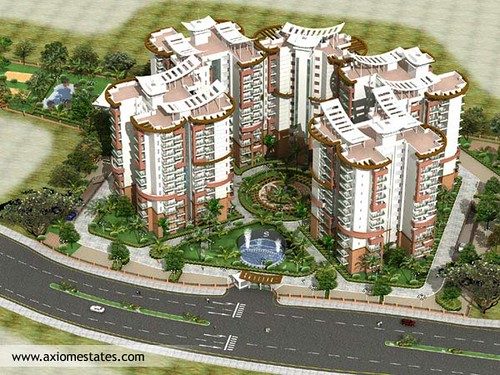
Image credit: Bangalore Properties - Real Estate India - Shriram Symphony by nancyarora2020 via flickr (BY-SA 2.0), sourced through Openverse.
Written by
Rajesh Tiwari
Real estate analyst covering property markets across Delhi NCR, Mumbai, and Bangalore. Rajesh tracks pricing trends, RERA compliance, and investment opportunities for residential and commercial buyers.
Looking for a technology partner?
From IT consulting to virtual office to custom software — eDarpan can help.
Continue reading
Property Prices Up in 2026: Should You Buy Now or Wait for 2027?
Property prices rose through 2026 while sales softened in some areas. Here's how to decide between buying now or waiting, using your own numbers rather than forecasts.
India Real Estate to Hit $5.8T by 2047: What It Means for Property Buyers Now
India's real estate could reach $5.8T by 2047. Here's how first-time buyers can judge projects, locations and timing without the hype, using RERA checks and real rupee numbers.
Rent or Buy in Dwarka 2026: Break-Even Math Under Current Rates
Stop guessing whether to rent or buy in Dwarka. This break-even guide walks through real price, rent and loan-rate inputs, with a worked example and the hidden costs that tip the decision.