Retail Rents Hit Records in Khan Market & CP: Should You Lease?
Khan Market and CP rents are at record highs. Before you sign, learn the fully loaded costs, smarter alternatives, and how to run the maths that most founders skip.
Here's a number that makes most retail founders wince: a well-located 500 sq ft shop in Khan Market can now command upwards of ₹1,500 per sq ft per month. That's ₹7.5 lakh a month in rent alone, before you've paid your staff, stocked your shelves, or cleared your first GST return. Connaught Place isn't far behind, with prime inner-circle frontage crossing ₹1,000 per sq ft in several deals closed over the last year. Landlords are quoting these numbers with a straight face because the demand is real, and that's the problem.
I've sat across the table from enough SMB owners and D2C brand founders during lease negotiations to know how seductive these addresses are. There's a genuine business case for being on a marquee high street. But there's also a graveyard of brands that signed nine-year leases at peak pricing, burned through their working capital in eighteen months, and shuttered quietly. The Delhi retail rent premium high street is not automatically worth paying, and whether it makes sense for you depends on maths most people don't run before they sign.
In this post I'll break down what these rents actually cost you fully loaded, when a flagship address earns its keep, and the two alternatives most owners overlook: emerging micro-markets and revenue-share leasing. You'll get a worked example, a comparison table, a negotiation checklist, and answers to the questions I get asked most.
Key Takeaways
- Khan Market and CP rents are at record highs (₹1,000–1,500+ per sq ft/month for prime frontage), but the fully loaded occupancy cost is often 40–60% higher than headline rent once CAM, maintenance, and fit-out amortisation are added.
- A high-street flagship makes sense as a brand-building or category-defining store, not as a volume-driven revenue centre. Run it as a marketing line item, not a P&L profit centre.
- Revenue-share and hybrid leases (minimum guarantee + percentage of sales) transfer risk to the landlord and are increasingly available in malls and organised retail, though rarely on classic high streets.
- Emerging micro-markets in Delhi-NCR can deliver 60–70% of the footfall quality at 30–40% of the rent, if you pick the catchment correctly.
- Always model a break-even sales-per-sq-ft target before signing. If your realistic monthly sales can't cover 3x the rent, the location is wrong.
- Negotiate the escalation clause and lock-in period as hard as the base rent. A 15% annual escalation quietly doubles your rent inside five years.
What does a Khan Market or CP lease actually cost, fully loaded?
The headline rent is the number everyone anchors on, and it's misleading. When I help clients evaluate a retail lease, we build a fully loaded monthly occupancy cost, because that's the number that hits your bank account.
Take a 600 sq ft unit in Khan Market quoted at ₹1,400 per sq ft per month. Base rent is ₹8.4 lakh. Now layer on the rest:
- CAM (Common Area Maintenance): On a high street this is lower than a mall, but you still pay for signage rights, security, and shared upkeep. Budget ₹40–80 per sq ft, so ₹24,000–48,000.
- Property tax and society charges: Often passed through to the tenant. ₹15,000–30,000.
- Fit-out amortisation: A decent retail fit-out runs ₹2,500–5,000 per sq ft. At ₹3,500 that's ₹21 lakh for the unit, amortised over a five-year lease at roughly ₹35,000/month.
- Security deposit opportunity cost: Landlords want 6–12 months' rent interest-free. On ₹8.4 lakh, a 9-month deposit is ₹75.6 lakh locked up. At a modest 8% opportunity cost that's ₹50,000/month of foregone return.
- GST: 18% GST on commercial rent. You can claim input credit if you're registered and the space is used for taxable supplies, but it's a cash-flow drag until you do.
Add it up and your effective monthly cost on that ₹8.4 lakh headline is closer to ₹9.5–10 lakh once you spread everything out. That's ₹1.2 crore a year. The question is not "can we afford the rent." It's "can this specific address generate ₹3.5 crore-plus in annual sales to justify a healthy occupancy cost ratio."
Pro Tip: Occupancy cost as a percentage of sales is the single most useful health metric in retail. For most Indian retail formats, keep it under 15% of net sales. Fashion and lifestyle can stretch to 18–20% for a flagship. If you're above 25%, the store bleeds no matter how good your merchandising is. Calculate this before you sign, using conservative sales assumptions, not the landlord's footfall pitch.
When is paying the high-street premium actually worth it?
I'm not against marquee locations. For the right business they're a genuine asset. But you have to be honest about why you're there.
A high-street flagship earns its rent in three situations:
- Brand credibility for a young D2C label. If you're a two-year-old brand that lives on Instagram and needs offline legitimacy, a Khan Market presence signals arrival to press, investors, and premium customers. You're buying PR and positioning, not footfall. Treat the rent as a marketing spend and it can be defensible.
- Category adjacency and captive spend. Some businesses thrive specifically because of who walks past. A premium eyewear or gifting brand next to established anchors captures spillover that no standalone location delivers.
- Experiential formats with high ticket sizes. If your average transaction is ₹15,000+ and your conversion depends on an in-person experience, the premium footfall quality of CP or Khan Market can justify the cost per square foot.
Where it fails is the volume play. If you're a mass-market apparel or F&B brand chasing throughput, the rent-to-sales maths almost never works at these prices. You'll do better with three stores in emerging micro-markets than one trophy address.
What are the alternatives to a classic high-street lease?
This is where most owners stop thinking too early. There are three broad models, and the right one depends on your risk appetite and cash position.
1. Emerging micro-markets
Delhi-NCR has plenty of catchments delivering strong, affluent footfall at a fraction of Khan Market rents. Think of high-street stretches and neighbourhood markets in Gurugram's newer sectors, parts of Noida's premium residential belts, and the redeveloped retail corridors around metro extensions. Rents here often run ₹150–450 per sq ft per month.
The trick is catchment analysis, not just price. A ₹250 per sq ft location with the wrong customer profile is more expensive than ₹1,400 with the right one, because it just won't convert. If you're evaluating corridors, our breakdown of buying near the Gurugram-Rewari Expressway and the premium housing sales surge across Delhi-NCR both map out where affluent residential demand is concentrating, which is exactly where retail footfall follows.
2. Revenue-share and hybrid leases
In organised retail and malls, you can often negotiate a lease structured as a minimum guarantee (MG) plus a percentage of sales, or pure revenue-share. Instead of ₹8 lakh fixed, you might pay ₹4 lakh MG or 12% of net sales, whichever is higher. This aligns the landlord with your performance and protects you in slow months.
Classic high streets like Khan Market rarely offer this because landlords have pricing power and don't want to share risk. But if you're open to a premium mall or a large-format retail development, it's a serious option worth pushing hard.
3. Virtual and lean-footprint models
Not every brand needs a large flagship. A smaller experiential kiosk plus a strong omnichannel setup can outperform a big store. If your primary need is a professional business presence and a GST-compliant registered address rather than customer-facing retail space, a virtual office address for GST and company registration gives you legitimacy at a tiny fraction of high-street cost. Pair it with a solid mobile commerce app and you have reach without the rent.
How do these options compare on the numbers?
Here's a side-by-side on a hypothetical 600 sq ft store, using realistic Delhi-NCR figures for early 2026. Numbers are illustrative but grounded in deals I've seen negotiated.
| Criterion | Khan Market / CP (Prime High Street) | Emerging Micro-Market | Mall (Revenue-Share Lease) |
|---|---|---|---|
| Base rent (₹/sq ft/month) | ₹1,000–1,500 | ₹150–450 | ₹4L MG or 12% of sales |
| Monthly base cost (600 sq ft) | ₹6L–9L | ₹90K–2.7L | ₹4L min, scales with sales |
| Security deposit | 6–12 months | 3–6 months | 3–6 months |
| Fit-out contribution from landlord | Rare | Occasionally | Sometimes (warm shell) |
| Footfall quality | Very high, premium | Moderate to high | High, but format-dependent |
| Downside protection | None (fixed rent) | None (fixed rent) | Strong (pay on performance) |
| Best for | Flagship, brand-building | Volume, multi-store expansion | Experiential, footfall-driven |
Notice the downside protection column. In a soft quarter, the high-street lease is a fixed obligation that keeps draining cash. The revenue-share lease breathes with your business. For a young brand without deep reserves, that flexibility can be the difference between surviving a bad season and closing.
A worked example: the ₹8.4 lakh Khan Market question
Let me walk through a real-shaped scenario. A Delhi-based premium home décor brand, six stores across NCR, ₹22 crore annual revenue, wanted a Khan Market flagship. The founder was emotionally sold. My job was to run the maths cold.
The proposed deal: 650 sq ft at ₹1,350 per sq ft = ₹8.78 lakh base rent, 9 months' deposit (₹79 lakh), 5-year lease with 15% escalation every year, no fit-out support.
Fully loaded monthly cost, year one: ₹8.78L rent + ₹35K CAM/taxes + ₹38K fit-out amortisation (₹23L fit-out over 5 years) + ₹53K deposit opportunity cost = roughly ₹10.04 lakh. Annualised: ₹1.2 crore.
The escalation trap: That 15% annual bump means base rent in year five is not ₹8.78L but ₹15.36L per month. Over the five-year term, cumulative rent alone crosses ₹7 crore. The founder had budgeted against year-one numbers only.
The break-even test: To keep occupancy cost at a healthy 18% of sales, the store needed to do ₹6.7 crore in year-one sales, climbing every year to stay ahead of escalation. Their best-performing store did ₹4.1 crore. The most realistic Khan Market projection, adjusted for their price point and category, was ₹4.5–5 crore. The maths didn't clear.
What we did instead: We negotiated the escalation down to a fixed 8% annual (still aggressive, but landlords will move on escalation more than base rent), capped the deposit at 6 months, and secured a 24-month tenant-favourable lock-in instead of the standard longer one. That alone saved over ₹1.4 crore across the term versus the original terms. The founder took the store as an explicit brand play with a hard review at month 18, funded from the marketing budget, not the store P&L. Two years on, it's still open and doing its job as a credibility anchor while the volume stores in NCR carry the profit.
Common Mistake: Signing based on year-one rent while ignoring the escalation clause. A 15% compounding escalation doubles your rent in about five years. Landlords quote high escalations expecting you not to negotiate them. Always model total cost over the full lock-in term, and treat escalation as a primary negotiating lever, not a footnote.
How to negotiate a retail lease without getting burned
Here's the checklist I run through with clients before they sign anything. Use it to brief your broker or lawyer.
- Model fully loaded occupancy cost over the full term, not just year one. Include rent, CAM, taxes, fit-out amortisation, and deposit opportunity cost.
- Set a break-even sales target at 15–18% occupancy cost ratio, then pressure-test it against your best comparable store's actual numbers, not projections.
- Negotiate escalation hard. Push for 5–8% annual, or a step structure (lower in early years). This often saves more than base rent haggling.
- Cap the security deposit at 3–6 months and get the refund terms in writing with a timeline. Nine-month deposits are negotiable more often than owners realise.
- Secure a tenant-favourable lock-in. Landlords want you locked for the full term; you want an exit window at 18–24 months with a defined notice period. Fight for it.
- Clarify GST treatment and input credit in the agreement. Confirm the landlord is GST-registered and issuing compliant invoices so you can claim input tax credit.
- Get fit-out support or a rent-free fit-out period (typically 30–90 days) written in. Even on high streets, a rent-free fitting-up window is standard and negotiable.
- Nail down signage and frontage rights. On a high street your façade is half the value. Ambiguous signage clauses cause expensive disputes.
If you're a founder evaluating your first serious retail commitment, our Grade A office leasing guide for founders covers many of the same negotiation principles for commercial space, and it's worth reading alongside this. And if you want a second set of eyes on the numbers or help finding the right space, eDarpan Properties works across rental listings and purchase options throughout India.
Should you build the tech before you sign the lease?
One thing I push every retail client on: your unit economics improve dramatically when your store isn't your only sales channel. Before you commit ₹1 crore a year to a high-street lease, ask whether some of that spend is better invested in reach.
A well-built custom retail and inventory system lets you track sales-per-sq-ft and occupancy ratios in real time, so you catch a failing store early instead of at renewal. A WhatsApp Business API setup turns walk-in customers into a repeat channel you own, and bulk SMS campaigns keep footfall-driving offers cheap. For higher-volume brands, an AI voicebot can handle order and store enquiries without adding headcount. These aren't nice-to-haves; they change the sales your physical space needs to generate to break even.
If you want to think through the technology stack that supports a multi-store retail operation, our IT consulting team can map it to your growth plan, and the full services overview shows how the pieces fit together.
Frequently asked questions
What is the current retail rent in Khan Market per square foot?
Prime frontage in Khan Market has been transacting at roughly ₹1,000–1,500 per sq ft per month in recent deals, making it one of the most expensive retail high streets in India. Actual rates vary sharply by floor, frontage width, and exact location within the market, so treat any single figure as indicative.
Is Connaught Place cheaper than Khan Market for retail?
Generally yes, though prime inner-circle CP frontage has crossed ₹1,000 per sq ft in strong deals. CP offers more inventory and floor variety than Khan Market, which gives tenants slightly more negotiating room, but the premium high-street pricing still demands rigorous occupancy-cost maths before committing.
What is a revenue-share lease and where can I get one?
A revenue-share lease means you pay the landlord a percentage of your store's sales, often with a minimum guarantee, instead of a fixed rent. They're common in organised malls and large retail developments but rare on classic high streets, where landlords have enough demand to insist on fixed rents. If downside protection matters to you, prioritise formats that offer this structure.
How much security deposit is normal for a Delhi retail lease?
High-street landlords typically ask for 6–12 months' rent as an interest-free deposit, while emerging micro-markets and malls often settle at 3–6 months. This is negotiable, and capping the deposit frees up significant working capital, so treat it as a key term rather than a fixed cost.
Do I pay GST on commercial retail rent in India?
Yes, commercial rent attracts 18% GST. If you're GST-registered and using the premises for taxable supplies, you can claim input tax credit on the GST paid, provided the landlord issues a compliant invoice. Confirm the landlord's GST registration before signing so you don't lose the credit.
What occupancy cost percentage is healthy for a retail store?
As a rule of thumb, keep total occupancy cost (rent plus CAM, taxes, and related charges) under 15% of net sales for most formats, and up to 18–20% for a premium fashion or lifestyle flagship. Above roughly 25%, the store is very hard to run profitably regardless of merchandising.
Are emerging micro-markets a safe bet for retail in Delhi-NCR?
They can deliver strong returns if you match the catchment to your customer profile, but they carry footfall risk that established high streets don't. Do proper catchment analysis on income levels, competing retail, and residential density before committing. Corridor and micro-market guides like our Gurugram-Rewari expressway breakdown help identify where demand is genuinely building.
The bottom line
The Delhi retail rent premium high street at Khan Market and CP is real, and for a specific kind of brand it buys something genuinely valuable: credibility, premium footfall, and positioning that Instagram alone can't deliver. But it is a marketing investment dressed up as a store, and you should run the numbers accordingly. For volume-driven businesses, the maths almost never clears at current rates, and you'll do better across emerging micro-markets or with a revenue-share structure that shares the risk.
Whatever path you choose, model the fully loaded cost over the entire lease term, set a realistic break-even sales target, and negotiate escalation and lock-in as hard as base rent. Those three moves alone save more than most brokers ever tell you about.
If you'd like help evaluating a specific space, running the occupancy-cost maths, or building the technology stack that makes a physical store work harder, get in touch with eDarpan. You can also learn more about how we work with SMBs and retail brands across India. And if you're still weighing whether to buy or wait in a rising market, our take on Chandigarh property prices and where value buyers should look is worth a read before you commit capital.
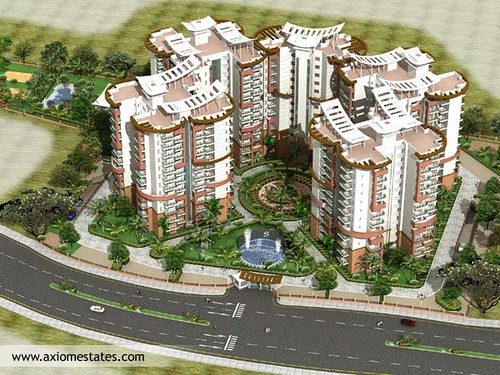
Image credit: Bangalore Properties - Real Estate India - Shriram Symphony by nancyarora2020 via flickr (BY-SA 2.0), sourced through Openverse.
Written by
Rajesh Tiwari
Real estate analyst covering property markets across Delhi NCR, Mumbai, and Bangalore. Rajesh tracks pricing trends, RERA compliance, and investment opportunities for residential and commercial buyers.
Looking for a technology partner?
From IT consulting to virtual office to custom software — eDarpan can help.
Continue reading
UP Model Building Rules 2026: Impact on Noida & Greater Noida Properties
UP's new 2026 building rules will reshape Noida & Greater Noida real estate, with major impacts on FAR, costs, and project approvals.
India's Real Estate Market Splits: What It Means for Investors
India's real estate market is splitting. Learn why commercial assets now offer stable cash flow, while residential success depends on hyper-local, end-user demand.
Hyderabad & Bengaluru Lead Sales Surge: What It Means for Buyers
Hyderabad & Bengaluru lead India's 2026 property surge, driven by infrastructure, affordability, and end-user demand. Learn the key takeaways for buyers.