Premium Homes Drive Delhi-NCR's 30% Sales Jump: Where to Buy
Delhi-NCR's 30% sales jump is luxury-led, not a rising tide. Here's the real math on whether mid-tier buyers should stretch into premium corridors or buy value elsewhere.
Here's the trap a lot of mid-tier buyers in the National Capital Region are walking into right now. You've saved up for years, your budget sits somewhere between ₹1.2 crore and ₹2.5 crore, and you're watching the headlines scream about a 30% sales jump. So you assume the whole market is on fire and you'd better buy anything, anywhere, before prices run further away from you. That assumption can cost you 15 to 20 lakh in the wrong micro-market.
The surprising part of the Q1 2026 numbers is where the growth actually came from. The volume didn't rise because everyone across every segment is buying more. It rose because the premium and luxury segment (broadly ₹2 crore and above, with a serious chunk above ₹4 crore) pulled the entire average up. Affordable and lower mid-segment supply has been thinning out for two years. So the "30% jump" is real, but it's a luxury-led surge, not a rising tide that lifts every boat equally.
This post decodes what the Delhi-NCR premium housing 2026 story actually means if you're a mid-tier buyer, salaried or an MSME owner, trying to decide whether to stretch into a premium corridor or hold your budget and buy value elsewhere. You'll get the real math, a worked case study, a corridor comparison table, a due-diligence checklist you can hand to a broker or lawyer, and a straight answer on when stretching makes sense and when it's a mistake.
Key Takeaways
- The 30% NCR sales jump is luxury-led. Premium inventory (₹2 Cr+) is driving both volume and average price, while affordable supply keeps shrinking.
- Stretching into a premium micro-market makes sense only if your total EMI stays under ~40% of net monthly income and you plan to hold for 7+ years.
- Gurgaon's Golf Course Extension and Dwarka Expressway, and Noida's Sector 150 belt are the genuine premium demand engines. Not every "premium" launch is one.
- Under-construction premium homes carry real completion and RERA risk. Verify the project before you pay a rupee.
- Value still exists in peripheral corridors like Sohna, New Gurgaon, and the Gurugram-Rewari belt for buyers who don't need a marquee address.
- Factor in the full acquisition cost: stamp duty, GST on under-construction, registration, and 1-2% brokerage. The sticker price is never the real price.
Why did Delhi-NCR premium housing 2026 sales jump 30%?
Three forces converged, and it's worth understanding each because they tell you whether the trend has legs.
First, supply mix changed. Developers stopped launching affordable stock because land costs and construction inputs made sub-₹60 lakh projects margin-negative in prime NCR land. So the launches you see now skew premium by design. When the only new product is expensive, the recorded average sale value rises even if the number of families buying stays flat.
Second, the buyer profile shifted. A lot of premium demand is coming from end-users who upgraded during and after the pandemic, plus NRIs and business owners parking capital in tangible assets after a volatile equity run. This isn't purely speculative flipping like the 2010-2013 cycle. Larger unit sizes (3.5 and 4 BHK, 2,000+ sq ft) are selling faster than compact 2 BHKs in the same towers, which tells you real families are consolidating into bigger homes.
Third, a handful of corridors got genuine infrastructure delivery. The Dwarka Expressway becoming functional, metro extensions, and improving connectivity to the new Jewar airport catchment gave certain locations a real demand story rather than a brochure promise.
Pro Tip: When you read that a "market" grew 30%, always ask two follow-up questions before acting on it. Grew in volume or in value? And grew in which segment? A value-led jump driven by ₹4 Cr penthouses tells you almost nothing about whether your ₹1.6 Cr 3 BHK in a peripheral sector is a good buy.
Should a mid-tier buyer stretch into a premium micro-market or wait?
This is the actual decision most readers face, so let's make it concrete instead of philosophical.
Stretching means buying above your comfortable budget to get into a corridor with stronger appreciation, better amenities, and easier resale. The pull is real: premium corridors tend to hold value in downturns and appreciate faster in upcycles because the buyer pool is deeper and less rate-sensitive.
The danger is equally real. If you push your EMI past 40-45% of net monthly income to buy a ₹2.2 Cr flat when your comfort zone was ₹1.5 Cr, you've turned a home into a financial vice. One job change, one health event, one delayed possession, and you're forced to sell at whatever the market gives you.
The stretch is justified when:
- Your EMI stays under 40% of stable net income even after the stretch.
- You have 6 months of EMI as an emergency buffer after the down payment.
- You're buying in a corridor with delivered infrastructure, not promised infrastructure.
- Your holding horizon is 7+ years, so short-term price wobbles don't force a sale.
- The premium is for genuine liquidity (easy resale), not just a shinier lobby.
Wait or buy value elsewhere when:
- The stretch pushes you into an under-construction premium project with a weak developer track record.
- You're stretching for the address rather than the fundamentals.
- Your income is variable (commission, freelance, early-stage business) and can't reliably absorb a bigger EMI.
- Comparable value exists in an adjacent corridor at 25-30% lower price for a 10% longer commute.
Which Delhi-NCR corridors are actually worth the premium?
Not all "premium" is equal. Some corridors command a premium because they earned it through connectivity and delivery. Others just charge more because the developer's marketing budget was larger. Here's how the main NCR micro-markets stack up for a mid-tier buyer weighing stretch versus value.
| Corridor | Indicative price (₹/sq ft) | Segment | Best for | Key risk |
|---|---|---|---|---|
| Golf Course Ext Road, Gurgaon | ₹14,000–22,000 | Premium/Luxury | End-users wanting liquidity & amenities | Entry price already high; thin value upside |
| Dwarka Expressway, Gurgaon | ₹11,000–16,000 | Premium (upgrading) | Stretch buyers betting on delivered infra | Some projects still completing; verify status |
| Noida Sector 150 & Expressway | ₹9,000–14,000 | Premium/Mid-premium | Space-per-rupee, sports/green township living | Farther from central Delhi jobs |
| New Gurgaon (Sec 79-95) | ₹7,500–11,000 | Mid-tier | Value buyers, first-time premium upgrade | Infra maturing; longer holding needed |
| Sohna & Gurugram-Rewari belt | ₹6,000–9,000 | Value/Emerging | Long-horizon investors, budget-conscious | Early-stage; connectivity still developing |
The pattern here is clear. If you have the income to safely afford Golf Course Extension, the premium buys you liquidity and downside protection. If you're stretching, Dwarka Expressway and Sector 150 give you a defensible premium story without the top-of-market price. And if you can't stretch without stress, the Sohna and Gurugram-Rewari expressway corridor offers a value entry that could mature over your holding period. We break down that emerging belt in detail if you're leaning that way.
A real worked example: the ₹1.5 Cr budget, three real choices
Let me walk through a case that mirrors dozens of conversations I've had. Take Rohan, a 38-year-old who runs a 12-person GST-compliant packaging MSME in Gurgaon. Net household income around ₹2.4 lakh/month. He'd saved ₹45 lakh for a down payment and was targeting a 3 BHK for his family.
His three real options in early 2026 looked like this:
- Option A — Stretch to premium: A ₹2.15 Cr 3 BHK (1,650 sq ft) on Dwarka Expressway, ready-to-move. Down payment ₹45 lakh, loan ₹1.7 Cr. At ~8.6% for 20 years, EMI ≈ ₹1.48 lakh/month. That's 62% of net income. Too high.
- Option B — Sensible mid-tier: A ₹1.55 Cr 3 BHK (1,450 sq ft) in New Gurgaon, ready-to-move. Loan ₹1.1 Cr. EMI ≈ ₹96,000/month, about 40% of income. Tight but workable with his buffer.
- Option C — Value with upside: A ₹1.15 Cr 3 BHK in Sohna, under construction, possession in ~24 months. Loan ₹70 lakh. EMI ≈ ₹61,000 once fully disbursed, plus he'd pay rent meanwhile.
Here's what actually mattered. Rohan's business income, while healthy, had seasonal dips (Q1 is slow for his sector). Option A's ₹1.48 lakh EMI would have wiped out his ability to pay salaries during a bad month. He was smart enough to see that the "30% surge" headline was tempting him toward Option A for the wrong reason: fear of missing out, not fundamentals.
He went with Option B. Ready-to-move eliminated construction risk, the EMI was survivable, and New Gurgaon's infrastructure was maturing along the corridor. Two things sealed it: the ₹1.55 Cr flat was ready, so he stopped paying rent immediately, and the developer had a clean delivery record. The lesson wasn't "always buy cheaper." It was that a stretch you can't service turns your best asset into your biggest liability.
Common Mistake: Budgeting only the sticker price. On Option B, Rohan's real outflow included stamp duty and registration (roughly 6-7% in Haryana, so ~₹9-10 lakh), brokerage of about 1% (₹1.5 lakh), and interiors. On an under-construction unit like Option C, add 5% GST (no input credit for buyers) on the construction cost. Always model the all-in number before you fall in love with a flat.
How do you verify a premium under-construction project before paying?
Most of the premium launches driving the 2026 numbers are under construction. That's where money is made and lost. A ready flat is what you see. An under-construction flat is a promise, and promises need verification.
Here's the walkthrough I give every client, whether they're buying a home or an office space:
- Pull the RERA registration. Every legit project has a RERA number. Search it on the Haryana (HRERA) or UP-RERA portal. Confirm the project is registered, the promoter matches, and the completion date on record matches what the sales team claims. Our full RERA verification guide covers exactly which fields to check.
- Check the approved plan and land title. Ask for the sanctioned building plan, the licence, and the title report. Verify the developer actually owns or has development rights to the land. A collaboration project with an unclear title is a red flag.
- Review the quarterly progress on RERA. Developers must upload construction progress. If a project claims 40% complete but RERA shows 15%, walk away.
- Read the builder-buyer agreement clause by clause. Focus on the penalty for delayed possession, the exit/refund terms, and the super-area vs carpet-area definition. Carpet area is what you actually get; loading of 30%+ eats your money.
- Verify the escrow account. Under RERA, 70% of buyer money must go into a project-specific escrow. Confirm you're paying into that account, not a generic promoter account.
- Match payment plan to construction milestones. Construction-linked plans protect you better than upfront/subvention schemes. You pay as they build.
- Do a physical site visit and talk to existing buyers. Nothing beats seeing the site and hearing from families already committed. Delivery reputation is the single best predictor of future delivery.
If reading a builder-buyer agreement makes your eyes glaze over, that's exactly the kind of due diligence eDarpan Properties handles alongside a property lawyer. Getting this wrong on a ₹1.5 Cr commitment is not the place to save on advice.
What about buyers who should wait or rent instead?
Waiting is a legitimate strategy, not a failure of nerve. If your income is genuinely variable, or you might relocate in three years, or you can't hit a 40% EMI ratio without white-knuckling it, renting in a premium corridor and buying later is often the smarter play.
The math frequently favors renting when the rental yield in premium NCR corridors sits around 2.5-3.5%. In plain terms, you can often rent a ₹2.2 Cr flat for ₹55,000-70,000/month, far less than the ~₹1.5 lakh EMI to own it. You keep your capital liquid, avoid the stamp duty and registration sunk cost, and stay mobile. We track this gap corridor by corridor in the Delhi-NCR rent trends 2026 analysis.
And if premium simply isn't the right fit right now, don't force it. The affordable housing slowdown has pushed value buyers toward specific emerging pockets that still make sense. You can browse current properties for sale in India or rental listings to benchmark real prices in your target corridor before committing to a strategy.
Frequently asked questions
Is Delhi-NCR premium housing 2026 a bubble?
It doesn't look like the speculative bubble of 2010-2013 because current demand is heavily end-user and NRI driven, with larger units selling fastest. That said, specific over-launched micro-markets can still see price correction. The risk is project-specific and corridor-specific, not a blanket NCR-wide bubble.
What is considered premium housing in Delhi-NCR right now?
Broadly, homes priced ₹2 crore and above, often with unit sizes of 1,600+ sq ft, in gated townships with full amenities. Luxury typically starts around ₹4 crore. The definition shifts by corridor; a ₹2 Cr flat is premium in Sohna but entry-level on Golf Course Road.
Which is the best NCR corridor for a first-time premium buyer?
Dwarka Expressway and Noida's Sector 150 belt offer the strongest balance of delivered infrastructure and reasonable entry pricing for someone upgrading into premium for the first time. New Gurgaon works well if you want to spend less and hold longer.
How much extra beyond the price should I budget for an NCR home?
Plan for roughly 8-12% on top of the base price. In Haryana that includes stamp duty and registration around 6-7%, brokerage of about 1%, plus GST at 5% on under-construction construction cost, and interiors. Never assume the sticker price is your total outflow.
Should I buy ready-to-move or under-construction in a premium corridor?
Ready-to-move eliminates completion risk, stops your rent immediately, and lets you see exactly what you're buying, usually worth the small price premium. Under-construction can be cheaper and offer better payment flexibility, but only buy it after full RERA and developer track-record verification.
Can an MSME owner claim any tax benefit on a premium home purchase?
A home bought in your personal name gives the standard home loan interest and principal deductions under the applicable income tax provisions, subject to limits. It's not a business asset, so no GST input credit applies. Consult a CA on structuring; buying property through a business entity has its own compliance and tax implications.
Is now a good time to buy, or will prices fall?
In the strong premium corridors with delivered infrastructure, prices are more likely to plateau than fall meaningfully, given the end-user demand base. In over-supplied or infrastructure-dependent pockets, waiting a cycle can pay off. Your holding horizon matters more than timing the market: seven-plus years neutralizes most short-term price noise.
The bottom line on Delhi-NCR premium housing 2026
The 30% sales jump is real, but it's a headline that hides more than it reveals. It's a luxury-led surge, driven by shrinking affordable supply and deep end-user and NRI demand in a few genuinely strong corridors. For a mid-tier buyer, the takeaway isn't "buy premium now before it's too late." It's "understand which premium is worth paying for, and only stretch if the math survives a bad quarter."
Anchor your decision to your EMI-to-income ratio, your holding horizon, and the fundamentals of the corridor, not the fear the headlines are engineered to create. Verify every under-construction project against RERA before you part with money. And model the all-in cost, not the sticker price.
If you want a second opinion grounded in real transactions rather than brochures, the team at eDarpan Properties helps buyers benchmark micro-markets, vet developers, and read the fine print. Explore live homes for sale, or get in touch to talk through whether stretching into a premium corridor actually fits your numbers. The right advice on a crore-plus decision pays for itself many times over.
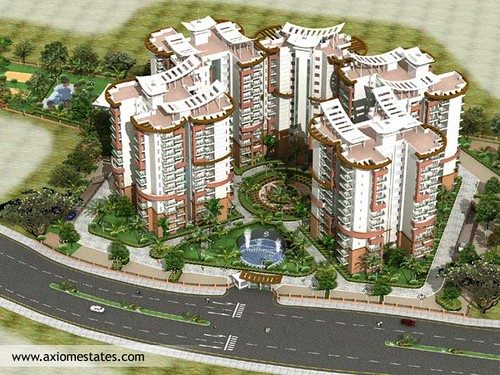
Image credit: Bangalore Properties - Real Estate India - Shriram Symphony by nancyarora2020 via flickr (BY-SA 2.0), sourced through Openverse.
Written by
Rajesh Tiwari
Real estate analyst covering property markets across Delhi NCR, Mumbai, and Bangalore. Rajesh tracks pricing trends, RERA compliance, and investment opportunities for residential and commercial buyers.
Looking for a technology partner?
From IT consulting to virtual office to custom software — eDarpan can help.
Continue reading
Delhi-NCR Price Surge: Is It Better to Rent or Buy Now?
Delhi-NCR prices soared 12% in 2026. For business owners, we analyze if renting or buying is smarter with a financial model for the current market.
How Rising Delhi NCR Home Prices Impact Your Budget & Options
Delhi NCR's 12% property price surge is derailing budgets. Learn strategic fixes, affordable alternatives, and whether to buy now.
Goa, Bhopal, Lucknow: Top Tier-2 Cities for Property Investment 2026
Move beyond expensive metros. Discover why Goa, Bhopal & Lucknow are the top tier-2 cities for high-yield property investment in 2026, backed by data & infrastructure growth.