Why Big Developers Are Piling Into Delhi-NCR: Buyer's View
Prestige, Sobha and Oberoi are flooding Delhi-NCR. Here's what national developers mean for your pricing, choices, and how to vet an out-of-state brand.
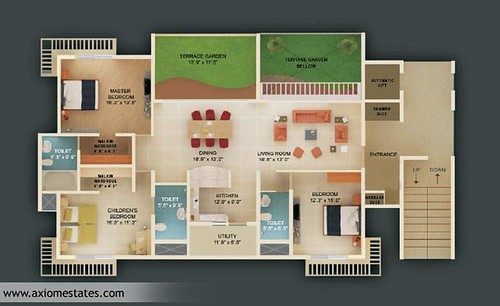
If you've been tracking Delhi-NCR property over the last two years, you've probably noticed something odd. The developer names on hoardings along Dwarka Expressway and Golf Course Extension Road aren't the local familiar ones anymore. Bengaluru's Prestige and Sobha, Mumbai's Oberoi Realty, Pune's Kolte-Patil — brands that built their reputations 1,500 km away are now planting flags in Gurgaon, Noida, and even along the Delhi-Mumbai Expressway corridor. For a buyer, this raises an uncomfortable question: is a Bengaluru builder actually equipped to deliver in Haryana's very different regulatory and construction environment, or are you paying a premium for a logo?
Here's a number that puts the scale in perspective. Gurugram alone absorbed over ₹90,000 crore worth of new luxury launches between 2023 and 2025, and a growing chunk of that came from developers headquartered outside North India. When Oberoi announced its Gurugram entry with a land deal reportedly north of ₹500 crore, and DLF's Privana series routinely sold out in days at ₹7-12 crore per unit, the market signal was clear: national capital pooled into NCR because the returns and the buyer appetite justified it.
This post breaks down what the arrival of these Delhi NCR real estate developers 2026 actually means for you as a homebuyer or investor. We'll map where the new supply is landing, what it's doing to pricing, and — most importantly — how to vet a project from an out-of-state brand before you sign a booking cheque.
Key Takeaways
- National developers are concentrating in three NCR pockets: New Gurugram (Dwarka Expressway/SPR), Greater Noida West, and the emerging Sohna/Golf Course Extension belt.
- Brand entry has pushed premium-segment prices up 25-40% in launch corridors since 2023, but it has also raised construction and title-clarity standards.
- A national logo does not guarantee delivery — many big brands build through local JV partners, so vet the actual executing entity, not just the brand.
- Always verify HRERA/UP-RERA registration, the land title chain, and the EDC/IDC payment status before booking.
- Under-construction premium units carry 12% GST on the construction component; ready-to-move-in units with a completion certificate carry none — this alone can swing your effective cost by lakhs.
- For NRIs and outstation buyers, the operational headache is verification and paperwork — that's where a proper due-diligence checklist saves you.
Why are national developers like Oberoi, Prestige and Sobha entering Delhi-NCR?
Three forces converged. First, the South Indian and Mumbai markets got tight. Land in prime Bengaluru and central Mumbai became so expensive that margins compressed, and the biggest developers went hunting for large contiguous land parcels they could no longer find at home.
Second, NCR cleaned up its act. The post-2016 RERA era, combined with the near-completion of infrastructure like the Dwarka Expressway (finally operational after nearly a decade of delays) and the Jewar/Noida International Airport nearing launch, made NCR credible again to buyers who had been burned by stalled projects between 2013 and 2018.
Third, and this is the part outsiders miss, NCR's luxury buyer pool is deep. There's a genuine, cash-rich audience for ₹5 crore-plus homes in Gurugram — a mix of promoter families, senior corporate executives, and returning NRIs. When Sobha launched in Gurugram and Prestige acquired large land banks in the region, they were chasing that exact demographic.
For a buyer, the practical upshot is that you now have real choice in the premium segment where earlier you were largely stuck with three or four regional names. Choice is good. But choice also means you have to actually compare, and that's harder when you're evaluating a brand whose track record sits in another state. If you're weighing NCR against other metros, our analysis of how South India led real estate in H1 2026 is a useful counterpoint.
Where is the new supply actually landing in Delhi-NCR?
Not evenly. The national brands are clustering in specific micro-markets, and knowing which pocket a project sits in tells you a lot about its price trajectory and risk.
New Gurugram: Dwarka Expressway and SPR
This is ground zero for the new premium launches. Sectors along Dwarka Expressway (Sectors 102-114) and the Southern Peripheral Road absorbed the bulk of national-brand activity. Connectivity is the whole pitch here — direct road access to IGI Airport and Delhi. Prices in this belt moved from roughly ₹8,000-10,000 per sq ft in 2021 to ₹14,000-20,000+ per sq ft for branded launches by late 2025.
Golf Course Extension Road and Sohna
The GCX corridor and the extension toward Sohna is the "luxury frontier." DLF's premium series and several national entrants target this belt. Sohna in particular has become an affordability-to-aspiration bridge — still cheaper per sq ft, but riding on the promise of future metro and expressway links.
Greater Noida West and Yamuna Expressway
The Noida side of the story is driven almost entirely by the Noida International Airport at Jewar. Land along the Yamuna Expressway has seen speculative appreciation, and while fewer top-tier national brands have launched here versus Gurugram, the appreciation potential attracts investors comfortable with a longer horizon.
| Micro-market | Typical segment | Approx. price (per sq ft, 2025-26) | Primary driver | Buyer profile |
|---|---|---|---|---|
| Dwarka Expressway (New Gurugram) | Premium / Luxury | ₹14,000 - ₹22,000 | Airport & Delhi connectivity | End-user + investor |
| Golf Course Extension Rd | Luxury / Ultra-luxury | ₹16,000 - ₹28,000+ | Prestige address, low supply | HNI end-user |
| Sohna Road belt | Mid-premium | ₹9,000 - ₹14,000 | Value + future infra | Value-seeking end-user |
| Greater Noida West | Mid to premium | ₹7,000 - ₹12,000 | Jewar airport, affordability | Investor + first-home buyer |
| Yamuna Expressway | Plots / mid | ₹5,500 - ₹9,000 | Airport-led speculation | Long-horizon investor |
What does the entry of Delhi NCR real estate developers 2026 mean for pricing?
The honest answer is: it cut both ways. In launch corridors, branded entry lifted the headline price. When a Sobha or Oberoi launches at a certain rate, it resets the anchor for the whole micro-market — nearby projects reprice upward within a couple of quarters. If you bought in New Gurugram in 2022, the brand influx worked in your favour.
But there's a second-order effect that's actually better for buyers than the price bump. National brands brought build quality, delivery discipline, and title hygiene that pressured the local market to match. A regional developer competing next door to a Prestige project can no longer get away with vague possession timelines or sloppy specification sheets. The floor rose.
The risk is the froth. Some launches in these corridors are priced on future infrastructure that hasn't fully materialised. Sohna's premium relies on a metro extension and road upgrades that are announced but not delivered. If you're paying a "future connectivity" premium today, you're carrying the timeline risk. If you want to understand how valuation frenzy plays out, our breakdown of whether the Hyderabad property boom is sustainable or a bubble covers the same warning signs that apply to NCR's hotter pockets.
Common Mistake: Buyers assume a national developer's brand premium is priced into the unit but forget the recurring cost. Branded premium projects in Gurugram routinely carry maintenance charges of ₹8-15 per sq ft per month. On a 2,500 sq ft unit that's ₹20,000-37,500 every month, before you've paid a rupee of EMI. Model this into your total cost of ownership, not just the sticker price.
How do you vet a project from an out-of-state developer before booking?
This is where outstation and NRI buyers get burned, because the instinct is to trust the brand. A national logo tells you the parent company is credible. It does not tell you who is actually executing your specific project. Many national developers enter a new state through a joint venture or a development-management agreement with a local landowner or builder. The brand markets it; a local entity builds it. You need to know which entity holds RERA liability.
Here's the verification walkthrough I use, and it's the same one I'd hand to any client evaluating a Gurugram or Noida launch.
- Pull the RERA registration. For Haryana, use the HRERA Gurugram portal; for the Noida side, UP-RERA. Search the project and confirm the registered promoter name. Note whether it's the national brand or a local SPV/JV. If it's an SPV, that's the entity legally on the hook.
- Match the registered project details to the brochure. RERA lists the sanctioned number of towers, units, completion date, and mortgaged status. If the brochure promises more units or a shorter timeline than RERA shows, that's a red flag.
- Trace the land title chain. Ask for the title search report and the mutation records. In Haryana, confirm the land is licensed for group housing under the DTCP licence. An unlicensed or agricultural-land parcel is a hard stop.
- Check EDC and IDC payment status. External and Internal Development Charges owed to the state are a common source of stalled projects and completion-certificate delays. A project where the developer hasn't cleared EDC/IDC can get stuck at the occupancy-certificate stage even after construction finishes.
- Read the JV/DMA structure if it exists. If the national brand is only managing development, understand what happens to warranty, service, and dispute resolution. Who do you sue if there's a defect three years post-possession?
- Inspect the actual under-construction site or a completed phase. Brochures are marketing. Walk a delivered tower if the developer has one in NCR. If this is their first NCR delivery, weight your risk accordingly — you're an early buyer in an unproven local execution.
- Verify the completion/occupancy certificate for ready units. A ready-to-move-in unit with a valid CC/OC carries no GST and gives you clean possession. Never take "OC applied for" as equivalent to "OC received."
If you're buying from abroad and can't run these checks in person, this is exactly the gap eDarpan Properties exists to close — coordinating on-ground verification, document review, and shortlisting so you're not relying on a broker's word. You can browse verified properties for sale in India or explore rental options if you're testing a location before you commit to buying.
A worked example: how one NRI buyer avoided a ₹35 lakh mistake
A Dubai-based NRI, working in fintech, was ready to book a 3BHK in a New Gurugram launch from a well-known national brand. Quoted price: roughly ₹2.6 crore for a 1,850 sq ft unit at ₹14,000 per sq ft, under construction, with possession promised in 36 months. The brand name gave him confidence, and he was about to wire the ₹26 lakh booking amount (10%).
The due-diligence review surfaced three things the brochure didn't:
- The RERA-registered promoter was a local SPV, not the national parent. The brand was the marketing and design partner under a DMA. That changed the warranty and recourse picture entirely.
- The GST on the construction component added roughly 5% effective cost that wasn't in the "all-in" figure his broker quoted — about ₹11-12 lakh he hadn't budgeted.
- A comparable ready-to-move unit from the same brand in an adjacent completed tower was available at ₹2.75 crore with a valid OC — meaning zero GST, immediate possession, no 3-year construction risk, and no rent-plus-EMI double-burden during the wait.
Run the math. The under-construction unit's true landed cost was around ₹2.72 crore (₹2.6 cr + GST) plus three years of rent in Dubai and construction-timeline risk. The ready unit at ₹2.75 crore was effectively cheaper on total cost of ownership, and it was a known, delivered product. He bought the ready unit. Avoiding the GST surprise and the timeline risk saved him an estimated ₹35 lakh over the holding period once you factor in avoided rent and the eliminated risk premium. The brand was fine. The structure was where the value hid.
Pro Tip: When a developer quotes an "all-inclusive" price on an under-construction premium unit, ask specifically: does this include 12% GST on the construction component, the EDC/IDC pass-through, the club membership charge, IFMS (Interest-Free Maintenance Security), and power backup charges? These "extras" routinely add 8-15% to the sticker price on Gurugram launches. Get them itemised in writing before you sign.
Is buying in Delhi-NCR right now better than other metros?
It depends on your goal. If you want an end-use luxury home with strong brand build quality and you can afford the ₹3 crore-plus segment, NCR's national-brand influx genuinely improved your options. The competition among Oberoi, Prestige, Sobha, DLF, and M3M in overlapping corridors keeps quality honest.
If you're a pure investor chasing yield, be more careful. Rental yields in Gurugram premium housing sit around 2.5-3.5%, which is thin. Your return case leans heavily on capital appreciation, and that appreciation increasingly depends on infrastructure delivering on schedule. Compare that against markets where you might catch an earlier point in the cycle. Our note on why Delhi property looks cheap on a global scale is worth reading alongside this if valuation is your lens.
And if you're an NRI, factor in the paperwork and repatriation layer before you fall for a launch video. The rules around funding, TDS on purchase, and repatriating sale proceeds are specific and unforgiving if you get them wrong — our guide to NRI property investment rules, tax and repatriation covers what you need before you transfer a rupee. If you're funding via a loan, also run the numbers on whether a home loan balance transfer makes sense down the line.
Frequently asked questions
Are national developers like Sobha and Prestige actually building projects in Delhi-NCR themselves?
Sometimes directly, often through a local joint venture or development-management arrangement. The brand handles design and sales while a local SPV or landowner partner executes on the ground. Always check the RERA-registered promoter name to identify the entity that is legally liable for your project.
How much GST do I pay on an under-construction flat in Gurugram in 2026?
Under-construction residential units attract 5% GST for non-affordable housing (with the input tax credit structure baked in), which developers typically pass on the construction component. Ready-to-move units with a valid completion or occupancy certificate carry no GST. This distinction can change your effective cost by lakhs, so confirm the OC status before comparing prices.
Which NCR area is best for investment appreciation in 2026?
The Dwarka Expressway belt and areas around the Noida International Airport at Jewar have the strongest appreciation narratives, driven by infrastructure. But appreciation depends on that infrastructure delivering on time, so treat any "future connectivity" premium as risk you are carrying, not value you already own.
How do I verify a builder's RERA registration for a Gurugram project?
Use the HRERA Gurugram portal for Haryana projects and search by project or promoter name. Confirm the registered number of units, the completion date, mortgage status, and the promoter's legal name. If the RERA details don't match the sales brochure, treat that as a serious warning sign.
Is it safe for an NRI to book a property in NCR without visiting India?
It can be, provided the due diligence is done properly by someone on the ground. The main risks are structural — verifying the executing entity, the title chain, EDC/IDC status, and OC — none of which you can assess from a brochure. Using a verification-focused service like eDarpan Properties reduces that exposure considerably.
Why are maintenance charges so high in branded NCR projects?
Premium projects offer amenity-heavy common areas — clubhouses, landscaped grounds, power backup, and high-end security — that cost more to run. Expect ₹8-15 per sq ft per month, which on a large unit runs to tens of thousands monthly. Always factor this recurring cost into your total cost of ownership, not just the purchase price.
Should I wait for prices to correct before buying in Gurugram?
In the hottest launch corridors, some froth exists, especially where pricing rides on unbuilt infrastructure. But well-located, OC-ready units from credible developers rarely see meaningful correction. Rather than time the market, focus on picking a project with clean title, verified RERA status, and delivered-quality track record.
The bottom line for buyers
The wave of Delhi NCR real estate developers 2026 arriving from Mumbai, Bengaluru, and Pune is, on balance, good news for buyers. You have more choice, higher build standards, and better title discipline than NCR offered a decade ago. But the brand on the hoarding is the start of your evaluation, not the end of it. The real work is confirming who is executing your project, whether the land and approvals are clean, and what your genuine all-in cost is once GST, EDC, and maintenance are added.
Do that homework, and NCR's branded boom becomes an opportunity rather than a trap. If you'd rather not run the verification maze alone — especially from overseas — reach out to eDarpan to have the shortlisting, document review, and on-ground checks handled properly. And if you're still deciding between cities, spend an evening comparing the listings available for sale across Indian markets before you narrow down. The best booking decision is the boring, well-documented one.
Image credit: Pune Properties - Real Estate India - Vascon Willows Floorplan by nancyarora2020 via flickr (BY-SA 2.0), sourced through Openverse.
Written by
Rajesh Tiwari
Real estate analyst covering property markets across Delhi NCR, Mumbai, and Bangalore. Rajesh tracks pricing trends, RERA compliance, and investment opportunities for residential and commercial buyers.
Looking for a technology partner?
From IT consulting to virtual office to custom software — eDarpan can help.
Continue reading
Rental Yields in Delhi-NCR 2026: Which Areas Pay Landlords
Discover which Delhi-NCR areas actually pay landlords in 2026. Compare gross vs net yields across Gurgaon, Noida & Ghaziabad micro-markets with real numbers.
Grade A vs Grade B Office Space in India 2026: What to Lease
The Grade A premium can cost you 40-70% more for the same carpet area. Learn when grade A office space in India is worth it and when you're just paying for a marble lobby.
Fractional Real Estate Investing in India 2026: SM REITs Guide
Own a regulated slice of commercial property from ₹10 lakh. Here's how fractional real estate investing in India works under SEBI's 2024 SM REIT rules.