Delhi Property Cheapest Globally: Why It's a Buyer's Signal
Deutsche Bank says Delhi is among the world's cheapest cities to buy property. Here's what that headline really means for NRIs and NCR buyers in 2026.
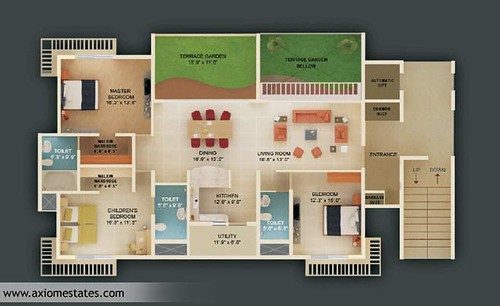
Every few months a headline lands that makes NRIs and first-time buyers do a double take. This time it was Deutsche Bank's finding, published in its annual global affordability comparison, that Delhi has among the cheapest residential property prices of any major world city when measured against local incomes and per-square-metre cost in dollar terms. If you've been sitting on the fence about buying in NCR, that word "cheapest" hits differently. It sounds like a green light. But is it?
Here's the uncomfortable truth I've seen play out with dozens of buyers over the years: "cheap" and "good value" are not the same thing. A flat in an unregistered project on the outskirts of Ghaziabad is cheap. It is rarely a good investment. Deutsche Bank's number is a macro signal built on averages and currency conversion. Your purchase happens at the micro level, in a specific tower, on a specific khasra number, with a specific builder's track record. The gap between those two is where people lose lakhs.
This post unpacks what the Delhi affordability finding actually means, why the number looks the way it does, and how to translate a global headline into a grounded buying decision. We'll walk through Delhi property affordability 2026 with real rupee figures, a worked case study, a comparison of NCR micro-markets, and a due-diligence checklist you can hand to your lawyer or broker. By the end you'll know whether the low prices are an opportunity for you or a warning to slow down.
Key Takeaways
- Delhi looks cheap globally mainly because of a weak rupee and low per-capita income base, not because NCR real estate is undervalued relative to Indian buyers.
- Affordability varies wildly inside NCR. Central Delhi is still expensive; the "cheap" number is pulled down by peripheral and older housing stock.
- The real risks are title clarity, RERA registration, and builder delivery record, not the headline price.
- For end-users and long-hold investors, current NCR pricing offers genuine entry points in Dwarka Expressway, New Gurgaon, and parts of Noida.
- Run a strict due-diligence checklist before you pay any token amount, and verify RERA status before believing a single brochure claim.
- NRIs get extra leverage from the exchange rate but face repatriation and TDS rules that must be planned upfront.
Why does Delhi property look the cheapest in the world?
The Deutsche Bank comparison, like most global affordability studies, converts local property prices into US dollars and stacks them against average local salaries. Two things drag Delhi down the price ladger, and neither is really about the intrinsic quality of the asset.
First, the rupee. When the dollar strengthens, everything priced in rupees looks cheap to an outside observer. A ₹1.2 crore flat that felt expensive to a Delhi salaried buyer converts to a modest dollar figure that looks like a bargain next to London, Singapore, or Sydney. That's a currency story, not a property story.
Second, the income base. These studies often use average or median local income. India's per-capita income is far lower than developed economies, so the price-to-income ratio can look distorted at the city aggregate level even when a specific 3BHK in South Delhi is genuinely unaffordable for a middle manager.
So when you read "cheapest globally," mentally translate it to: "cheap in dollar terms for someone earning in dollars or pounds." That's why NRIs and foreign-currency earners should pay close attention. For them, the discount is real. For a purely rupee-earning local buyer, the headline is far less meaningful, and if you want the honest local picture you should compare NCR against Hyderabad, Pune, and Bengaluru rather than against Manhattan.
What the headline does not tell you
- It's a city average. It blends Lutyens' bungalow zones with peripheral group housing. The "cheap" is mostly the periphery and ageing stock.
- It ignores carpet-area versus super-area games that inflate the price you actually pay per usable foot.
- It says nothing about liquidity. A cheap asset you can't resell in under a year is not cheap; it's illiquid.
- It doesn't factor holding costs: maintenance, property tax, and interest if you're leveraged.
Is low pricing a buyer's opportunity or a red flag in NCR?
Both, depending on which pocket of NCR you're looking at. I break the market into three buckets when advising buyers.
Genuine value pockets. Areas where infrastructure has caught up but prices haven't fully repriced. Dwarka Expressway, parts of New Gurgaon (Sectors 79 to 95), and Noida sectors along the upcoming metro extensions. Here, "cheap" is a lag, not a defect. These are the pockets a long-hold investor wants.
Value traps. Distressed or stalled projects where the price is low because delivery risk is high. Several Noida Extension and Greater Noida projects fell into this bucket after the NBCC and Amrapali fallout. The sticker looks great. The chance of getting possession on time does not.
Fairly priced core. South Delhi, Gurgaon's Golf Course Road, Central Delhi. These aren't cheap and never will be. The global headline barely touches them.
Pro Tip: When a project is priced 20 to 30 percent below comparable inventory in the same micro-market, that discount is almost never generosity. It's pricing in a risk the market has spotted. Before you celebrate the deal, find out what that risk is: litigation, delayed approvals, a weak builder balance sheet, or an encroachment dispute. If your broker can't explain the discount, walk.
A worked example: how an NRI buyer evaluated a Gurgaon 3BHK
Let me make this concrete. A client of mine, a software engineer based in Dubai earning in dirhams, wanted to buy in Gurgaon in early 2026. The dollar-rupee rate made everything feel like a steal. His shortlist was a ₹1.85 crore 3BHK on Dwarka Expressway (RERA-registered, established builder) versus a ₹1.32 crore 3BHK in a peripheral Sohna project promising the same specs.
On paper the Sohna flat was 29 percent cheaper. Here's how the numbers actually shook out once we modelled it properly.
| Factor | Dwarka Expressway (₹1.85 Cr) | Sohna peripheral (₹1.32 Cr) |
|---|---|---|
| RERA status | Registered, on-schedule | Registered, 14-month delay flagged |
| Builder delivery record | 4 projects delivered on time | First large project |
| Expected possession | 18 months | 36+ months (realistic) |
| Rental yield (est.) | 3.1% | 1.8% (thin tenant demand) |
| 5-year resale liquidity | High | Low |
| Effective cost incl. delay risk | ₹1.85 Cr | ~₹1.55 Cr adjusted |
Once we priced in the extra 18 months of no rent, the interest cost on his self-funded portion, and the resale discount he'd eventually take on an illiquid asset, the "cheap" Sohna flat's effective cost climbed to roughly ₹1.55 crore. The gap narrowed from 29 percent to under 17 percent, and that remaining gap was entirely a delivery-risk premium he'd be absorbing personally.
He bought the Dwarka Expressway flat. Two years on, it's delivered, rented at ₹48,000 a month, and up about 22 percent on paper. The Sohna project is still not handed over. The lesson: the cheapest number rarely survives contact with a proper model. If you want to see how the southern markets compare on this exact math, our breakdown of South India's real estate momentum in H1 2026 is a useful counterpoint.
What due diligence should you run before buying in Delhi NCR?
This is where most buyers get lazy, and where the cheap headline does real damage. A low price makes people skip steps because the deal "feels" good. Do not. Here's the sequence I run every time.
- Verify RERA registration. Pull the project up on the relevant state RERA portal (HRERA for Gurgaon/Sohna, UP-RERA for Noida, Delhi-RERA for Delhi proper). Check the registration number matches the brochure, and read the quarterly progress filings. A registered project with stalled filings is a warning.
- Title search and encumbrance certificate. Get a property lawyer to trace the title chain for at least 30 years and pull the encumbrance certificate from the sub-registrar. This catches mortgages, disputes, and ownership gaps.
- Check the land use and conversion. Confirm the land is approved for residential use and that agricultural-to-residential conversion (if applicable) is complete. This trips up buyers in Sohna and Greater Noida constantly.
- Builder financial health. Look at how many projects the builder has delivered, whether any are in NCLT, and their debt position. A cheap flat from an overleveraged builder is a delivery gamble.
- Approvals stack. Environmental clearance, fire NOC, completion/occupancy certificate for ready units. Never take possession without an occupancy certificate.
- Carpet vs super area. Insist on the carpet area figure and compute your real per-square-foot cost. RERA mandates carpet-area disclosure; use it.
- All-in cost model. Add stamp duty (around 6% in Delhi, 7% in Haryana with variations), registration charges, GST on under-construction (5% without ITC), maintenance deposit, and parking. The sticker price is never the final number.
If you're financing the purchase, this is also the moment to shop your loan aggressively. Rates move, and if you're carrying an existing loan, a home loan balance transfer in 2026 can save several lakhs over the tenure. Don't accept the first bank's sheet.
How should NRIs approach the currency-driven discount?
NRIs are the natural winners of a "cheapest globally" moment, because the discount is real for them. But leverage on the buy side must be matched by discipline on the compliance side.
Key rules to plan around:
- Payment routing. Purchases must run through NRE, NRO, or FCNR accounts via normal banking channels. No cash, no informal transfers.
- TDS on purchase. When buying from a resident seller, TDS applies; when an NRI later sells, the buyer must deduct TDS at the applicable rate, which is materially higher than the resident 1%. Plan the cash flow.
- Repatriation limits. Sale proceeds repatriation is capped and conditioned. Get this modelled before you buy, not after.
- Property type restriction. NRIs can buy residential and commercial property freely, but not agricultural land, farmhouses, or plantation property.
We've written a full guide on NRI property investment rules, tax and repatriation for 2026 that goes deeper into the tax mechanics. Read it before you wire a rupee.
Common Mistake: NRIs frequently buy under-construction property attracted by the low entry price and the exchange rate, then discover their repatriation is limited to the amount originally remitted through banking channels plus certain conditions. If you funded partly through an NRO account with domestic income, the repatriation math changes. Structure the funding source deliberately at purchase, because you cannot easily rewrite it at sale.
Does the Delhi affordability story hold up against other Indian cities?
For an Indian buyer, the more useful comparison isn't Delhi versus London. It's Delhi versus the other metros where you might deploy the same capital.
| City | Entry 3BHK (decent locality) | Rental yield | Price momentum 2026 |
|---|---|---|---|
| Delhi NCR (Dwarka Expwy) | ₹1.6–2.0 Cr | ~3% | Steady, infra-led |
| Hyderabad (western corridor) | ₹1.1–1.6 Cr | ~3.5% | Hot, some overheating |
| Bengaluru (Whitefield/North) | ₹1.4–2.2 Cr | ~3.5% | Firm, IT-driven |
| Pune (Hinjewadi) | ₹1.0–1.5 Cr | ~3.8% | Balanced |
Delhi NCR isn't the cheapest among Indian metros for quality stock, and it isn't the highest yielding. What it offers is depth, established social infrastructure, and a large resale market. If yield is your priority, Pune and Hyderabad may beat it. If you value a deep, liquid market with strong tenant demand and don't want a bubble worry, NCR's stability is a feature. On the Hyderabad question specifically, our analysis of the Hyderabad property boom in 2026 is worth reading before you chase the higher yield.
One more trend worth noting: buyers across metros, including NCR, are trading up. We covered why in the shift toward premium housing in 2026. That premium demand is part of why the entry-level "cheap" segment can feel disconnected from where the market's energy actually is.
How eDarpan Properties helps you act on this
A macro headline is easy to read and hard to act on responsibly. That's the gap we built eDarpan Properties to close. Whether you're an end-user or an investor, we help you filter the genuine value pockets from the value traps using the same due-diligence discipline I described above.
If you're ready to look at inventory, browse verified properties for sale across India or, if you're testing a market before committing capital, our rental listings let you live in an area first. NRIs setting up an Indian business footprint alongside a property purchase often need a compliant registered address, and our virtual office solutions for GST and company registration handle that cleanly.
When you want a second opinion on a specific project's risk profile, or help structuring an NRI purchase, talk to our team. You can also learn more about how eDarpan works before you engage.
Frequently asked questions
Is Delhi really the cheapest property market in the world?
By some global comparisons that convert prices to dollars and measure against local incomes, Delhi ranks among the most affordable major cities. But this is heavily influenced by the weak rupee and India's lower income base, so the "cheapest" label is far more meaningful to foreign-currency earners than to local rupee-earning buyers.
Does cheap Delhi property mean it's a good time to buy in 2026?
It can be, but only in the right pockets and after proper due diligence. Low prices in stalled or litigation-hit projects are a red flag, while genuine value exists along infrastructure corridors like Dwarka Expressway and New Gurgaon where prices lag the improved connectivity.
What is the safest area to buy property in Delhi NCR?
Safety here means delivery certainty and resale liquidity, not just crime. RERA-registered projects from builders with a strong delivery record in established micro-markets such as Golf Course Road, Dwarka Expressway, and central Noida sectors carry the lowest risk, even if they cost more than peripheral options.
How much does it actually cost to buy a flat in Delhi beyond the sticker price?
Budget for stamp duty (around 6% in Delhi, higher in Haryana), registration charges, 5% GST on under-construction property, maintenance deposits, parking, and legal fees. These typically add 8 to 12 percent on top of the quoted price, so always model the all-in cost.
Can NRIs buy property in Delhi NCR and repatriate the money later?
Yes, NRIs can buy residential and commercial property (not agricultural land or farmhouses) through banking channels using NRE, NRO, or FCNR accounts. Repatriation of sale proceeds is allowed within limits and conditions, so structure your funding source at purchase to keep repatriation straightforward later.
Why does the same 3BHK cost so differently within NCR?
Because price reflects delivery risk, builder reputation, infrastructure, and resale demand, not just square footage. A discount of 20 to 30 percent versus comparable inventory usually prices in a specific risk such as delayed approvals, litigation, or a weak builder, so always ask what the discount is compensating for.
Should I buy in Delhi or a higher-yield city like Hyderabad or Pune?
If rental yield is your main goal, Pune and Hyderabad often edge out NCR. If you want a deep, liquid market with strong tenant demand and lower bubble risk, Delhi NCR's stability is an advantage. Match the city to your objective rather than the headline.
The bottom line
The Deutsche Bank finding is a real signal, but it's a macro one. Read correctly, Delhi property affordability 2026 tells you that foreign-currency buyers and patient long-hold investors have a genuine window in the right NCR pockets. Read lazily, it lures you into a cheap flat that never gets delivered. The difference between those two outcomes is entirely in the due diligence you run before you pay a token amount.
Treat "cheapest globally" as an invitation to look, not a reason to skip the checklist. Verify RERA, trace the title, price the all-in cost, and match the asset to your actual goal. If you do that discipline consistently, the current market genuinely does offer some of the best entry points NCR has seen in years. When you're ready to move from reading to evaluating specific inventory, eDarpan Properties is built to help you do exactly that, without the hype.
Image credit: Pune Properties - Real Estate India - Vascon Willows Floorplan by nancyarora2020 via flickr (BY-SA 2.0), sourced through Openverse.
Written by
Rajesh Tiwari
Real estate analyst covering property markets across Delhi NCR, Mumbai, and Bangalore. Rajesh tracks pricing trends, RERA compliance, and investment opportunities for residential and commercial buyers.
Looking for a technology partner?
From IT consulting to virtual office to custom software — eDarpan can help.
Continue reading
Rental Yields in Delhi-NCR 2026: Which Areas Pay Landlords
Discover which Delhi-NCR areas actually pay landlords in 2026. Compare gross vs net yields across Gurgaon, Noida & Ghaziabad micro-markets with real numbers.
Grade A vs Grade B Office Space in India 2026: What to Lease
The Grade A premium can cost you 40-70% more for the same carpet area. Learn when grade A office space in India is worth it and when you're just paying for a marble lobby.
Fractional Real Estate Investing in India 2026: SM REITs Guide
Own a regulated slice of commercial property from ₹10 lakh. Here's how fractional real estate investing in India works under SEBI's 2024 SM REIT rules.