Verifying an Under-Construction Project on RERA Before You Pay
A 40-minute RERA project verification can save 20-30% of your savings from a stalled build. Learn how to verify an under-construction project before you pay.

Last month a client called me in a panic. He'd paid ₹18 lakh as booking amount plus first two instalments on a "RERA-approved" apartment in Greater Noida West. The problem? The registration number the builder printed on the brochure belonged to a completely different tower in the same township, and the actual project he'd booked into had lapsed on its RERA registration eight months earlier. Possession was promised for December 2024. As of today, the site has a boundary wall and a marketing office. Nothing else.
This is not a rare story in Delhi-NCR. As of the last public counts, the UP-RERA and Haryana RERA portals together list several thousand registered projects, and a meaningful chunk of the older ones carry complaints, extension requests, or lapsed registrations. The buyer almost never checks. They trust the sample flat, the glossy AutoCAD render, and a salesperson who says "sir, sab RERA-approved hai." Proper RERA project verification takes about 40 minutes and can save you from parking 20-30% of your life savings in a project that may not deliver for a decade.
In this post I'll walk you through exactly how to verify an under-construction project before you pay a single rupee: how to find and validate the registration number, how to read the project timeline and quarterly progress, how to pull the builder's complaint history, and the specific red flags that should make you walk away. I'll use real portal steps for UP-RERA and Haryana RERA since that's where most NCR demand sits.
Key Takeaways
- Never rely on the RERA number printed in a brochure. Verify it directly on the state RERA portal and match the project name, promoter name, and tower number exactly.
- A registered project can still be a bad bet. Check the declared completion date, the number of extensions filed, and quarterly progress reports.
- Search the promoter's name across all their projects, not just the one you're buying. A builder with 40 open complaints on other towers is telling you something.
- Match the sanctioned plan area and the carpet area on RERA against what the builder-buyer agreement says. Mismatches here become disputes later.
- Cap your booking-stage exposure. Pay only what construction stage justifies, and insist the RERA number appears in the agreement itself.
- Keep every receipt and the RERA project page as a dated screenshot. If it goes to a complaint, this is your evidence.
Why RERA registration matters more for under-construction than ready-to-move
The Real Estate (Regulation and Development) Act, 2016 was designed almost entirely to protect the under-construction buyer. A ready-to-move flat you can inspect, measure, and take possession of the same day. An under-construction booking is a promise, and RERA is the enforcement mechanism behind that promise.
Under the Act, any project on land larger than 500 square metres or with more than 8 apartments must register with the state RERA authority before the builder can advertise, market, or accept booking money. That last part is critical. If a builder is collecting your ₹5 lakh booking amount for an unregistered project, they are already breaking the law, and you have far less protection when things go wrong.
Registration also forces the builder to declare a completion date, deposit 70% of collections into a dedicated project escrow account, and file quarterly progress updates. This is your paper trail. When possession is delayed, that declared date is what entitles you to interest and, in some cases, a full refund. I've covered the refund mechanics separately in RERA Carpet Area Refund: How to Claim When Builder Delays Possession, and I'd read it before you sign anything.
The three portals NCR buyers need
- UP-RERA (up-rera.in) for Noida, Greater Noida, Ghaziabad, and the wider UP side of NCR.
- Haryana RERA — note there are two benches, Gurugram (haryanarera.gov.in) and Panchkula. For Gurgaon and Faridabad you'll use the Gurugram authority.
- Delhi RERA (rera.delhi.gov.in) for projects within Delhi, though genuinely new under-construction supply inside Delhi is limited.
How do I check if a builder's RERA registration is genuine?
Here is the step-by-step I run for every client before they release booking money. Do this yourself; don't let the sales team do it "for you" on their laptop.
- Get the exact registration number from the builder in writing. Ask for it over email or WhatsApp, not verbally. The format on UP-RERA looks like
UPRERAPRJ123456. On Haryana it's typically likeRC/REP/HARERA/GGM/.... Screenshot their reply. - Open the official portal directly. Type the URL yourself. Do not click a link the builder sends you, since spoofed lookalike pages exist.
- Use the "Registered Projects" search. On UP-RERA, go to the project search and enter either the registration number or the project name. Enter the number first because names get duplicated across townships.
- Match four things exactly: the project name, the promoter/company name, the district, and the tower or phase. A builder may have registered Tower A and B but be selling you an unregistered Tower C under the same brand.
- Check the registration validity date. Every registration has a "proposed completion date" and a "registration valid up to" date. If that date has passed and the project is incomplete, the registration has lapsed and the legal protection weakens sharply.
- Download the registration certificate PDF. The genuine page lets you open the actual RERA certificate. Read the registered land area and the number of units. This is the sanctioned scope.
Common Mistake: Buyers verify that the RERA number "exists" and stop there. Existence is not enough. I've seen a valid registration where the declared completion date was already 14 months in the past and the builder had filed three extension applications. The number was 100% genuine and the project was 100% stuck. Always read the dates and the extension history, not just the green "registered" tick.
Reading the project timeline and quarterly progress like an auditor
Once you've confirmed the project is genuinely registered, the timeline is where the truth lives. RERA requires the builder to upload quarterly progress reports (QPRs) covering construction status, funds collected, and funds spent.
On the project page, look for these tabs or documents:
- Proposed completion date vs revised completion date. One revision can be genuine. Three or four is a pattern of failure.
- Quarterly Progress Reports. Compare "physical progress" percentages quarter over quarter. If the tower was 40% complete in Q1 2024 and still shows 42% a year later, construction has effectively stalled regardless of what the site office claims.
- Financial disclosures. The 70% escrow rule means collections should broadly track construction. If a builder has collected large sums but the physical progress lags badly, the money may have been diverted to other projects.
- Amendments to the registration. Look for changes in unit count, layout, or common area. Any change to the plan you were sold matters.
A worked example: two projects, same locality
A client couple wanted a 2BHK in Noida Extension, budget around ₹75 lakh all-in. They shortlisted two under-construction projects a kilometre apart. Both were "RERA registered." Here's what the verification actually surfaced.
Project A had registered in 2021, declared completion December 2024, and its QPRs showed steady progress: 35% in early 2023, 68% by mid-2024, 84% by late 2024. Two complaints on the portal, both marked resolved. Escrow collections tracked construction reasonably.
Project B registered in 2019, original completion December 2022, already revised twice to December 2025. QPRs showed physical progress crawling from 30% to 38% over two years. The promoter had 27 open complaints across three of their projects, several about delayed possession and refund non-payment.
Project B's per-square-foot price was ₹800 lower, and the sales team pushed it hard with a "limited launch discount." The couple booked Project A instead. Eight months later, Project B's registration lapsed and a fresh batch of complaints hit the portal. The ₹6-7 lakh they'd have "saved" on paper would have been locked in an indefinitely delayed asset.
How do I check a builder's RERA complaint history?
This is the step almost everyone skips, and it's often the most revealing. A builder's complaint record is public.
- On the state RERA portal, look for a section named "Complaints", "Adjudication", or "Orders". UP-RERA and Haryana RERA both publish orders passed against promoters.
- Search by the promoter name, not just the project. This is the key move. A builder often sells under a project brand but registers under a company name (an SPV). Get both, and search both.
- Read a few orders in full. You're looking for patterns: repeated possession delays, refusal to pay delay interest, unilateral changes to layout, or non-refund after cancellation.
- Note whether the builder complies with orders. Some builders lose complaints and still don't pay, forcing buyers into recovery proceedings. That behaviour predicts your own future.
Cross-check the promoter name against the Ministry of Corporate Affairs (MCA) portal too. Look at the company's status, directors, and any strike-off or litigation flags. A builder floating a brand-new SPV with no track record for a large project deserves extra scrutiny.
Comparison: what genuine RERA verification should turn up
Here's a simple scoring framework I give clients. Rate the project on each row before you decide.
| Check | Green (proceed) | Amber (negotiate/caution) | Red (walk away) |
|---|---|---|---|
| Registration status | Valid, matches project & tower exactly | Valid but expiring within 6 months | Lapsed, or number belongs to another tower |
| Completion date revisions | None, or one genuine extension | Two revisions | Three or more revisions |
| Quarterly physical progress | Rising steadily, on track for date | Slow but moving | Flat / stalled for 2+ quarters |
| Open complaints (promoter) | 0-2, resolved | 3-10, mixed outcomes | Many open, non-compliance with orders |
| Escrow vs collection alignment | Funds spent track construction | Minor mismatch | Large collections, little progress |
One red row is enough for me to advise a client to stop. Two ambers usually means a hard renegotiation on payment schedule and possession penalties before we go further.
Structuring your payment so a delay doesn't wipe you out
Verification tells you whether to buy. Payment structuring protects you if you do. Even a good project can slip, so cap your exposure at every stage.
- Insist on construction-linked payments (CLP), not time-linked. You pay as slabs get cast, not as months pass. This is your single biggest protection against a stalled site.
- Keep the booking amount modest. A booking of ₹2-5 lakh is normal; being pushed to pay 20-25% upfront for a project that's only at foundation stage is a warning.
- Read the delay clause in the builder-buyer agreement. The interest the builder pays you for delay should mirror the interest you pay them for late payment. Many agreements are lopsided. Negotiate it.
- Make sure the RERA registration number appears inside the agreement, along with the carpet area (not super built-up) and the exact possession date.
If you're stretching your budget to buy, run the numbers against your income first. The framework in EMI vs Income: The Affordability Rule Before You Buy in 2026 is a useful sanity check before you commit to years of instalments on an under-construction unit. And if you're weighing whether to buy now at all, Housing Sales Dropped 6% in Q2: Is It a Buyer's Market Now? puts the current NCR demand picture in context.
Special cases: NRIs and fractional/commercial buyers
The verification steps are identical, but two buyer groups have extra layers.
NRIs face the added FEMA, repatriation, and TDS dimensions on top of RERA. If you're buying under-construction from abroad, get someone physically checking the site and portal on your behalf, and read NRI Buying Property in India: FEMA Rules, Taxes & Repatriation before wiring funds. Distance makes you more vulnerable to a paper-only project.
Commercial and fractional buyers should verify the commercial registration separately, since some builders register the residential phase but not the retail or office component. If you're exploring shared ownership of office or retail assets, Fractional Ownership of Commercial Property in India: A Guide walks through the structure and the specific diligence it needs.
How eDarpan helps you verify before you pay
Most buyers I meet are IT and business people who understand due diligence in their own field but have never navigated a state RERA portal. That's the gap eDarpan Properties is built to close. We pull the registration record, read the QPRs and complaint orders, cross-check the promoter on MCA, and give you a plain-English green/amber/red verdict before you commit money.
If you're actively shortlisting, browse verified listings for properties for sale in India or, if you'd rather wait out an uncertain market, rental properties in India. And when you're ready for a second opinion on a specific project, reach out to our team before you sign the booking form, not after.
eDarpan also runs a wider technology and compliance practice: our IT consulting and broader services help SMBs with everything from cloud migration to virtual office addresses for GST and company registration, which is often the first step when a developer or brokerage sets up a new entity.
Frequently asked questions
Is it safe to book a flat that is RERA registered?
RERA registration is necessary but not sufficient. It confirms the project is legally allowed to be sold and creates a paper trail, but a registered project can still stall. Always check the completion date, quarterly progress, and complaint history before treating "registered" as "safe".
How do I find a project's RERA number if the builder won't share it?
Search the state RERA portal's registered projects section by project name and district. If a genuine, actively marketed project cannot be found on the portal by name, that itself is a serious red flag and grounds to walk away.
What happens if I've already paid and the RERA registration has lapsed?
You still have remedies. You can file a complaint with the state RERA authority for delay interest or refund, and a lapsed registration doesn't erase your rights under the original agreement. Keep all receipts and dated screenshots of the project page, and see our guide on claiming a delayed-possession refund.
Can a builder collect booking money before RERA registration?
No. Under the Act, a builder cannot advertise, market, sell, or accept any advance for a project that requires registration until it is registered. If you're being asked to pay for a "pre-launch" that isn't yet on the RERA portal, you're taking on significant legal risk.
How often should I check the RERA portal after booking?
Check every quarter when new progress reports are due. If physical progress flattens for two consecutive quarters or a new completion-date revision appears, treat it as an early warning and consult a real estate advisor promptly.
Does RERA cover the carpet area versus super built-up area confusion?
Yes. RERA mandates pricing and sale on carpet area, the actual usable floor area. Make sure the agreement and the RERA record both state carpet area, and match the two. Any discrepancy here is a common source of later disputes.
Is the RERA process the same across Delhi, Noida, and Gurgaon?
The core law is the same, but each state runs its own portal and authority with slightly different search interfaces and disclosure formats. NCR buyers typically deal with UP-RERA for Noida/Ghaziabad, Haryana RERA (Gurugram bench) for Gurgaon/Faridabad, and Delhi RERA within Delhi.
The bottom line
An under-construction flat is one of the largest financial commitments most families make, and it's also the one where the buyer does the least homework. Forty minutes of proper RERA project verification — confirming the registration matches the exact tower, reading the timeline and quarterly progress, pulling the promoter's full complaint history, and structuring your payments to construction milestones — separates a sound investment from a decade of stuck money.
Do the checks yourself, or let eDarpan Properties do them with you. Either way, verify first, then pay. Never the other way around.
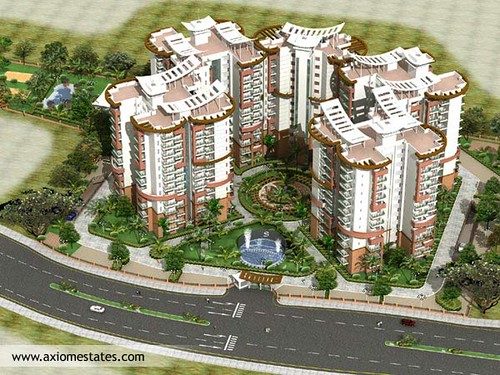
Image credit: Kolkata Properties - Real Estate India -Siddha Xanadu Interiors by nancyarora2020 via flickr (BY-SA 2.0), sourced through Openverse.
Written by
Rajesh Tiwari
Real estate analyst covering property markets across Delhi NCR, Mumbai, and Bangalore. Rajesh tracks pricing trends, RERA compliance, and investment opportunities for residential and commercial buyers.
Looking for a technology partner?
From IT consulting to virtual office to custom software — eDarpan can help.
Continue reading
RTO Mandates & Office Space Demand in India 2026: What to Know
RTO mandates and GCC expansion are driving up office rents in India. Here's what SMB founders need to know about leasing, flexible offices, and costs in 2026.
Fractional Ownership of Commercial Property in India 2026
SEBI now regulates fractional ownership via SM REITs. Learn how to own Grade-A commercial property in India from ₹10 lakh, plus returns, risks and a diligence checklist.
Capital Gains Tax on Property Sale in India 2026: Save Legally
A retiree saved ₹19 lakh legally by choosing the right method. Learn how capital gains tax on property sale in India works in 2026 and where the real savings hide.