WhatsApp Marketing ROI 2026: What Indian SMBs Actually Earn
Real 2026 numbers on WhatsApp marketing ROI for Indian SMBs: message costs, conversion benchmarks, and a worked example to estimate returns before you spend.
Last month I sat across from a distributor in Pune who runs a mid-sized FMCG business. He'd spent close to ₹80,000 over four months on WhatsApp campaigns through a reseller and had no idea whether it worked. His exact words: "The vendor shows me delivery reports, but where is my return?" That question, more than any pricing table, is what this post is about.
Here's a number that surprises most SMB owners: WhatsApp messages in India open at roughly 75–90%, while the promotional emails they've been buying for years sit at 15–20%. That gap is real and it's why WhatsApp works. But high open rates don't automatically mean high returns. I've seen businesses burn money on the platform just as easily as they've made it. The difference is whether they calculated the maths before they started.
In this post I'll break down actual cost-per-message under Meta's 2026 pricing, realistic open and conversion benchmarks by industry, and a full worked example so you can estimate your own WhatsApp marketing ROI India before you commit a single rupee. No vanity metrics, no jargon. Just the numbers I'd walk a client through.
Key Takeaways
- Under Meta's per-message pricing model, your real cost driver is the number of conversations you initiate, not the number of messages you send. Marketing template messages cost roughly ₹0.78–0.88 each in India.
- Open rates of 75–90% are genuine, but conversion is where money is made or lost. Expect 2–8% conversion on a warm, opted-in list; well below 1% on a cold or scraped one.
- The single biggest ROI killer is a bad list. A clean, consented database of 2,000 buyers beats a rented list of 50,000 strangers every time.
- Utility and authentication messages (order updates, OTPs) are far cheaper than marketing messages and often deliver the best hidden ROI through repeat purchases.
- Budget for the full stack: BSP fees, template message costs, a person to manage it, and creative. The per-message price is only about 40% of your true spend.
- Track revenue per campaign with a unique landing page or coupon code. If you can't attribute sales, you can't calculate ROI, full stop.
How much does a WhatsApp marketing message actually cost in India in 2026?
Meta moved to per-message pricing on the WhatsApp Business Platform, replacing the older per-conversation model. This matters because your billing now depends on message categories, not 24-hour windows. There are four categories: marketing, utility, authentication, and service.
As a working estimate for India (rates shift, so always confirm with your provider), here's what you're paying at the Meta rate card level:
- Marketing messages: around ₹0.78–0.88 per delivered message. This is your promotional stuff: offers, launches, festive campaigns.
- Utility messages: roughly ₹0.11–0.16 per message. Order confirmations, shipping updates, payment reminders.
- Authentication messages: approximately ₹0.11–0.14 per message. OTPs and login codes.
- Service messages: these are user-initiated conversations and are generally free within the session window.
On top of Meta's rate, your Business Solution Provider (BSP) adds their own markup or platform fee. Some charge a flat monthly subscription (₹1,500–₹8,000/month depending on features), some add a per-message margin of 10–30%, and some do both. This layered pricing is exactly why the Pune distributor couldn't see his real cost. He was looking at a bundled invoice.
Pro Tip: Before signing with any BSP, ask them to show you the Meta base rate and their markup separately on a sample invoice. If a provider refuses to break this out, walk away. Transparency here is the number one predictor of whether you'll be able to calculate returns later. If you'd rather skip the vendor-vetting headache entirely, our team handles this setup as part of our WhatsApp Business API onboarding and shows you the split upfront.
What are realistic open, click, and conversion rates for Indian SMBs?
Benchmarks get thrown around loosely, so let me give you ranges I've actually observed across retail, D2C, education, and services clients. These assume an opted-in audience, which is both a legal requirement and a practical one.
| Metric | Poor (cold/rented list) | Typical (opted-in list) | Strong (engaged buyers) |
|---|---|---|---|
| Delivery rate | 60–75% | 92–97% | 97–99% |
| Open/read rate | 40–55% | 70–85% | 85–95% |
| Click-through rate | 1–3% | 8–15% | 15–30% |
| Conversion to purchase | Under 1% | 2–5% | 5–12% |
| Opt-out per campaign | 8–15% | 1–3% | Under 1% |
Notice how the poor column isn't just weaker, it's dangerous. High opt-out rates and low delivery on a cold list signal to Meta's quality system that people don't want your messages. That drags down your quality rating, which can throttle your sending limits or get your number flagged. If you're unsure about the rules here, our post on WhatsApp bulk messaging rules for 2026 covers what actually gets numbers banned.
WhatsApp marketing ROI India: a full worked example
Let me walk through a real scenario, lightly anonymised. A Jaipur-based D2C brand selling handmade home décor came to us wanting to run their Diwali campaign on WhatsApp. Average order value was ₹2,400. They had a database of 6,000 past customers and website enquiries, all opted in through their checkout and a website widget.
The cost side
- Marketing template messages: 6,000 messages at ₹0.85 = ₹5,100 per send. They planned three sends across the festive window (teaser, launch, last-chance), so 18,000 messages = ₹15,300.
- BSP platform fee: ₹4,000/month on a mid-tier plan.
- Creative and copy: ₹8,000 one-time for images, catalogue setup, and template approval.
- Management time: roughly 15 hours of a marketing coordinator's time, valued at about ₹6,000.
Total campaign spend: ₹33,300.
The revenue side
Across the three sends, unique reach was about 5,600 customers (some overlap between sends). Read rate averaged 81%. Click-through to the catalogue and offer page ran at 11%, giving roughly 616 clicks. Conversion from click to order landed at 6.5%, which is strong but realistic for a warm festive audience buying gifts they already trust.
That's about 40 orders at ₹2,400 average = ₹96,000 in revenue.
Return calculation: (₹96,000 − ₹33,300) ÷ ₹33,300 = roughly 188% ROI, or about 2.88x on spend. And that ignores the repeat purchases some of those buyers made in January, which is where WhatsApp's real long-term value sits.
Common Mistake: Most owners would look at this and say "great, let's message 60,000 people next time." That's the trap. When they scaled to a rented list of 40,000 the following quarter, delivery dropped to 68%, opt-outs spiked, and conversion fell under 1%. The campaign lost money and their quality rating took a hit that took weeks to recover. Volume without consent doesn't scale ROI, it inverts it.
How do I choose a WhatsApp Business API provider in India?
You cannot use the free WhatsApp Business app for serious marketing at scale. You need the API, and the API is accessed through a BSP. Here's how the common options compare on what actually matters to an SMB.
| Provider type | Typical monthly cost | Best for | Watch out for |
|---|---|---|---|
| Global BSP (large platforms) | ₹5,000–₹25,000+ | High volume, multi-channel, robust APIs | Overkill and pricey for small senders; USD billing swings |
| Indian mid-market BSP | ₹2,000–₹8,000 | SMBs wanting local support and INR billing | Feature depth varies; check automation limits |
| Low-cost reseller | ₹999–₹2,500 | Very small senders, simple broadcasts | Opaque markups, weak analytics, poor support |
| Managed setup via consultant | Setup + ongoing | Owners who want it done right without learning it | Pick one who shows you the Meta base rate |
For most SMBs doing under 50,000 messages a month, an Indian mid-market BSP or a managed setup makes the most sense. INR billing avoids currency surprises, and local support matters when a template gets rejected the night before your sale. We help clients pick and configure the right one through our IT consulting practice, and if you want the whole thing handled end to end, our WhatsApp Business API service covers verification, template approval, and integration.
What does it take to set up WhatsApp API the right way?
If you want to brief a vendor properly or do it in-house, here's the actual sequence. None of these steps are optional if you want good deliverability.
- Register a Meta Business Manager account and complete business verification. You'll need your GST certificate, company registration, and a matching business address. This verification alone can take 2–10 working days.
- Get a dedicated phone number that isn't already registered on a personal WhatsApp account. Many businesses use a fresh SIM or a virtual number for this.
- Connect through your chosen BSP and complete the display name approval. Meta reviews your business display name, and vague or misleading names get rejected.
- Apply for the green tick (optional) official business account badge. It boosts trust but isn't guaranteed; Meta grants it based on brand notability.
- Build and submit message templates for approval. Marketing templates must be clear, non-spammy, and include an opt-out path. Approval is usually within minutes to a few hours, but rejections happen for pushy language.
- Set up opt-in capture on your website, checkout, and physical store. Consent must be explicit and logged. This is your legal and ROI foundation.
- Integrate with your CRM or catalogue so you can segment, personalise, and track. This is where a proper integration pays off versus blasting the same message to everyone.
- Warm up your number by starting with lower volumes and utility messages before heavy marketing sends. This protects your quality rating.
If your business also needs a verifiable GST business address to clear that verification step, our virtual office for GST and company registration is a practical shortcut that plenty of our clients use before applying.
Which message types give the best hidden ROI?
Everyone obsesses over marketing broadcasts, but the quiet money-maker is utility messaging. Order confirmations, dispatch alerts, delivery updates, and payment reminders cost a fraction of marketing messages and drive repeat behaviour without feeling like ads.
Consider a business sending 10,000 order updates a month at roughly ₹0.13 each. That's ₹1,300, and it measurably reduces "where is my order" support calls, cuts refund disputes, and keeps customers engaged so your next marketing message actually gets opened. I've seen businesses whose utility messages carry higher lifetime value per rupee than their promotional ones.
Authentication messages (OTPs) are similarly cheap and reliable, which is why many businesses migrate OTP delivery from SMS to WhatsApp. That said, SMS still has its place for pure reach and for numbers that aren't on WhatsApp, and a blended approach often wins. Our bulk SMS services pair well with WhatsApp for exactly this kind of fallback strategy.
If you're layering AI-driven replies on top of all this, the newer capabilities are worth understanding. Our Meta Business AI on WhatsApp setup guide walks through what's now possible, and for automated voice follow-ups, our AI voicebot can handle the calls WhatsApp can't.
How do I calculate my own WhatsApp campaign ROI before spending?
Here's the formula I give every client. Fill in your own numbers before you approve any budget.
- List size × cost per message × number of sends = your message spend.
- Add BSP fees, creative, and management time = total campaign cost.
- Estimate: list size × delivery rate × read rate × click rate × conversion rate = expected orders. Use the "typical" column from the benchmark table above, not the strong one, when forecasting.
- Expected orders × average order value = expected revenue.
- (Expected revenue − total cost) ÷ total cost = projected ROI.
Run this with conservative numbers first. If it only works when you assume best-case conversion, it doesn't work. And critically, put a unique coupon code or a dedicated landing page URL in every campaign so you can attribute actual sales. Attribution is the difference between knowing your ROI and guessing it.
For businesses that want conversion tracking, catalogues, and payment collection stitched together properly, this often needs a bit of custom software or a mobile app layer. And if you're planning to accept payments directly in chat, read our breakdown of WhatsApp Payments in India for 2026 first.
Frequently asked questions
Is WhatsApp marketing legal for businesses in India?
Yes, provided you have explicit opt-in consent from recipients and use approved message templates through the official Business API. Sending unsolicited promotional messages to scraped or purchased lists violates Meta's policies and can get your number banned. Always capture and log consent.
How much should a small business budget for WhatsApp marketing per month?
A realistic starting budget is ₹8,000–₹20,000 per month, covering BSP fees, message costs for a few thousand contacts, and basic creative. Scale spend only after you've confirmed positive ROI on smaller sends. Don't front-load a huge budget before you've validated your list and offer.
Why are my WhatsApp messages not getting delivered?
Common causes are a low quality rating from spammy sends, recipients who haven't opted in, invalid or non-WhatsApp numbers in your list, or hitting your daily messaging limit. Clean your list, warm up your number gradually, and keep opt-out rates low to protect deliverability.
What's the difference between the WhatsApp Business app and the API?
The free Business app is for manual, small-scale conversations from a single device. The API supports automation, bulk template messaging, CRM integration, and multi-agent access, which is what you need for serious marketing. The API requires a BSP and business verification.
How do I measure ROI if customers buy in-store, not online?
Use a unique offer code in your WhatsApp message that customers mention or show at the counter, and log redemptions at your point of sale. You can also send a WhatsApp-only offer and compare footfall or sales during that window against a baseline period.
Are WhatsApp marketing messages cheaper than SMS in India?
Per message, WhatsApp marketing is often slightly more expensive than transactional SMS, but its far higher open and engagement rates usually deliver better ROI. For OTPs and simple alerts, a blended approach using both WhatsApp and SMS as a fallback tends to be most cost-effective.
Do I need GST registration to set up WhatsApp Business API?
Meta's business verification generally requires documents proving your business is legitimate, and GST registration is one of the strongest. If you're a registered MSME or company, keep your GST certificate and registration handy to speed up verification.
The bottom line
WhatsApp marketing genuinely works for Indian SMBs, but the ROI is earned through discipline, not sending volume. The businesses that profit are the ones with clean opted-in lists, honest cost accounting, proper attribution, and a healthy mix of utility and marketing messages. The ones that lose money chase reach, buy lists, and never track a single conversion back to revenue.
Do the maths before you spend. Forecast with the conservative benchmarks in this post, run a small validated campaign, and scale only what proves out. That's how you turn WhatsApp marketing ROI India from a hopeful guess into a repeatable number on your P&L.
If you'd like this set up properly, from BSP selection and business verification through template approval and CRM integration, that's exactly what we do. Explore our full services overview, dig into our cloud and managed services if you need the backend infrastructure to support it, or just get in touch and we'll help you calculate your expected returns before you commit a rupee. You can also read more about eDarpan and how we work with Indian SMBs.
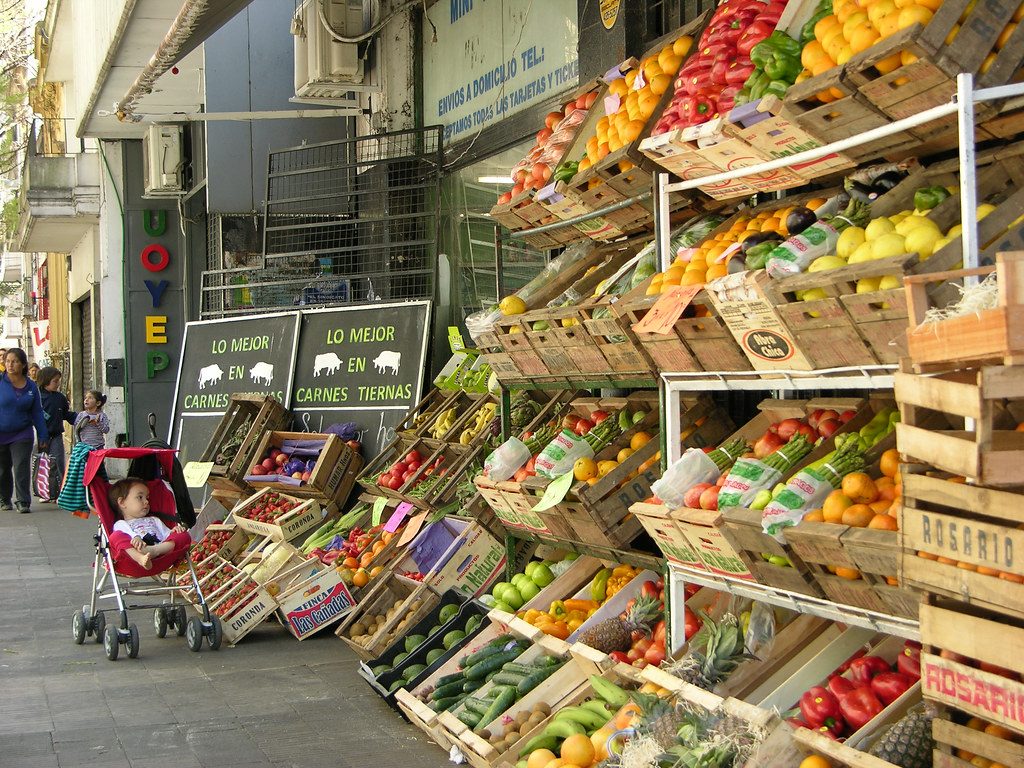
Image credit: Market by alexfiles via flickr (BY-SA 2.0), sourced through Openverse.
Written by
Sneha Pandey
Digital marketing strategist focused on WhatsApp Business API, bulk SMS campaigns, and growth hacking for Indian SMBs. Sneha has helped companies achieve 3x customer engagement through conversational commerce.
Looking for a technology partner?
From IT consulting to virtual office to custom software — eDarpan can help.
Continue reading
Meta Business AI on WhatsApp 2026: Setup Guide for Indian SMBs
Learn how Meta Business AI on WhatsApp helps Indian SMBs answer customers 24x7, plus a step-by-step setup guide and when to switch to the API.
WhatsApp Business API Pricing Changes 2026: What SMBs Pay Now
WhatsApp Business API pricing 2026 shifts to per-message charges by category. Learn the real rupee rates, why bills spike, and how SMBs can cut costs.
WhatsApp Payments in India 2026: What SMBs Can Now Accept
By 2026, WhatsApp Payments for business India lets SMBs close sales inside chat. Here's what you can accept, how to set it up, and the compliance to watch.