WhatsApp Business API Pricing Changes 2026: What SMBs Pay Now
WhatsApp Business API pricing 2026 shifts to per-message charges by category. Learn the real rupee rates, why bills spike, and how SMBs can cut costs.
Last month a client who runs a chain of coaching centres in Pune called me in a mild panic. His WhatsApp bill had jumped from around ₹12,000 to nearly ₹31,000 in a single billing cycle, and nobody at his BSP could give him a straight answer as to why. He hadn't sent more messages. He'd actually sent fewer. What changed was how Meta charges, and if you're running WhatsApp campaigns without understanding the mechanics, you're almost certainly leaking money.
Meta has been steadily dismantling the old conversation-based pricing model, and by 2026 the shift to per-message pricing is essentially complete for most template categories. The old system charged you when a 24-hour conversation window opened. The new system charges per template message delivered, category by category, and the difference between a marketing message and a utility message on the same customer can be the difference between a comfortable margin and a bleeding one.
In this piece I'll break down WhatsApp Business API pricing 2026 the way I explain it to clients in a whiteboard session: the actual rupee rates by category, a real cost breakdown from a business I helped restructure, how to pick a BSP without overpaying on markup, and the specific tactics that cut your bill without cutting your reach.
Key Takeaways
- Meta now charges per template message, not per 24-hour conversation. Category matters more than volume.
- Utility and authentication messages are cheap (often under ₹0.15 each in India); marketing messages are the expensive tier.
- Service conversations (user-initiated, replied within 24 hours) are free — build your flows to lean on these.
- Your real cost = Meta's base rate + your BSP's per-message markup. The markup is where most SMBs overpay.
- Poor template categorisation can silently reclassify utility messages as marketing, doubling or tripling your bill.
- Compare BSPs on markup, platform fees, and included features — not just the headline "free tier" they advertise.
What actually changed in WhatsApp pricing for 2026?
To understand where we are, you need to know where we came from. Until 2024, Meta priced by conversation. When you opened a conversation with a customer, you paid a flat rate for a 24-hour window, and you could send unlimited messages within that window at no extra charge. It was simple to budget and forgiving if you were chatty.
That model is gone. The 2026 structure charges per template message, split into three billable categories plus one free one:
- Marketing — promotions, offers, product launches, re-engagement. The most expensive tier.
- Utility — order confirmations, delivery updates, payment reminders, appointment alerts. Cheap, because they're tied to an existing transaction.
- Authentication — OTPs and login codes. Priced separately, usually the lowest tier in India.
- Service — free. These are user-initiated conversations where a customer messages you first and you reply within the 24-hour window.
The single biggest implication: volume alone no longer tells you your cost. Two businesses sending 50,000 messages a month can have wildly different bills depending on how those messages are categorised. This is the part most SMB owners miss, and it's exactly why my Pune client's bill spiked. His BSP's platform had started categorising his class-reminder messages as marketing instead of utility.
What are the actual per-message rates for Indian businesses?
Meta publishes India rates in USD and they change periodically, so treat these as indicative planning numbers rather than a contract. As of the 2026 pricing tables, the approximate India rates convert roughly as follows (at ~₹84/USD):
| Category | Approx. Meta rate (India) | Approx. ₹ per message | Typical use |
|---|---|---|---|
| Marketing | $0.0107 | ₹0.88 – ₹0.90 | Offers, campaigns, re-engagement |
| Utility | $0.0014 | ₹0.11 – ₹0.13 | Order, delivery, payment updates |
| Authentication | $0.0014 | ₹0.11 – ₹0.13 | OTPs, login verification |
| Service (user-initiated) | Free | ₹0.00 | Support replies within 24 hrs |
Look at that gap. A marketing message costs roughly seven times a utility message. If you can legitimately send an update as a utility template instead of dressing it up as a marketing blast, you save enormously at scale. And service conversations cost nothing, which is why designing your customer journey to trigger inbound messages is one of the highest-leverage things you can do.
One important nuance for 2026: utility messages sent within an open customer service window (where the customer messaged you first) are often free, while the same utility template sent cold as a business-initiated message is billed. The window matters. This is the kind of detail that separates a well-architected setup from an expensive one, and it's worth getting an IT consulting review of your message flows if you're sending at volume.
A real cost breakdown: how a Jaipur retailer cut ₹19,000 a month
Let me walk you through an actual restructuring, with the numbers anonymised only lightly. A home-furnishings retailer in Jaipur with about 40,000 opted-in customers was sending everything as marketing templates through their BSP. Their monthly volume looked like this:
- Order confirmations: 8,000/month
- Delivery and dispatch updates: 12,000/month
- Payment reminders: 3,000/month
- Promotional broadcasts: 15,000/month
- OTPs for account login: 6,000/month
Before restructuring, every single one of these was going out as a marketing template because that's how their templates were originally approved and their team never revisited it. At roughly ₹0.90 per message including their BSP's markup, 44,000 marketing messages cost around ₹39,600/month.
Here's what we changed:
- Re-submitted order, delivery, and payment templates as Utility. These were genuinely transactional, so they qualified. 23,000 messages moved from ₹0.90 to about ₹0.13 each.
- Moved OTPs to the Authentication category. 6,000 messages at ~₹0.13.
- Kept only the 15,000 genuine promotions as Marketing. No way around it — those are legitimately marketing.
- Built two automated "reply to continue" flows so customers who responded to an update opened a free service window, letting us send follow-up support messages at zero cost.
The new monthly breakdown:
| Message type | Volume | Category | Approx. cost |
|---|---|---|---|
| Order + delivery + payment | 23,000 | Utility | ₹2,990 |
| OTPs | 6,000 | Authentication | ₹780 |
| Promotions | 15,000 | Marketing | ₹13,500 |
| Total | 44,000 | — | ₹17,270 |
From ₹39,600 to roughly ₹17,270. A saving of over ₹22,000 a month, or more than ₹2.6 lakh a year, with zero reduction in messages sent. Everything came from correct categorisation and smart use of the free service window. The customer's experience didn't change at all — arguably it improved, because we cleaned up the template copy in the process.
Common Mistake: Approving all your templates as "Marketing" during onboarding because it's the path of least resistance. Meta approves marketing templates readily, so teams default to it. But every transactional message you send under that category is costing you 7x. Audit your template categories before you audit anything else.
How do you choose a BSP without overpaying?
Here's the part vendors won't volunteer: your final cost is Meta's base rate plus your BSP's markup. Meta charges the BSP a wholesale rate, and the BSP adds a per-message margin and often a monthly platform fee on top. Two businesses sending identical messages can pay very different amounts depending purely on which BSP they signed with.
Some BSPs advertise "no markup on Meta rates" and make their money on platform subscriptions. Others keep the platform free but add ₹0.10–₹0.30 per message. At 50,000 messages a month, a ₹0.20 markup difference is ₹10,000/month. That's real money for an MSME.
Here's how the major India BSP models compare on the criteria that actually affect your bill:
| BSP model | Per-message markup | Platform fee | Best for |
|---|---|---|---|
| Volume-focused (low markup, high fee) | ₹0 – ₹0.05 | ₹5,000+/month | High-volume senders (100k+/mo) |
| SMB tier (moderate markup, low fee) | ₹0.10 – ₹0.20 | ₹0 – ₹2,500/month | Growing SMBs (10k–50k/mo) |
| Feature-rich CRM bundle | ₹0.15 – ₹0.30 | Bundled in subscription | Teams needing chatbots + CRM |
| Direct Cloud API (self-managed) | ₹0 (Meta rate only) | Your dev cost | Businesses with an in-house dev team |
If you're technically capable, going direct on the Cloud API removes the BSP markup entirely — you pay Meta directly. The trade-off is engineering effort: you own the integration, template management, and webhook handling. I've broken down that decision in detail in WhatsApp Cloud API vs On-Premises 2026, which is worth reading before you commit either way.
Pro Tip: When comparing BSP quotes, don't ask "what's your price?" Ask three questions: (1) What's your per-message markup by category? (2) What's the monthly platform fee, and does it scale? (3) Do you charge for failed or undelivered messages? That third one catches people out — some platforms bill on send-attempt, not delivery.
If you'd rather not audit five vendor contracts yourself, our team handles WhatsApp Business API setup and BSP selection for Indian SMBs regularly, and we're upfront about markups because we're not reselling anyone's platform blindly.
What about GST and compliance on WhatsApp spend?
Two things trip up Indian businesses here. First, GST at 18% applies to your BSP invoice, not to Meta's underlying charge directly. If your BSP is India-registered, they'll charge GST and you can claim input tax credit if you're registered — so factor that into your effective cost. A ₹17,000 message bill is really ₹20,060 with GST, of which you may recover the ITC.
Second, sending rules matter for more than cost. WhatsApp enforces opt-in consent strictly, and violations can get your number's quality rating downgraded or your account restricted. The messaging limits, opt-in requirements, and template approval rules for 2026 are laid out in WhatsApp Bulk Messaging Rules 2026. Getting banned costs far more than any per-message rate.
For businesses that need a registered address to complete their Meta Business verification and GST registration in the first place, a virtual office address for GST and company registration is a clean, low-cost way to get compliant without leasing physical space.
Step-by-step: setting up cost-efficient WhatsApp messaging
Here's the sequence I run with clients. You can brief your BSP with this or do it in-house.
- Map every message you send to a category. List each template and honestly tag it Marketing, Utility, or Authentication. Be strict — a "reminder to renew your subscription with 10% off" is marketing, but a plain "your subscription expires on the 5th" is utility.
- Submit templates under the correct category. Meta reviews and can reclassify, so match your copy to the category. Utility templates must not contain promotional language, or Meta will bump them to marketing and you'll pay more.
- Design for the free service window. Add clear reply prompts ("Reply YES to confirm") so customers initiate conversations. Any reply within 24 hours opens a free window.
- Set up delivery-based billing verification. Confirm with your BSP that you're billed on delivered messages, and pull a monthly report that breaks spend down by category.
- Separate your OTP traffic. Authentication messages are cheap and time-critical. Route them through a reliable path — and consider keeping bulk SMS as a fallback for critical OTPs when WhatsApp delivery is delayed.
- Automate re-categorisation reviews. Quarterly, re-audit your templates. Product changes and new campaigns tend to drift back into expensive categories over time.
If you want the whole flow — templates, chatbot logic, CRM integration — built properly rather than patched together, our custom software development and mobile app teams integrate WhatsApp directly into your order and support systems so the categorisation happens automatically.
How does pricing tie into your broader marketing budget?
WhatsApp rarely lives alone. Most SMBs I work with run it alongside SMS, email, and paid ads, and the smart move is to route each message type through its cheapest reliable channel. Transactional OTPs and updates lean on WhatsApp utility and SMS. Acquisition and awareness lean on paid channels covered in AI Advertising for Indian SMBs 2026.
There's also the revenue side. With WhatsApp Payments now available to Indian SMBs, a single utility message can carry a payment link and close a sale inside the chat, which changes the ROI maths on every message you send. When a ₹0.13 utility message drives a ₹2,000 order, the pricing debate becomes almost academic — as long as you're not overpaying on categorisation and markup.
For businesses building out a full digital stack, pairing WhatsApp with an AI voicebot for phone support and proper Google Workspace or Microsoft 365 licensing keeps everything coherent. Our full services overview covers how these fit together.
Frequently asked questions
Is WhatsApp Business API free to use in 2026?
The API access itself is free, and user-initiated service conversations are free. But business-initiated template messages (marketing, utility, authentication) are billed per message by Meta, plus any markup your BSP adds. There's no monthly Meta license fee — you pay for messages sent.
How much does a marketing message cost on WhatsApp in India?
Meta's India marketing rate is roughly $0.0107 per message, about ₹0.88–₹0.90 before your BSP markup and 18% GST. Utility and authentication messages are far cheaper, around ₹0.11–₹0.13 each. Rates change periodically, so confirm current figures with your BSP.
What's the difference between conversation-based and per-message pricing?
The old model charged a flat rate per 24-hour conversation window regardless of how many messages you sent within it. The 2026 per-message model charges for each individual template message by category. Per-message pricing rewards tight categorisation and use of free service windows.
Can I switch BSPs without losing my WhatsApp number?
Yes. Your WhatsApp Business number and its display name are tied to your Meta Business account, not the BSP. You can migrate between BSPs, though it requires coordination and a short verification step. Plan for a brief transition window and re-submit templates on the new platform.
Do utility messages ever get charged as marketing?
Yes, and this is a common cost trap. If a utility template contains promotional language, upsells, or offers, Meta can reclassify it as marketing at review or in real time, charging you the higher rate. Keep transactional templates strictly transactional.
Is GST charged on WhatsApp Business API spend?
If your BSP is registered in India, they'll charge 18% GST on their invoice, which covers both the message cost and their platform fee. Registered businesses can typically claim this as input tax credit, so your effective net cost is lower than the invoice total.
Should a small business use a BSP or go direct on the Cloud API?
If you send under 50,000 messages a month and lack an in-house dev team, a good SMB-tier BSP is usually more cost-effective once you account for engineering time. Businesses with technical resources and high volume can save on markup by going direct. Weigh the markup savings against integration and maintenance effort.
The bottom line on WhatsApp Business API pricing 2026
The move to per-message pricing isn't a punishment — it's an opportunity, but only if you understand it. The businesses I see overpaying aren't sending too many messages; they're sending them under the wrong categories, through BSPs with fat markups, and ignoring the free service window entirely. Fix those three things and most SMBs cut their WhatsApp spend by 30–50% without touching their reach.
Start with a template audit this week. Tag every message by its true category, check what your BSP is actually charging you per message, and design at least one flow that triggers free inbound conversations. Those three steps alone will pay for themselves inside a billing cycle.
If you'd like a hand mapping your message flows, choosing a BSP without the markup surprises, or building WhatsApp directly into your order system, get in touch with the eDarpan team. We set this up for Indian SMBs every month, and we'll tell you honestly whether a BSP or the direct Cloud API is right for your volume. You can also learn more about how we work before you reach out.
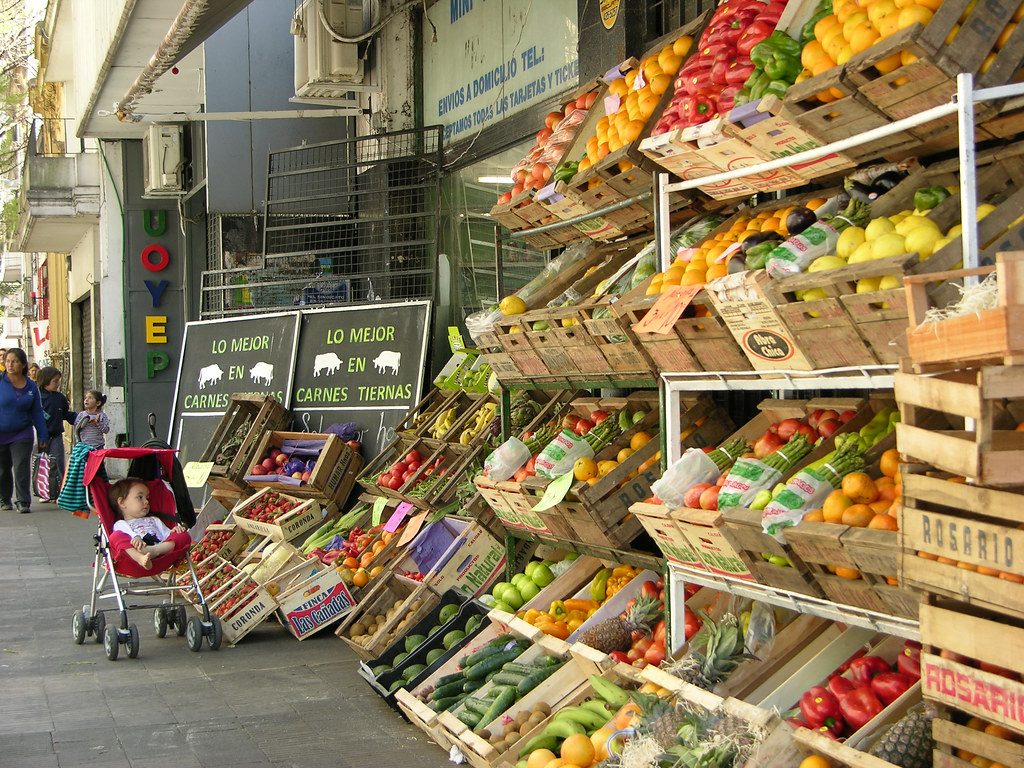
Image credit: Market by alexfiles via flickr (BY-SA 2.0), sourced through Openverse.
Written by
Sneha Pandey
Digital marketing strategist focused on WhatsApp Business API, bulk SMS campaigns, and growth hacking for Indian SMBs. Sneha has helped companies achieve 3x customer engagement through conversational commerce.
Looking for a technology partner?
From IT consulting to virtual office to custom software — eDarpan can help.
Continue reading
WhatsApp Payments in India 2026: What SMBs Can Now Accept
By 2026, WhatsApp Payments for business India lets SMBs close sales inside chat. Here's what you can accept, how to set it up, and the compliance to watch.
WhatsApp Bulk Messaging Rules 2026: Stay Compliant, Avoid Bans
Unofficial WhatsApp panels get numbers banned permanently. Learn the 2026 rules for compliant WhatsApp bulk messaging in India via the official Business API.
AI Advertising for Indian SMBs 2026: Meta, Google & Amazon Ads
AI advertising for Indian small businesses in 2026: how Meta Advantage+, Google Performance Max, and Amazon AI ads boost ROAS with real cost breakdowns and setup steps.