AI Advertising for Indian SMBs 2026: Meta, Google & Amazon Ads
AI advertising for Indian small businesses in 2026: how Meta Advantage+, Google Performance Max, and Amazon AI ads boost ROAS with real cost breakdowns and setup steps.
Last quarter I sat with a kitchenware brand owner in Rajkot who was burning ₹1.2 lakh a month across Meta and Google ads. His return on ad spend was 1.8. That means for every rupee he put in, he got ₹1.80 back, and after product cost, packaging, and Shiprocket fees, he was barely breaking even. He thought the answer was spending more. It wasn't. The answer was letting the platforms' AI do the targeting he was fighting against manually.
Here's a number that surprised him: Meta's own data shows that campaigns using Advantage+ Shopping automation deliver, on average, a meaningfully higher ROAS than manually structured campaigns for e-commerce advertisers, because the AI tests thousands of audience and creative combinations no human can manage by hand. Most Indian SMB owners are still running ads the way they did in 2020, splitting budgets across ten ad sets, guessing at ages and interests, and wondering why performance keeps sliding.
This post is about AI advertising for Indian small businesses in 2026 across the three platforms that actually move revenue: Meta, Google, and Amazon. I'll show you what each AI tool does, when to use it, a real cost breakdown, and the exact steps to set it up. No theory. Just what works when the budget is your own money.
Key Takeaways
- Meta Advantage+, Google Performance Max, and Amazon Sponsored Brands AI all work best when you feed them good data and clean creative, not tight manual targeting.
- Give AI campaigns 7 to 14 days and a minimum budget before judging them. Killing them early is the number one mistake I see.
- A properly tracked conversion event (Meta Pixel + Conversions API, Google enhanced conversions) matters more than any bidding trick.
- Budget realistically: ₹500 to ₹1,000 per day per platform is the practical floor for AI to learn in most Indian categories.
- Retargeting via WhatsApp closes the loop cheaply. Ads bring the click; WhatsApp closes the sale.
- Track everything against GST-inclusive margins, not top-line revenue, or your ROAS math will lie to you.
Why is AI advertising suddenly worth it for Indian SMBs?
For years the automated tools were a black box that spent your money and showed you nothing. That changed. The machine learning models now have enough Indian-market signal to actually target buyers in Tier 2 and Tier 3 cities, not just metros. Meta and Google both trained on years of Indian purchase behaviour, festival spikes, cash-on-delivery patterns, and vernacular ad response.
The second thing that changed is creative generation. You no longer need a designer on retainer for every variation. Meta's Advantage+ creative can generate background variations, resize for placements, and test headlines automatically. Google's asset generation inside Performance Max does similar work. For a business owner in Coimbatore running a single-person marketing operation, this is the difference between running one static ad and testing fifteen.
But AI advertising is not a magic button. It amplifies whatever you feed it. Good product feed, clean tracking, and a decent offer produce good results. Garbage in still means garbage out, just faster and at scale.
What does Meta Advantage+ actually do, and how do I set it up?
Meta Advantage+ Shopping Campaigns (ASC) are Facebook and Instagram's AI-first campaign type. Instead of you building separate ad sets for cold audiences, retargeting, and lookalikes, you set a budget and a conversion goal, upload your creative and product catalogue, and Meta's system decides who sees what across its inventory.
For an Indian D2C brand doing under ₹50 lakh a year, this is usually the right starting point. It removes the temptation to over-segment a small budget into ineffective slivers.
Step-by-step setup for a Meta Advantage+ campaign
- Install the Meta Pixel and Conversions API. The Pixel alone loses data to iOS privacy and ad blockers. The Conversions API (server-side tracking) recovers it. This is non-negotiable. If your site is on Shopify or WooCommerce, the plugin handles most of it. For custom stores, a custom software development partner can wire the server-side events in a day.
- Set up your product catalogue. Connect your store's product feed so Meta knows SKUs, prices in rupees, and stock. Dynamic creative pulls from this.
- Define one clean conversion event. Usually "Purchase" or "Add to Cart" for early data. Do not stack five events.
- Create the ASC campaign. Choose Sales objective, then Advantage+ Shopping. Set your daily budget. Start at ₹800 to ₹1,000/day if you can.
- Upload 6 to 10 creatives. Mix video and static. Include a clear offer and price. Let Advantage+ creative enhancements stay on.
- Set your existing customer cap. Tell Meta what percentage of budget can go to existing customers versus new. For growth, keep new-customer share high.
- Leave it alone for 7 days. Do not edit daily. Every edit resets the learning phase.
Common Mistake: Turning off a campaign on day 3 because it "isn't working." Meta's learning phase needs roughly 50 conversions per week to stabilise. If you kill it at day 3 with 11 conversions, you never gave the AI enough signal. Budget for a two-week test window before you decide anything.
How does Google Performance Max work for Indian businesses?
Performance Max (PMax) is Google's equivalent all-in-one AI campaign. One campaign runs across Search, YouTube, Gmail, Display, Discover, and Maps. You give it assets and a goal, and the AI allocates spend across all of them.
PMax shines for two Indian use cases. First, local service businesses (a dental clinic in Pune, a coaching centre in Lucknow) that benefit from showing up on Maps and Search together. Second, e-commerce brands with a Merchant Center feed who want Shopping and remarketing handled automatically.
Before running PMax, get your Google Business Profile set up properly. PMax pulls from it for local signals, and a weak profile drags down your local ad performance.
Asset groups: the part most people get wrong
PMax uses "asset groups" instead of ad sets. Each asset group should represent one theme or product line. A saree retailer might have one asset group for silk sarees, one for cotton, one for wedding collections. Each group needs headlines, descriptions, images, and ideally a YouTube video, even a simple 15-second one.
Feed Google audience signals. These are hints, not hard targeting. Upload your customer email list, add your website visitors, and describe your ideal buyer. Google uses these to jump-start the AI rather than learning cold.
Should Indian sellers use Amazon's AI ad tools?
If you sell on Amazon India, Sponsored Products and Sponsored Brands are where the buying intent already lives. Someone searching "steel water bottle 1 litre" on Amazon is ready to purchase. That intent is worth more than an interrupt ad on Instagram.
Amazon's AI features include automatic targeting for Sponsored Products, where the algorithm matches your listing to relevant search terms, and bid optimisation that adjusts based on conversion likelihood. For most sellers, the smart play is running an automatic campaign to discover which search terms convert, then moving the winners into a manual campaign for tighter control.
The auto-to-manual workflow
- Launch an automatic Sponsored Products campaign with a modest daily budget, say ₹500.
- Run it 2 to 3 weeks. Download the search term report.
- Identify search terms with sales and a decent ACoS (Advertising Cost of Sale).
- Add those winners as exact-match keywords in a manual campaign with higher bids.
- Add the money-wasting terms (clicks, no sales) as negative keywords in the auto campaign.
Meta vs Google vs Amazon: which AI ad platform for your business?
They are not competitors so much as different stages of the buyer journey. Here is how I generally advise clients to think about it.
| Criteria | Meta Advantage+ | Google Performance Max | Amazon Sponsored Ads |
|---|---|---|---|
| Buyer intent | Low to medium (discovery) | Medium to high (search) | High (ready to buy) |
| Best for | D2C brands, new product launches | Local services, e-commerce with feed | Amazon marketplace sellers |
| Practical daily min | ₹800–₹1,000 | ₹700–₹1,000 | ₹400–₹600 |
| Learning window | 7–14 days | 2–3 weeks | 2–3 weeks |
| Creative demand | High (video + static) | Medium (assets + video) | Low (product images) |
| Tracking complexity | High (Pixel + CAPI) | Medium (enhanced conversions) | Low (built-in) |
My rule of thumb: if you sell on Amazon, always run Sponsored Products, it is the cheapest incremental revenue you'll find. Then use Meta to build demand and Google to catch it. Splitting a ₹30,000 monthly budget across all three is usually a mistake for a small business. Pick the one closest to where your buyers are and win it first.
A real case study: a Jaipur home decor brand
A home decor seller in Jaipur, roughly 8 people, was spending ₹90,000 a month across manually built Meta campaigns. Fourteen ad sets, endless interest targeting, a ROAS hovering around 2.1. The founder was doing all the ad management herself between packing orders.
We did three things over six weeks.
First, we fixed tracking. Their Pixel was firing but the Conversions API was not set up, so Meta was missing roughly a third of conversion signal. We deployed server-side tracking. Within days, the reported ROAS climbed just from Meta correctly attributing sales it already drove.
Second, we collapsed fourteen ad sets into one Advantage+ Shopping campaign with a ₹2,000/day budget and eight fresh creatives, half video. We set the new-customer share high because they wanted growth.
Third, we added WhatsApp retargeting. Anyone who added to cart but didn't buy got a WhatsApp message 90 minutes later with the product image and a small nudge. We built this on the WhatsApp Business API so it was automated, not manual.
The numbers after six weeks: spend held at about ₹90,000, but blended ROAS moved from 2.1 to 3.4. The abandoned-cart WhatsApp flow alone recovered roughly ₹40,000 in monthly revenue that was previously lost. The founder got her evenings back because she stopped babysitting ad sets.
The lesson wasn't spending more. It was better tracking, letting AI handle targeting, and closing the loop on WhatsApp where Indian buyers actually respond.
How does WhatsApp fit into an AI advertising strategy?
This is the piece most agencies skip because they only get paid on ad spend. Your ads generate clicks and leads. But Indian buyers hesitate. They add to cart and get distracted. They enquire and go quiet. WhatsApp is where you re-engage them at almost no cost.
Two high-value flows worth building:
- Click-to-WhatsApp ads. Meta lets you run ads where the call to action opens a WhatsApp chat instead of a landing page. For considered purchases (furniture, coaching, real estate), this converts better because the buyer talks to a human or a bot before committing.
- Abandoned-cart and lead-nurture messages. Automated, template-based follow-ups sent through the API. These need approved templates and cost a per-message fee. Understand the 2026 per-message rates before you build heavy flows so the economics work.
If you're weighing how to host this, our breakdown of Cloud API versus On-Premises for SMBs covers the trade-offs. For most small businesses the Cloud API is the right call. You can also layer conversational AI on top; our guide to Meta's Business AI on WhatsApp walks through it, and for phone-heavy businesses an AI voicebot handles the calls that WhatsApp doesn't.
What compliance and cost factors do Indian advertisers need to plan for?
A few things trip up Indian SMB owners on the finance and compliance side.
GST on ad spend. Meta, Google, and Amazon India charge 18% GST on ad invoices. If you're GST-registered, you can claim input tax credit, but only if your business details on the ad account match your GST registration exactly. Get this right at setup. A mismatch means you eat the 18%.
Margins, not revenue. When you calculate ROAS, use GST-inclusive product cost and every downstream fee. A ROAS of 3 sounds fine until you subtract 18% GST, shipping, COD charges, and returns. Many sellers are unprofitable at a ROAS they think is healthy.
Business verification. Meta and Google increasingly require business verification for higher spend and certain features. If you don't have a proper registered business address, that's a blocker. A virtual office for GST and company registration solves this cleanly and cheaply.
Pro Tip: Set up a dedicated business credit card or a prepaid ad wallet with a hard monthly cap. AI campaigns can scale spend fast if you accidentally set a lifetime budget wrong or a bid strategy goes aggressive. I've seen a wrong setting burn ₹15,000 in a weekend. A capped card is a cheap insurance policy.
How do I actually get started this month?
Here's a practical 30-day plan for a business new to AI advertising.
- Week 1: Fix tracking. Pixel plus Conversions API for Meta, enhanced conversions for Google. Verify events fire correctly using the platform's testing tools.
- Week 1: Sort compliance. Confirm GST details on ad accounts, complete business verification, set a capped payment method.
- Week 2: Build creative. Produce 6 to 10 assets: mix of video and static, clear price and offer, mobile-first.
- Week 2: Launch one AI campaign on the platform closest to your buyers. One campaign, decent budget, don't spread thin.
- Weeks 3–4: Leave it alone and observe. Let the learning phase complete. Add a WhatsApp retargeting flow for people who click but don't convert.
- End of month: Read the data honestly. Judge on margin-based ROAS, not vanity metrics. Then scale the winner slowly, roughly 20% budget increases, not doubling overnight.
If wiring up tracking, feeds, and WhatsApp automation sounds like more than your team can take on, that's exactly the kind of work our IT consulting team handles. We also cover the broader stack most growing brands need, from cloud and managed services to mobile app development, so the marketing plumbing connects to the rest of your business.
Frequently asked questions
How much should an Indian small business spend on AI advertising per month?
Start with what lets one platform learn properly, usually ₹20,000 to ₹30,000 a month on a single channel rather than splitting across three. Below roughly ₹500 to ₹1,000 per day, AI campaigns struggle to gather enough conversion signal to optimise. Scale up only after you see a profitable, margin-based ROAS.
Is Meta Advantage+ better than manually built campaigns?
For most small businesses with limited budget and no dedicated media buyer, yes. Advantage+ tests combinations no human can manage and avoids the over-segmentation that wastes small budgets. Experienced advertisers with large accounts may still get more from manual control, but that's the exception, not the rule.
Do I need a website to run AI ads, or can I use WhatsApp?
You can run click-to-WhatsApp ads that skip the website entirely, which works well for considered purchases and services. That said, a website with proper conversion tracking gives the AI far richer signal for e-commerce. Many Indian SMBs run both: WhatsApp for enquiries, website for direct purchase.
How is GST handled on Meta and Google ad spend in India?
Both charge 18% GST on ad invoices. If your ad account carries your correct GST registration details, you can claim input tax credit against it. Make sure the business name and GSTIN match your registration exactly, or you lose the ability to claim.
How long before AI ad campaigns show results?
Plan for 7 to 14 days on Meta and 2 to 3 weeks on Google and Amazon before judging performance. The algorithms need a body of conversion data to stabilise, and editing campaigns mid-learning resets that process. Patience in the first two weeks is the single biggest predictor of success.
Can I run AI advertising without hiring an agency?
Yes, the platforms are built for self-service and AI handles the heavy targeting work. The parts that genuinely need help are conversion tracking setup, product feed configuration, and WhatsApp automation. Many owners handle campaigns themselves and bring in a partner only for that technical plumbing.
Which platform gives the best ROI for a marketplace seller?
If you sell on Amazon India, Amazon Sponsored Products almost always delivers the cheapest incremental sales because you're reaching buyers with immediate purchase intent. Use it as your foundation, then add Meta or Google to build broader demand once Amazon is optimised.
The bottom line
AI advertising for Indian small businesses isn't about clever hacks or throwing more money at Meta. It's about giving the algorithms clean data, honest creative, and enough runway to learn, then closing the loop where Indian buyers actually respond, which is WhatsApp. The Jaipur brand didn't spend more; they spent smarter, and recovered ₹40,000 a month they were quietly losing.
Get the foundations right first: tracking, GST-compliant accounts, one focused campaign, and a retargeting flow. Do that and the AI does the rest of the heavy lifting.
If you want help wiring the tracking, feeds, and WhatsApp automation that make these campaigns actually pay, talk to the eDarpan team. You can also explore our full services overview or read more on what actually drives growth in AI advertising for Indian SMBs.
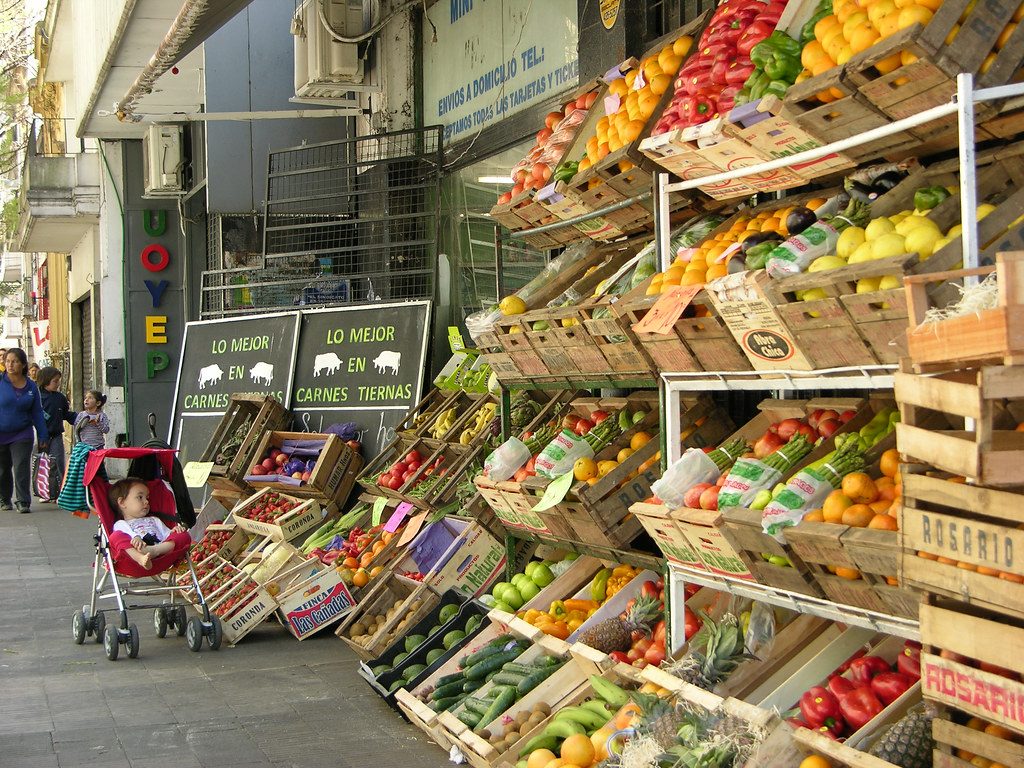
Image credit: Market by alexfiles via flickr (BY-SA 2.0), sourced through Openverse.
Written by
Sneha Pandey
Digital marketing strategist focused on WhatsApp Business API, bulk SMS campaigns, and growth hacking for Indian SMBs. Sneha has helped companies achieve 3x customer engagement through conversational commerce.
Looking for a technology partner?
From IT consulting to virtual office to custom software — eDarpan can help.
Continue reading
WhatsApp Business API Per-Message Pricing: What Indian SMBs Will Pay Now
WhatsApp messaging now bills per template by category, and marketing messages drive most of the cost. Here's how Indian SMBs can model the real spend before the invoice arrives.

WhatsApp Business API Per-Message Pricing: What Indian SMBs Will Pay Now
WhatsApp's per-message billing has quietly changed. Learn how marketing, utility, and service rates work for Indian SMBs and how to keep campaign costs under control.
WhatsApp Business API Pricing Changes 2026: What SMBs Pay Now
WhatsApp's shift to per-message pricing in 2026 could raise your bill 30-50%. Here's what SMBs really pay and how to cut costs by 40%.