Who Pays for NCR Property Rises? Home Loan Math for 2026
Property prices in Delhi-NCR keep climbing, but EMIs can climb faster. See how price rises, construction costs and rates shape what you can really afford.
Every quarter, a new headline announces that Delhi-NCR property prices have climbed again, and every quarter the same question lands in our inbox: "I earn a decent salary, so why can't I afford a two-bedroom in Dwarka anymore?" The answer is rarely one dramatic number. It is the compounding effect of land costs, construction inflation, a bigger down payment, and an EMI that quietly eats a larger slice of take-home pay than the buyer expected. Getting home loan affordability Delhi NCR 2026 right means modelling those forces together, not reacting to the sticker price alone.
This piece is written for two groups: first-time buyers who want a home they can actually service without starving the rest of their life, and investors or small business owners who are weighing property against other uses of capital. We will walk through how price rises and construction cost increases flow into your loan, build a worked example, compare the loan structures you will realistically be offered, and give you a checklist to run before you sign anything. Where a decision touches compliance, such as GST on under-construction flats or the stamp duty and registration costs that surprise people at the last step, we will say so plainly.
Key Takeaways
- Your EMI is driven by the loan amount and the interest rate, but your eligibility is driven by your income and existing obligations. Model both before you fall in love with a unit.
- Plan the down payment as the price plus stamp duty, registration, GST where applicable, and a cash buffer. Roughly 12 to 15 percent of the property value is a realistic all-in upfront requirement in most NCR micro-markets once you add these up.
- A 0.5 percentage point rate move can change a 25-year EMI by thousands of rupees a month on a large loan. Stress-test at two rates above today's offer.
- Construction cost inflation hits under-construction and resale differently, and the difference shows up in your possession timeline and in what you end up paying per square foot.
- Keep total EMI, including any existing loans, below roughly 40 to 45 percent of net monthly income. Lenders allow more, but that does not make it comfortable.
- Run the numbers on rent versus buy with a realistic horizon of at least seven to ten years before deciding.
Why NCR Prices Keep Rising and Who Actually Absorbs the Increase
Property prices in Dwarka, Gurgaon, Noida Extension and the wider NCR belt are set by a handful of forces that move at different speeds. Land is the slow, heavy one. Infrastructure such as metro extensions, expressway links and new employment hubs pushes land values up in steps. Construction cost is the fast, nagging one: steel, cement, labour, and the cost of compliance all move with the broader economy, and developers pass a large part of that through to the next launch. Financing costs and the state of the housing cycle determine how much of this the market will absorb.
The people who carry the increase are not the developers. They are the buyers who take on loans sized to the new price. A flat that cost a certain amount two years ago may now cost fifteen to twenty percent more, and the buyer's loan rises in proportion, while their income typically rises more slowly. The gap between price growth and income growth is where affordability quietly breaks.
There is a second, less visible cost. Developers facing higher input costs sometimes shift from simple price hikes to a larger payment during construction or a higher preferred-location charge. Read the payment schedule as carefully as the price sheet. A flat that looks cheaper per square foot can cost more in real terms if the payment milestones front-load your cash.
How Does a Price Rise Turn Into a Bigger EMI?
The mechanics are simple, but people rarely run them end to end. Your EMI depends on three things: the principal you borrow, the interest rate, and the tenure. Each one is affected by a rising price.
- Principal rises with price. If the price goes up and your down payment stays the same, the loan grows one for one.
- Your loan-to-value ratio matters. Most banks lend up to around 80 to 90 percent of the property value for a first home, depending on the loan amount and your profile. Above certain thresholds the ratio tightens, which forces a bigger down payment.
- Tenure is the lever people reach for. Stretching to 30 years lowers the EMI, but the total interest paid balloons. It also pushes your repayment into years when your income may or may not have grown as planned.
- Eligibility is the ceiling. Lenders calculate how much they will lend from your net income, age, and existing obligations. A higher price can make you ineligible for the loan you need, even when the EMI on paper looks manageable.
A Worked Example: Two-Bedroom in Dwarka
Consider a salaried couple in Dwarka. Combined net take-home is ₹1,30,000 per month. They have no existing loans, a car EMI of ₹0, and they want a 2BHK priced at ₹1.1 crore. Here is the basic affordability math, with rates illustrative rather than a quote from any lender.
Their down payment is 20 percent, or ₹22 lakh, leaving a loan of ₹88 lakh. On a 20-year tenure at an illustrative 8.75 percent, the EMI is roughly ₹77,000 per month. That is about 59 percent of their take-home pay, far above the comfort zone and likely above what most lenders would approve once they apply the standard income-to-EMI ceilings.
Now stretch the tenure to 30 years at the same rate. The EMI drops to roughly ₹68,000, still over half their take-home. The lesson is that tenure alone rarely solves an affordability gap. The honest options are a lower price, a larger down payment, a co-applicant with income, or waiting.
Add stamp duty and registration on top. In Delhi, stamp duty is typically 6 percent for women buyers and 6 percent for men under the current structure, and registration is generally 1 percent, though rates and rules change, so confirm with the sub-registrar. On a ₹1.1 crore property that is roughly ₹7 lakh before you have paid a rupee of furnishing or legal fees. That cash has to come from somewhere, and it is the cost that most first-time buyers underestimate.
Common Mistake: Forgetting the Cash Buffer
Pro tip from experience: Buyers plan the down payment to the rupee and then have nothing left for the moving day, the first maintenance demand, the society's corpus contribution, or the interior work that every new owner eventually does. Keep at least six months of EMI and household expenses in liquid savings after the purchase. A home you cannot afford to live in for the first year is a home you will be forced to sell in the fourth.
What Does Construction Cost Inflation Do to Under-Construction Flats?
Under-construction purchases carry a timing risk that resale does not. Your EMI often starts before you move in, through a pre-EMI structure, while the developer completes the building. Construction cost increases can delay possession and sometimes trigger demands for additional charges, depending on your agreement.
Pre-EMI works like this: the bank disburses tranches linked to construction progress, and you pay interest only on the disbursed amount until the loan is fully disbursed or the possession date, after which the full EMI kicks in. If possession slips by a year, you pay the pre-EMI for an extra year while also paying rent somewhere else. Model that scenario before you commit.
GST is the other piece. Under-construction residential property attracts GST in India, with rates and the treatment of affordable housing varying by category, and the rules have been revised over time. Confirm whether the quoted price is inclusive of GST, whether the developer is charging it separately, and which rate applies to your specific unit. A quote that omits GST can understate your real outlay by a meaningful margin.
Which Loan Structure Fits Your Situation?
Not every loan is the same, and the structure matters as much as the headline rate. Here is how the common options compare for an NCR buyer in 2026.
| Option | Typical Rate Structure | Best For | Key Risk |
|---|---|---|---|
| Public sector bank home loan | Often lower starting rates, linked to external benchmarks | Salaried buyers with clean credit and standard documentation | Slower processing, stricter paperwork |
| Private bank home loan | Competitive rates, faster approval, sometimes higher processing fees | Buyers who need speed or have non-standard income | Fees and rate resets that erode the headline advantage |
| Housing finance company (HFC) | Flexible eligibility, may charge higher rates | Self-employed buyers and those with irregular documented income | Higher effective cost over the loan life |
| Balance transfer of an existing loan | Depends on the new lender's offer | Existing borrowers paying a high rate who can switch cleanly | Prepayment charges and processing costs on the old loan |
For self-employed buyers, the picture is more complicated. Lenders typically look at two or three years of income tax returns and audited financials. A business owner with aggressive tax planning may show lower taxable income than their real cash flow, which reduces eligibility. The fix is to plan documentation a year ahead, not the week you start house-hunting.
Pro Tip: Negotiate the Processing Fee and Prepayment Terms
Most buyers negotiate the interest rate and forget the rest. Ask for the processing fee to be waived or reduced, check whether floating-rate loans carry prepayment penalties, and confirm how a rate reset is communicated and applied. A quarter-point difference in rate can be wiped out by a fee and a prepayment clause you did not read.
A Step-by-Step Affordability Check Before You Commit
Here is the process we walk clients through before any property visit. You can do it yourself with a spreadsheet and your last three salary slips.
- Calculate net monthly income. Use take-home pay, not gross CTC. Include a conservative estimate of any variable income, and only count it if it is consistently documented.
- Subtract existing obligations. Car loans, personal loans, credit card minimums and any support payments all count against you.
- Set your EMI ceiling. Keep total EMI, including the new home loan, under roughly 40 to 45 percent of net income. This is a planning ceiling, not the lender's maximum.
- Compute the total upfront cash. Down payment plus stamp duty, registration, GST where applicable, legal fees, and a six-month cash buffer.
- Run the loan at three rates. Model today's offer, plus 0.5 and 1.0 percentage points higher. If the higher-rate EMI breaks your budget, the loan is too large.
- Test a 20 percent income drop. If losing one-fifth of your income would make the EMI unmanageable, you need a smaller loan or a bigger emergency fund.
- Compare against rent. Total the rent you would pay over your horizon, add the opportunity cost of your down payment, and compare that with the total cost of owning, including interest, maintenance and property tax.
If you are weighing whether now is the right moment to commit, our notes on whether to buy now or wait in Dwarka walk through the timing logic in more depth, and this comparison of buying versus waiting across seven cities shows how the broader market signals fit together.
Is the Dwarka Location Still Worth the Premium?
Location affects both price and resale value, so the affordability question cannot be separated from where you buy. Metro access, road connectivity and the pace of civic infrastructure all feed into the price you pay today and the price a buyer will pay when you sell. Before you accept a premium for a particular sector or a metro-adjacent unit, check what is actually built and what is still on paper.
Our guide on what NCR buyers should check on metro corridors and Dwarka prices covers the specific checks: operational status of the line, distance to the station as an actual walk, and whether a promised road or park is in the approved master plan. For investors, the rental side of the equation matters too, and the tax treatment of rent is easy to overlook. Our explainer on rental income tax for landlords in Delhi-NCR sets out what changes in your net yield once tax is taken into account.
What Should Investors and Small Business Owners Consider?
Business owners often ask whether property should sit on the company balance sheet or in personal names, and whether leveraging a home loan makes sense when the capital could fund operations. The honest answer is that it depends on the business's cash flow and the owner's risk tolerance, and that mixing business and personal finance creates tax and compliance complications that are worth an accountant's time.
For an SMB, the cleanest route is usually to keep the operating business liquid and treat property as a separate, personally held investment funded from personal savings or a personal loan, not from the business's working capital. A business that borrows against its own operations to buy a flat can find itself short when a large customer pays late. If you are structuring a company's premises, our team also handles virtual office addresses for GST and company registration, which can keep your registered address separate from a property purchase decision you have not yet made.
Frequently Asked Questions
How much home loan can I get in Delhi NCR on my salary?
Lenders typically work backward from your net monthly income, allowing total EMIs up to a percentage of it, with the exact ceiling set by the bank and your profile. The loan amount then depends on tenure, interest rate and your age at maturity. A bank's eligibility calculator will give a starting estimate, but the final figure comes from document-verified income.
What is the minimum down payment for a home loan in India?
Banks generally require a down payment of at least 10 to 20 percent of the property value, with the exact share depending on the loan amount and the lender's loan-to-value rules. Separately, you need cash for stamp duty, registration and other charges, which are not covered by the loan. Plan for the all-in figure, not just the percentage.
Is it better to take a 20-year or 30-year home loan?
A longer tenure lowers the monthly EMI but increases the total interest paid substantially. A shorter tenure costs more each month but reduces the lifetime interest bill. Choose the shortest tenure whose EMI you can comfortably pay with a margin for income shocks, rather than the longest one that makes the EMI look affordable.
How does stamp duty affect my home loan affordability?
Stamp duty and registration are one-time costs paid in cash on purchase and are generally not financed by the home loan. On a property in the range of ₹1 crore, these charges add several lakh rupees to your upfront outlay, which directly reduces how much you can comfortably put down. Confirm current rates with the sub-registrar before finalising your budget.
Should I take a fixed or floating rate home loan in 2026?
Most Indian home loans are floating-rate and linked to an external benchmark, so your EMI can change when the benchmark moves. Fixed-rate options exist but often carry a higher starting rate and sometimes a conversion charge. The right choice depends on how much rate movement your budget can absorb, which is why the three-rate stress test in the checklist above matters.
Does GST apply when I buy a flat from a builder?
GST can apply to under-construction residential property purchased directly from a developer, while ready-to-move-in resale property generally does not attract GST. The rate and treatment depend on the category of the property and applicable notifications, which have been revised over time. Ask the developer for the GST treatment in writing and check whether it is included in the quoted price.
Is it cheaper to rent or buy a home in Delhi NCR?
It depends on your time horizon, the price-to-rent ratio of the specific micro-market, and your financing cost. Over a short horizon of two to three years, renting usually wins once transaction costs are counted. Over seven to ten years or more, buying can make sense if the price is reasonable relative to rent and you can carry the EMI without stress.
Where eDarpan Fits In
We are a technology and real estate team, and we deliberately keep the advice here practical rather than promotional. If you are an SMB that needs a registered address, a business email setup or back-office systems while you grow, our service portfolio covers the basics, and our IT consulting team helps businesses plan that infrastructure sensibly. If you are looking at homes or investment property, our property listings include options for buying and renting across the NCR belt, and you can contact us to talk through your numbers before you sign anything. Learn more about who we are on our about page.
The strongest affordability decision is the one you make with the numbers in front of you. Build the budget, stress-test the EMI, count the upfront cash honestly, and only then pick the property. When you are ready to talk specifics, reach out, and we will help you model the scenario that fits your income and your timeline.
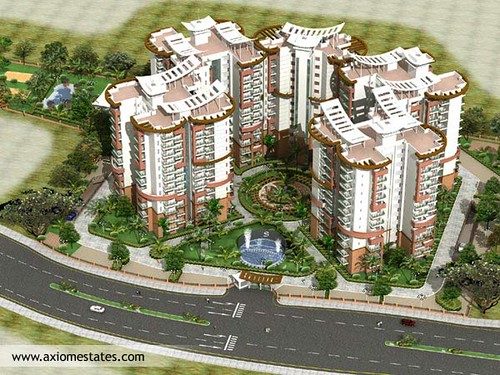
Image credit: Bangalore Properties - Real Estate India - Shriram Symphony by nancyarora2020 via flickr (BY-SA 2.0), sourced through Openverse.
Written by
Rajesh Tiwari
Real estate analyst covering property markets across Delhi NCR, Mumbai, and Bangalore. Rajesh tracks pricing trends, RERA compliance, and investment opportunities for residential and commercial buyers.
Looking for a technology partner?
From IT consulting to virtual office to custom software — eDarpan can help.
Continue reading

Metro Corridors and Dwarka Property Prices: What NCR Buyers Should Check
Will new metro corridors justify paying more for Dwarka flats today? Here's how to separate real price drivers from speculative premiums before you buy.

Delhi-NCR Property Tax on Rental Income: What Landlords Must Know in 2026
Think rent minus tax is simple? Learn how Section 24 deductions, TDS and GST really work for Delhi-NCR landlords before you file your 2026 return.
Unsold Inventory Up 12%: Buy, Rent or Wait in Dwarka Right Now
Unsold inventory is up 12%. Here's a rupee-level framework for Dwarka buyers deciding whether to buy, rent or wait, with the break-even math that matters.