Delhi-NCR Office Leasing Boom: Should Your Startup Lease or Go Virtual?
Paying ₹1.2 lakh a month for an office empty four days a week? Learn the true cost of leasing vs going virtual in Delhi-NCR, with a break-even framework you can run yourself.

Every few months, a founder in Gurgaon or Noida tells me the same thing: "We're paying ₹1.2 lakh a month for an office that's empty four days a week, and our GST registration still needs a rented address." If you run a startup or a small business in Delhi-NCR right now, you have probably felt the squeeze. Commercial rents in Gurugram's main corridors and Noida's Sector 62 belt have been firming up as warehousing, logistics and flexible-workspace demand pulls tenants into the market, and landlords have noticed. Meanwhile, most early-stage teams are running hybrid, with half the staff working from home or on client sites on any given day.
The real question is not "is a leased office good or bad?" It is whether a fixed-term lease is the right financial and compliance tool for where your business is today. This guide walks through the decision the way I would walk a client through it: the costs that actually matter, a break-even framework you can run on a spreadsheet, the GST and registration rules that trip people up, and a checklist for deciding. If you are weighing a virtual office vs leased office Delhi NCR, this should give you a defensible answer by the end.
Key Takeaways
- A leased office carries costs well beyond rent: deposits, maintenance, power backup, housekeeping, insurance and fit-out often add 25 to 40 percent to the headline number.
- A virtual office is a legally usable registered address for GST and ROC purposes, but you must confirm the specific provider's documentation and the state's rules before relying on it.
- Run the break-even on your real headcount and real visit frequency, not on your hopes for next year's hiring plan.
- Decide on a hybrid model (virtual address plus pay-per-use meeting space) until you have a predictable, recurring need for daily desks.
- Lease terms are a liability on your balance sheet. Negotiate lock-in periods, escalation clauses and exit rights before you sign, not after.
- Your compliance calendar (GST returns, ROC filings, MSME updates) should drive the timing of any office decision, not the other way around.
Why Are Delhi-NCR Office Rents Moving Now, and Does It Matter to You?
The honest answer is that the rent you see on a broker's listing is rarely the rent you pay. In Gurugram, quoted rates for Grade A space along the Golf Course Road and Sohna Road corridors have been moving up, and warehousing demand along the Delhi-Jaipur and Delhi-Rewari belts has pulled some commercial supply into logistics use. Noida's newer commercial zones have seen similar pressure. Whether that pushes your specific rent up depends on your micro-location and your negotiating position, but the direction of travel is clear enough that you should plan for renewal escalations of 5 to 10 percent a year and budget accordingly.
What matters more for a small team is the structure of the deal. A typical Gurugram lease for 1,000 to 1,500 square feet might quote ₹90 to ₹130 per square foot per month for decent Grade B space, which is ₹90,000 to ₹1.95 lakh before anything else. Add a security deposit of six to ten months, maintenance charges, power backup costs, internet, housekeeping, and a fit-out of ₹300 to ₹600 per square foot if you want anything beyond bare shell, and the real monthly cost of ownership is substantially higher than the rent line.
What Does a Leased Office Really Cost Compared to a Virtual Office?
Founders underestimate leases because they count rent and forget the rest. Here is the cost structure I walk clients through. Use your own quotes, but this framework will keep you honest.
- Base rent: the number on the lease, usually quoted per square foot on carpet or super-built-up area. Confirm which one. The difference can be 20 to 30 percent.
- Security deposit: typically 6 to 10 months of rent. This is cash locked up, and it is returned only after a clean exit. Price the opportunity cost at your borrowing rate.
- Maintenance and common-area charges: often ₹20 to ₹40 per square foot per month in managed buildings, sometimes more.
- Power and DG backup: frequently billed per unit consumed plus a fixed backup charge. In summer months this can be the single largest surprise.
- Internet and telephony: dedicated leased lines or business broadband, plus a backup link if you run client-facing operations.
- Fit-out and furniture: a one-time cost that is also a depreciating asset, and often ignored in the monthly view.
- Housekeeping, pantry, insurance: small individually, meaningful together.
- Lock-in and exit cost: most leases carry 3 to 5 year lock-ins with penalty clauses. Breaking early can cost three to six months of rent.
A virtual office, by contrast, is a service: a registered business address, mail handling and forwarding, and often access to meeting rooms or a reception on demand. Plans are typically priced monthly or annually, and the cost is a fraction of a lease. The trade-off is that you do not have a dedicated desk, a place for your team to be every day, or a space where you control the environment.
How Do You Run a Break-Even Analysis for Your Startup?
This is the framework I use. Build it in a spreadsheet with three inputs: your fixed cost of leasing per desk, your fixed cost of a virtual setup, and your realistic daily occupancy.
- Count your real desk demand. Not your headcount. Take your team size, subtract people who are genuinely remote, and then look at attendance over the last eight weeks. If your team averages 6 people on site on a 12-person roster, your demand is 6, not 12.
- Calculate the all-in monthly lease cost. Divide the total monthly outlay (rent, maintenance, power, internet, amortised fit-out, insurance) by the number of desks you actually need, plus a 20 percent buffer for growth.
- Price the virtual alternative. Include the address plan, plus a pay-per-use meeting room budget. Estimate it at, say, 6 to 8 bookings a month at ₹800 to ₹1,500 each.
- Compare the two monthly figures, and then add the one-time costs (deposit, fit-out) to the lease side.
- Find the break-even headcount: the number of regular on-site staff at which the leased option becomes cheaper per person.
Here is a worked example. A 9-person SaaS team in Noida Sector 63 has 5 people on site most days. A 900 square foot leased space with eight desks, all-in, comes to roughly ₹1.35 lakh a month once maintenance, power, internet and amortised fit-out are included. Their virtual setup, a registered address plus meeting room credits, comes to around ₹18,000 a month. On paper the lease costs ₹27,000 per on-site person per month against ₹3,600 per person for the virtual plan. Unless they consistently fill at least 14 to 15 desks, the lease is hard to justify on cost alone. The arithmetic changes when you add a client who insists on a visible address and team presence, or when you hire a sales team that needs daily face time.
Does a Virtual Office Work for GST Registration in Delhi-NCR?
This is where I see the most avoidable mistakes. A virtual office can be used as a principal place of business for GST registration in many cases, but it is not automatic, and the rules have been tightened in practice by individual state authorities. Before you rely on one, check the following:
- Whether the provider gives you documentation the GST department accepts: typically a notarised or rent-agreement-equivalent document plus proof of address and a utility or landlord consent letter, depending on the state.
- Whether the address is in your registered state. A Delhi virtual office cannot support a Haryana GST registration.
- Whether your business activity requires physical premises for inventory. If you store goods, you may need a separate additional place of business, which a virtual office does not provide.
- Whether the address is used consistently across GST, ROC, Shops and Establishment, and your bank KYC. Mismatches cause notices.
For the detailed state-level process, see our guidance on virtual office or co-working for GST in 2026 and the more specific discussion of virtual office vs co-working for GST registration. If you are operating in Gurugram or Noida specifically, the piece on Gurgaon and Noida SMEs going virtual covers the local documentation patterns. I would also read the co-working GST hurdles article before signing a co-working agreement, because co-working space is sometimes accepted and sometimes refused depending on the officer.
Pro Tip: Ask your virtual office provider for the exact document bundle they supply for GST and whether they have had it accepted in your state before. A provider who cannot answer that clearly is telling you something. Also, keep the address proof and the rent or consent letter in your registration file, not just in an email, because you will be asked for them during verification.
What Is a Common Mistake Founders Make When Choosing an Office?
The most common mistake is signing for the team they plan to have in 18 months rather than the team they have today. The second is treating the deposit as a small cost and not pricing its cash drag. The third, and the one that costs the most, is ignoring the compliance calendar. Founders sign a lease in the middle of a GST return cycle, then discover the address change requires an amendment that must be filed within a set window. Map your GST return dates (GSTR-1 and GSTR-3B are monthly for most regular taxpayers), your ROC annual filings (AOC-4 and MGT-7 for companies), and your MSME Udyam updates before you commit. A move during a filing crunch is painful and avoidable.
What Is the Step-by-Step Process to Decide and Execute?
If you have decided the numbers justify a change, here is the sequence I recommend. Brief your vendor or your internal team using this order.
- Audit current usage for eight weeks: who is on site, which days, and for what purpose.
- Build the break-even model using the framework above, with three scenarios: current headcount, plus 30 percent, and minus 20 percent.
- Shortlist two or three options: one lease, one virtual office with meeting credits, and one hybrid (virtual address plus a flexible desk plan).
- Verify the GST and ROC position for the chosen address, in your registered state, with the provider's documents in hand.
- Negotiate the lease or plan: ask for a 2-year lock-in rather than 5, a capped escalation clause (5 percent is a reasonable opening position), a deposit refund schedule, and a sublet or early-exit right.
- Schedule the move around filings, and file any address amendments with GST and ROC within the required window.
- Update your bank, MSME Udyam, website and invoices to the new address before the first invoice carries the old one.
Where Can eDarpan Help?
We work with Delhi-NCR founders on exactly this decision, from the cost model to the compliance paperwork. Our team at eDarpan can help you structure a virtual office address that works for your GST registration, and our IT consulting practice can help you decide what infrastructure your team actually needs when it is working from a mix of locations. If you are moving your files and communications off an on-premise setup as part of the change, our cloud migration and managed services team has done that for teams of this size. You can see the full range on our services overview, and our virtual office address offering is built for the GST and company-registration use case described above.
If you are weighing a lease purchase or a long-term rental rather than a short-term office, our property team covers rental properties in India and properties for sale, and can give you a realistic view of the market before you commit.
Frequently Asked Questions
Is a virtual office vs leased office Delhi NCR decision different for GST registration?
Yes. A leased office gives you a principal place of business without negotiation, while a virtual office requires documentation the state accepts and the right state location. Check both before you pick.
Can I register GST in Gurgaon using a virtual office address?
Often yes, but it depends on the officer and the documents. Get the provider's document bundle confirmed for Haryana specifically, and keep the address proof in your registration file.
How much deposit is typical for a leased office in Noida?
Most commercial leases ask for six to ten months of rent as a security deposit. Price the cash tied up in that deposit as part of your real cost.
When does a leased office make financial sense for a startup?
When your recurring on-site headcount is high enough that the per-person cost of the lease falls below the hybrid or virtual alternative, and when you have predictable demand for daily desks over at least two years.
Can I use a virtual office for a company registration and still have a team in the same city?
Yes, many founders do. The registered office and the working location can differ, as long as your ROC and GST filings reflect the registered address accurately.
What lock-in period should I negotiate on a commercial lease?
Two years is a reasonable target for an early-stage company. Three to five year lock-ins with penalty clauses are common, so push hard on exit rights if your business is still finding its shape.
Does a virtual office support an MSME or Udyam registration?
Udyam registration requires an address for the enterprise, and a virtual office address can typically be used, provided it is consistent with your GST and bank records. Confirm the specifics for your entity type before filing.
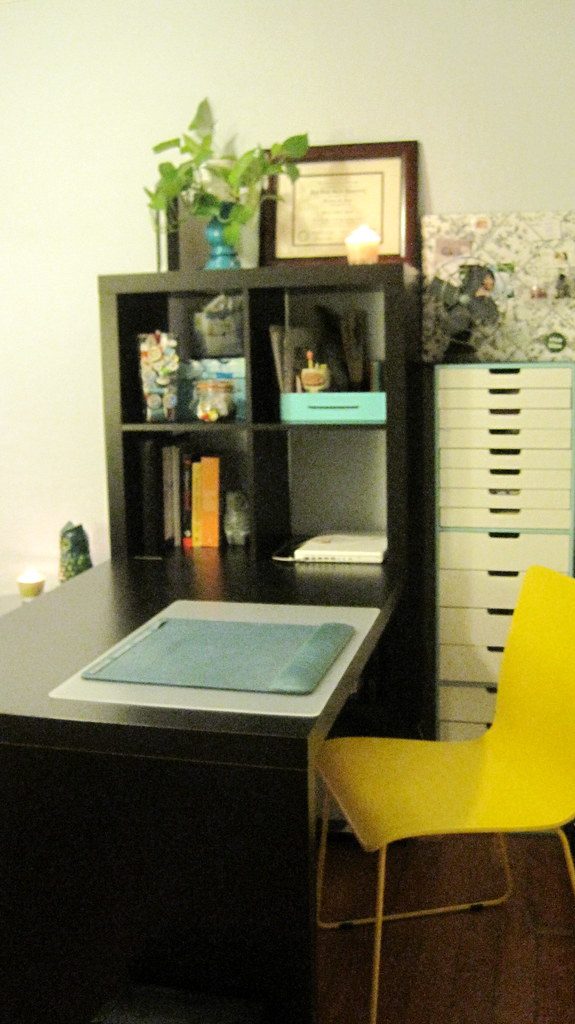
Image credit: Paul Kent in his virtual office by twid via flickr (BY-SA 2.0), sourced through Openverse.
Written by
Kavita Joshi
Business consultant with 12 years of experience helping Indian startups navigate GST compliance, company registration, and operational scaling. Kavita has guided 200+ businesses through their first year.
Looking for a technology partner?
From IT consulting to virtual office to custom software — eDarpan can help.
Continue reading

Virtual Office or Co-working for GST in 2026: Which Works for Your Startup?
Can a virtual office pass GST registration scrutiny in 2026? Compare costs, documents, and risks against co-working to choose the right principal place of business.
Co-working GST Hurdles: Can You Register With a Virtual Office in 2026?
Can a co-working or virtual office address pass GST verification in 2026? Learn which documents work, where registrations stall, and how to avoid a month-long delay.
Gurgaon SMEs Going Virtual: GST Registration Without a Leased Office
Can a virtual office get your GST registration approved without a costly lease? Here's how it works, the documents you need, and the compliance traps to avoid.