GSTAT Is Live: How to File Your GST Appeal Before Division Benches
GSTAT is finally live. Learn how to file your GST appeal before Division Benches, the pre-deposit math, key documents, and the crucial 30 June 2026 deadline.
If you're a business owner who lost a GST case at the first appeal stage in 2021, there's a decent chance your file has been sitting in limbo for the better part of four years. No tribunal to hear it. No forum to challenge the Commissioner (Appeals). Just a pre-deposit locked up and a demand order hanging over your working capital. I've seen this play out with a Ludhiana textile trader who had ₹22 lakh blocked because there was literally no bench in the country empowered to hear his second appeal. That gap is now closing.
The GST Appellate Tribunal, or GSTAT, has finally become operational. The Principal Bench in New Delhi and State Benches across cities like Mumbai, Bengaluru, Chennai, Kolkata, Ahmedabad, and Lucknow are being stood up, and the tribunal has notified that appeals can now be filed through the GSTAT portal. For the thousands of businesses that had appeals stuck since the GST regime began in 2017, this is the moment to act. But the process has shifted in ways that trip up even seasoned accountants, especially the move toward Division Benches and a hard deadline for filing pending matters.
This guide walks through the practical mechanics of GST appeal tribunal GSTAT filing, how Division Benches actually work, what documents you need, the pre-deposit math, and where businesses lose money by moving too slowly. I'll use real rupee figures and a worked example so you can brief your CA or file it yourself.
Key Takeaways
- GSTAT is live. Appeals against Commissioner (Appeals) orders are now filed online through the GSTAT portal in
Form GST APL-05.- Most cases go to a Division Bench (two members). Only matters purely about place of supply hit the Principal Bench.
- The pre-deposit for a tribunal appeal is 10% of the disputed tax, capped, and it's over and above what you paid at the first appeal.
- For orders passed before GSTAT started functioning, a special window ending 30 June 2026 lets you file older appeals without them being time-barred.
- Get your certified copies, order references, and pre-deposit challans ready before you touch the portal. Missing annexures cause most rejections.
- A weak first-appeal record follows you up. Fix the grounds now, not later.
What is GSTAT and why does it matter for your business now?
The GST Appellate Tribunal is the second appeal forum under the CGST Act. When you disagree with a tax officer's order, the appeal path runs like this: adjudicating authority, then Commissioner (Appeals), then the Tribunal, and finally the High Court and Supreme Court on questions of law.
For nearly eight years, that third rung didn't exist. Businesses that lost at the Commissioner (Appeals) stage had only one real option: file a writ petition in the High Court, which is expensive, slow, and not designed for fact-heavy tax disputes. Many just paid up rather than fight, even when the demand was questionable.
Now the Tribunal is functional. The GSTAT portal is accepting registrations and filings, and benches are hearing matters. This matters for three reasons. First, your blocked pre-deposits and disputed demands finally have a home. Second, appeals here are cheaper and faster than the High Court route. Third, GSTAT decisions on facts are generally final, so getting your case built right at this stage is critical.
How do Division Benches work under the new GSTAT structure?
This is where the structure has genuinely changed, and it's the part people get wrong. GSTAT is not one big room in Delhi. It's a tiered system.
The Principal Bench sits in New Delhi. It's reserved for a narrow category of disputes, primarily those involving the place of supply. If your dispute is about whether a transaction was inter-state or intra-state, that's Principal Bench territory.
Everything else, which is the vast majority of real-world cases, goes to a State Bench, and within it, to a Division Bench. A Division Bench is made up of two members sitting together: one Judicial Member and one Technical Member (either from the Centre or the State, depending on the case). They hear the matter jointly and decide together.
Smaller, low-value matters can be heard by a single member sitting alone, but the threshold and case type determine that. As a practical rule, if your disputed amount is meaningful, expect a two-member Division Bench.
Pro Tip: Check which State Bench has jurisdiction over you before you draft. A Pune-based manufacturer files at the Maharashtra State Bench, not Delhi. Filing at the wrong bench doesn't just delay you; it can cost you fresh drafting fees and, in worst cases, push you past a deadline. Confirm the bench and its territorial jurisdiction as your first step.
Judicial vs Technical Member: why the split matters
The two-member composition is deliberate. The Judicial Member brings the legal reasoning; the Technical Member understands the tax mechanics, classification, ITC chains, and valuation. When you argue before a Division Bench, you're arguing to both. That means your appeal should be tight on the law and credible on the accounting. A grounds-of-appeal document that only cites case law but ignores the reconciliation of your GSTR-3B and GSTR-2A will get picked apart by the Technical Member.
What are the deadlines and pre-deposit rules for GSTAT filing?
Two numbers matter most: the time limit to file, and the money you must deposit.
Time limit. Normally, you have three months from the date the Commissioner (Appeals) order is communicated to file your tribunal appeal. Because the Tribunal wasn't operational for years, the government has provided a special window: appeals against older orders can be filed up to 30 June 2026 without being treated as delayed. Do not treat this as generous breathing room. Backlogs are already forming, and last-minute filing risks portal errors and missing documents.
Pre-deposit. To have your appeal heard, you pay 10% of the disputed tax amount, subject to the statutory cap. This is in addition to the deposit you already made at the Commissioner (Appeals) stage. So across both appeal levels, you may have around 20% of the disputed tax parked. This is where cash flow planning matters, especially for MSMEs running on thin margins.
| Stage | Forum | Pre-deposit (of disputed tax) | Typical timeline to file | Filing mode |
|---|---|---|---|---|
| First Appeal | Commissioner (Appeals) | 10% | 3 months from order | Form GST APL-01 (online) |
| Second Appeal | GSTAT Division / State Bench | 10% (additional, capped) | 3 months (special window to 30 Jun 2026 for old orders) | Form GST APL-05 (GSTAT portal) |
| Place of supply disputes | GSTAT Principal Bench, Delhi | 10% (additional, capped) | 3 months | Form GST APL-05 (GSTAT portal) |
| Question of law | High Court | As directed | 180 days | Writ / statutory appeal |
A worked example: how a Jaipur trader is handling a ₹40 lakh demand
Let me make this concrete. A wholesale electronics trader in Jaipur, running as a private limited company with about 18 employees, received a demand order in 2022 disallowing input tax credit of ₹40 lakh. The officer claimed the supplier's GSTR-1 didn't reflect certain invoices, so the ITC was ineligible.
He filed his first appeal before the Commissioner (Appeals) and paid the mandatory 10% pre-deposit, which came to ₹4 lakh. The order went against him in 2023 with a poorly reasoned finding. At that point there was no tribunal, so his ₹4 lakh sat blocked and the ₹40 lakh demand loomed. He couldn't afford a High Court writ.
Now that GSTAT is live, here's how he's proceeding:
- Confirming jurisdiction. His registered place of business is in Rajasthan, so he files at the Rajasthan State Bench, which will hear it as a Division Bench given the value.
- Calculating the pre-deposit. Another 10% of ₹40 lakh, so ₹4 lakh, is deposited for the tribunal appeal. Total blocked capital across both stages: roughly ₹8 lakh. He plans this against his current-quarter cash flow so it doesn't choke vendor payments.
- Rebuilding the record. This is the key move. His original appeal leaned only on the argument that the buyer shouldn't be penalised for the supplier's default. For the tribunal, his CA is adding a full reconciliation: bank payment proofs showing the supplier was actually paid, e-way bills proving goods movement, and the supplier's subsequent GSTR-1 amendments. He's arguing both law and facts, because the Division Bench has a Technical Member who will scrutinise the numbers.
- Filing Form GST APL-05 on the GSTAT portal with the certified copy of the Commissioner (Appeals) order, the pre-deposit challan, and the grounds of appeal.
His estimated professional cost for a properly built tribunal appeal, including drafting and representation, is in the ₹60,000 to ₹1.5 lakh range depending on hearings, far cheaper than a High Court writ that could run several lakhs. The point of the example: the tribunal is only as good as the case you bring. Reopening and strengthening the factual record is what converts a stuck file into a winnable appeal.
What documents do you need for GSTAT filing?
Missing or mismatched documents are the single biggest reason filings get flagged. Prepare this set before you log in:
- Certified copy of the Commissioner (Appeals) order you are challenging, with the correct order reference number and date.
- Copy of the original adjudication order (the one the first appeal was about).
- Pre-deposit challan for the 10% tribunal deposit, showing the payment reference.
- Grounds of appeal, drafted clearly, separating legal grounds from factual ones.
- Statement of facts with a clean chronology of the dispute.
- Supporting evidence: invoices, GSTR-1/3B/2A reconciliations, e-way bills, payment proofs, contracts.
- Authorisation for the authorised representative or advocate, plus the appellant's PAN and GSTIN details.
Common Mistake: Businesses upload the acknowledgement of the first appeal instead of the certified copy of the actual order, or they cite the demand order number where the appeal order number is required. The tribunal registry treats these as defective filings. Double-check that every reference number on your Form GST APL-05 matches the document it points to.
How do you file the GSTAT appeal step by step?
Here's the practical walkthrough you can follow or hand to your consultant:
- Register / log in on the GSTAT portal using your GSTIN-linked credentials. Set up the appellant profile and confirm contact details, because hearing notices come here.
- Select the correct bench. Choose your State Bench based on your principal place of business. Only pick the Principal Bench if the dispute is genuinely about place of supply.
- Open Form GST APL-05 and enter the order details: the Commissioner (Appeals) order number, date, and the disputed amount broken into tax, interest, and penalty.
- Make the pre-deposit and record the challan reference in the form. Keep a PDF of the challan for upload.
- Upload the annexures: certified order copy, original order, grounds of appeal, statement of facts, and evidence. Keep file sizes and formats within portal limits.
- Verify and submit. Review every reference number one last time, then submit. The portal generates an acknowledgement, typically a provisional filing that becomes final once the registry checks for defects.
- Respond to defect notices quickly. If the registry flags a defect, you usually get a short window to cure it. Missing that window can be fatal to timing.
- Track hearing dates and prepare a paperbook for the Division Bench, tabbed and paginated, so both members can follow your evidence.
If your team is thin on compliance bandwidth, this is exactly where good IT and process consulting pays off. Getting your GST records, reconciliations, and document trails into clean, retrievable shape is half the battle in any appeal.
How can you prepare your systems so appeals are never this painful again?
Most GST disputes are winnable if the underlying records are clean and instantly retrievable. The businesses that lose are usually the ones whose data lives in scattered spreadsheets, WhatsApp forwards, and one accountant's laptop.
A few practical fixes I recommend to SMB clients:
- Centralise your records in the cloud. Reconciliations, invoices, e-way bills, and correspondence should be searchable in seconds, not hunted for across drives. A structured cloud migration and managed setup means your appeal evidence is always one query away.
- Standardise document workflows. A lightweight custom software workflow that tags every purchase with its invoice, GSTR match status, and payment proof turns a three-week evidence hunt into an afternoon.
- Keep licensing and email clean. Notices and hearing communications land in email. Reliable Google Workspace or Microsoft 365 with proper retention means you never lose a critical order or notice.
- Handle registration and address correctly. If you're expanding to a new state and need a compliant registered address, a virtual office for GST and company registration keeps your jurisdiction clean from day one.
These aren't just IT niceties. A business that can produce a complete, reconciled evidence trail on demand argues from a position of strength before a Division Bench.
Frequently Asked Questions
Is the GST Appellate Tribunal operational in 2025?
Yes. GSTAT has become functional, with the Principal Bench in New Delhi and State Benches being set up across major cities. The GSTAT portal is accepting appeal registrations and filings in Form GST APL-05. Businesses with pending or fresh second appeals can now file rather than being forced toward High Court writs.
What is the pre-deposit for a GSTAT appeal?
You must deposit 10% of the disputed tax amount, subject to the statutory cap, to have your tribunal appeal admitted. This is over and above the 10% you paid at the Commissioner (Appeals) stage. Plan this against your cash flow, because it locks up working capital until the appeal concludes.
What is the difference between the Principal Bench and a Division Bench in GSTAT?
The Principal Bench in Delhi mainly hears disputes involving place of supply. Most other cases go to a State Bench, heard by a Division Bench of two members, one Judicial and one Technical. File at the State Bench with jurisdiction over your principal place of business unless your dispute is specifically about place of supply.
What is the deadline to file pending GST appeals before GSTAT?
For orders passed before the Tribunal became operational, there is a special window allowing appeals to be filed up to 30 June 2026 without being treated as time-barred. Don't wait for the deadline. Backlogs and portal errors make early filing far safer.
Which form is used for filing an appeal before GSTAT?
Appeals to the Tribunal are filed in Form GST APL-05 through the GSTAT portal. You'll need the certified copy of the Commissioner (Appeals) order, the pre-deposit challan, grounds of appeal, statement of facts, and supporting evidence uploaded as annexures.
Can I file a GSTAT appeal myself or do I need a professional?
Technically you can file it yourself, and low-value matters may be manageable. But because a Division Bench includes a Technical Member who scrutinises the numbers, a well-drafted appeal with reconciliations and evidence matters. For meaningful demands, a competent CA or advocate usually pays for itself.
What happens if I miss the GSTAT filing deadline?
A late appeal can be dismissed as time-barred unless you can show sufficient cause for condonation of delay, which is not guaranteed. If your tribunal path closes, your only remedy may be an expensive High Court writ, and even that is limited to questions of law. This is why filing within the window is critical.
Where eDarpan fits, and what to do next
Winning a GST appeal tribunal GSTAT filing is rarely about clever arguments alone. It comes down to whether your records are clean, retrievable, and reconciled, and whether you moved before the backlog swallowed your case. That's the part where technology and process quietly decide outcomes.
eDarpan works with Indian SMBs to get exactly that foundation in place, from managed cloud infrastructure that keeps every invoice and reconciliation a search away, to custom compliance workflows and the right technology services for a growing business. If you're expanding into a new state, our virtual office solution keeps your GST jurisdiction clean. And if you want to talk through your setup before your next filing, get in touch with the eDarpan team.
While you're preparing, it's worth reading our related pieces on the new 72-hour GST auto-approval system, the updated GST arrest rules and 7-day notice, and TDS on software and SaaS bills, all of which touch the same compliance discipline that decides how well your appeals go. Get your house in order now, and the tribunal becomes an opportunity rather than a scramble.
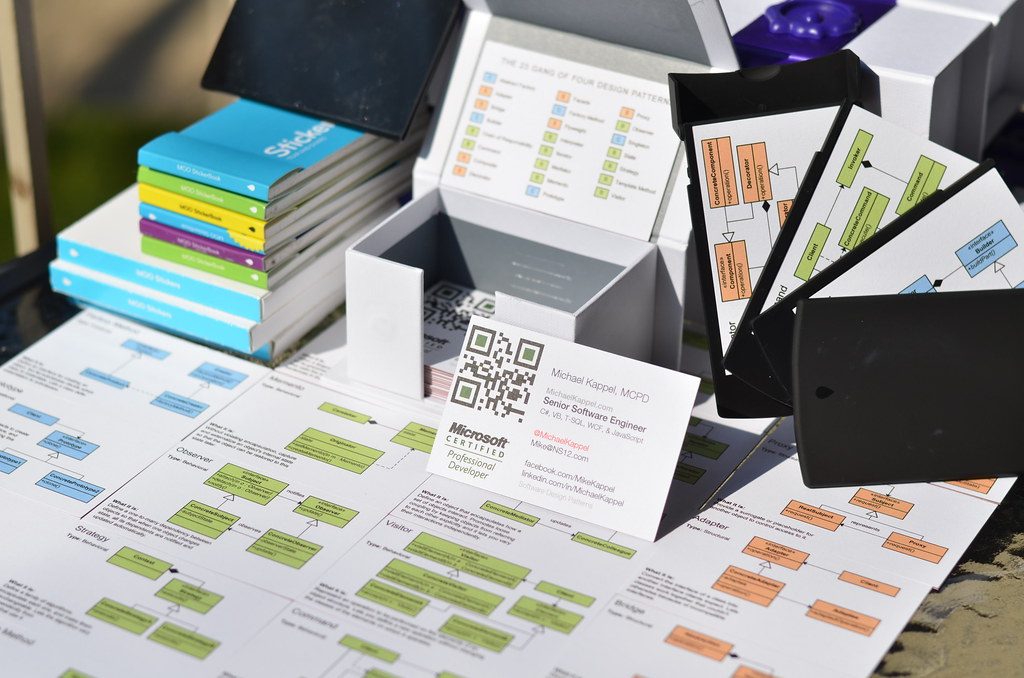
Image credit: Design Pattern Business Cards by Michael Kappel via flickr (BY-ND 2.0), sourced through Openverse.
Written by
Kavita Joshi
Business consultant with 12 years of experience helping Indian startups navigate GST compliance, company registration, and operational scaling. Kavita has guided 200+ businesses through their first year.
Looking for a technology partner?
From IT consulting to virtual office to custom software — eDarpan can help.
Continue reading
Business Email Setup in India 2026: Domain to Deliverability
A practical 2026 guide to business email setup in India: domain control, SPF/DKIM/DMARC records, Google vs Microsoft pricing, and staying out of spam.
Digital Procurement for Indian MSMEs 2026: Start Without Chaos
A hand-written register hid a ₹2.3 lakh double payment for 11 weeks. Learn how digital procurement for MSMEs stops leakage—no SAP, no chaos.
Budget 2026: Cloud, Data Centre & AI Tax Breaks for SMBs
Decode Budget 2026 cloud, data centre & AI tax incentives in India for SMBs. Real savings on GST, cloud costs, and depreciation, minus the policy jargon.