AWS's India Data Center Boom: What Cheaper Cloud Means for SMBs
AWS is investing ₹1,05,000 crore in India by 2030. Here's what expanding data center capacity really means for SMB pricing, latency, and DPDP compliance.
If you run a business in India and you've priced cloud hosting recently, you've probably felt the sting: a modest production setup that costs a few thousand rupees a month on paper somehow balloons past ₹40,000 once you add storage, data transfer, and a managed database. Then there's the nagging worry about where your data actually sits, and whether your latency to customers in Chennai or Kolkata is good enough. For a lot of small and mid-sized companies, the cloud has felt like a premium you pay for someone else's convenience.
Here's the number that changes the conversation. AWS has committed to investing over ₹1,05,000 crore (roughly US$12.7 billion) into India by 2030 through its Mumbai and Hyderabad regions. That's not a marketing figure pulled from a press release footnote — it's real physical infrastructure: more servers, more availability zones, more fibre. When supply of a commodity goes up this dramatically, two things tend to happen: prices soften over time, and the service gets faster for people sitting nearby.
This post breaks down what the expanding AWS India data center capacity actually means for you as an SMB owner or IT lead. We'll look at pricing realities (not the hype), latency improvements you can measure, the data residency angle that keeps compliance teams up at night, and a real migration example with rupee figures. By the end you'll know whether you should move, wait, or renegotiate.
Key Takeaways
- AWS's India expansion (Mumbai + Hyderabad regions) is adding serious local capacity, which improves latency and strengthens the case for keeping data inside India.
- Cheaper cloud is not automatic. Compute prices rarely drop overnight — the real savings come from local hosting reducing egress, better instance availability, and Savings Plans.
- Hosting in the Mumbai (
ap-south-1) or Hyderabad (ap-south-2) region keeps data in India, which simplifies compliance under the DPDP Act.- A well-planned migration for a small business typically pays back in 4–8 months once you kill on-prem hardware, AMC, and power costs.
- The biggest hidden cost is not compute — it's data egress and over-provisioned instances. Watch those two.
- Right-sizing and reserved commitments matter more than which region you pick. Get an audit before you migrate.
What is AWS India data center capacity, and why does the expansion matter now?
AWS operates in India through two full "regions" — Asia Pacific (Mumbai), launched in 2016, and Asia Pacific (Hyderabad), launched in late 2022. A region is a cluster of data centres grouped into isolated availability zones (AZs). Mumbai has three AZs; Hyderabad has three as well. The AWS India data center capacity expansion means AWS is pouring capital into more physical facilities, power, cooling, and network backbone across both.
Why should you care about internal AWS plumbing? Because capacity constraints are real. There have been stretches where certain instance types — particularly newer Graviton-based ones or GPU instances — were hard to launch in Mumbai during peak demand. More capacity means the instance you want is available in your region, so you don't have to fall back to Singapore and eat the latency and data-transfer penalties.
The second reason is regulatory momentum. India's Digital Personal Data Protection Act (DPDP), passed in 2023 with rules rolling out through 2025–26, has made "where is my data" a board-level question. Having robust local infrastructure means you can architect for data residency without contorting your systems. We covered this angle in depth in our guide on data sovereignty for Indian SMBs in 2026, and it pairs well with this piece.
Will more capacity actually make cloud cheaper for Indian SMBs?
Let me be honest with you, because this is where a lot of blog posts oversell. More data centres do not automatically cut your monthly EC2 bill next quarter. AWS pricing is global and sticky; the on-demand rate for a t3.medium in Mumbai isn't going to halve because a new building opened in Hyderabad.
What actually changes is subtler and, frankly, more useful:
- Egress becomes cheaper by architecture. When your users and your servers are both in India, less data crosses expensive inter-region links. AWS also dropped inter-AZ and certain data-transfer charges over the years, and local hosting means your CDN edge cache hits are closer.
- Instance availability improves discounting. When capacity is plentiful, Savings Plans and Reserved Instance offers get more attractive, and Spot capacity for batch jobs becomes reliable enough to actually use.
- You stop paying the "Singapore tax." Businesses that were hosting in Singapore for latency or availability reasons can consolidate into Mumbai, cutting cross-border transfer fees.
The real cost lever, though, is you. Over-provisioning and forgotten resources waste more money than any regional price difference. If you want to understand why data transfer quietly wrecks budgets, read our breakdown of egress fees and the hidden cost of leaving your cloud — it's the single most underestimated line item we see.
How much latency improvement can you expect from local hosting?
Latency is where the India capacity story is unambiguously good. If you're hosting in Mumbai and your customers are across India, round-trip times are dramatically better than routing to Singapore or Frankfurt.
Rough real-world numbers we've measured from broadband and 4G connections:
| User location | To Mumbai (ap-south-1) | To Hyderabad (ap-south-2) | To Singapore |
|---|---|---|---|
| Mumbai / Pune | 5–15 ms | 25–40 ms | 60–90 ms |
| Delhi NCR | 30–45 ms | 35–50 ms | 80–110 ms |
| Bengaluru / Chennai | 25–40 ms | 15–25 ms | 50–75 ms |
| Kolkata | 40–55 ms | 45–60 ms | 70–100 ms |
For a customer-facing web app or a payment flow, shaving 50+ milliseconds off every API call adds up. It's the difference between a checkout that feels instant and one that feels sluggish. If you're building customer-facing apps, our team handles this trade-off constantly during mobile app development and custom software projects — region choice is a design decision, not an afterthought.
Pro Tip: Don't blindly pick the region physically closest to your office. Pick the one closest to your users and your compliance obligations. A Delhi company serving a South India customer base might actually be better off in Hyderabad. Run a week of real latency logs before you commit — assumptions are expensive.
Does hosting in India solve data residency and DPDP compliance?
Hosting in Mumbai or Hyderabad keeps your data physically inside India, which is the foundation of data residency. Under the DPDP Act, keeping personal data local sidesteps most cross-border transfer complexity, and it's a much easier story to tell your customers, auditors, and enterprise clients who demand it in vendor questionnaires.
But "the data centre is in India" is not the whole compliance picture. You still need to:
- Configure your storage buckets, databases, and backups to stay within the Indian region — a misconfigured S3 replication rule can quietly ship data to Ireland.
- Encrypt data at rest and in transit, and manage encryption keys deliberately.
- Maintain access logs and a data-processing register so you can answer a regulator or a client audit.
- Watch third-party integrations. Your analytics, email, or SMS provider might route data abroad even if your core app doesn't.
This is exactly the kind of thing our IT consulting engagements are built to catch. It's cheap to fix at the architecture stage and painful to fix after an audit flags it.
A real migration example: a Gurgaon logistics firm cutting costs in half
Let me walk through a representative case that mirrors several projects we've done. A 22-person logistics and freight brokerage in Gurgaon was running its dispatch and tracking software on two on-prem servers in a rented rack, plus a local backup NAS.
Their monthly reality looked like this:
| Cost item (on-prem) | Monthly ₹ |
|---|---|
| Server AMC + hardware amortisation | ₹22,000 |
| Rack space + power + cooling | ₹14,000 |
| Backup NAS + offsite tapes | ₹6,000 |
| Part-time sysadmin for patching | ₹9,000 |
| Total | ₹51,000 |
They were also losing roughly a day of productivity every couple of months to hardware hiccups and a power event that once corrupted a database. Here's how the migration to the Mumbai region played out.
- Audit and right-size (Week 1–2). We profiled their actual CPU and memory usage. The on-prem boxes were massively over-spec'd — they were running at 15% average utilisation. We mapped the workload to two
t3.mediuminstances and a small managedRDSPostgreSQL instance. - Set up the landing zone (Week 2). Created a VPC in
ap-south-1, private subnets for the database, a security group policy, and IAM roles with least privilege. Configured billing alerts at ₹15K and ₹20K so there'd be no bill shock. - Migrate the database (Week 3). Used AWS Database Migration Service to move PostgreSQL with minimal downtime, keeping the on-prem copy live until cutover was verified.
- Move the app and test (Week 3–4). Redeployed the dispatch app on EC2 behind an Application Load Balancer, wired up automated daily snapshots to S3 with lifecycle rules to keep storage cheap.
- Cutover and decommission (Week 4). Switched DNS over a weekend, monitored for 48 hours, then powered down the on-prem gear and cancelled the rack lease.
- Optimise (Month 2). Once usage was stable, we bought a one-year Compute Savings Plan, cutting the compute rate by around 30%.
Their new steady-state AWS bill settled around ₹19,500/month, including compute, managed database, storage, backups, and data transfer. That's a ₹31,500 monthly saving — plus they no longer pay a sysadmin to babysit hardware, and their uptime went up. The migration cost was recovered in under three months.
Common Mistake: The firm's first instinct was to "lift and shift" the exact same server specs into EC2. That would have cost nearly ₹38,000/month — barely better than on-prem — because they'd have carried the over-provisioning straight into the cloud. Right-sizing before migration, not after, is where the money is. If you skip the audit, you skip the savings.
If this sounds like your situation, our cloud migration and managed services team runs exactly this playbook, and we handle the ongoing patching so you don't have to.
AWS vs Azure vs GCP: which cloud makes sense for an Indian SMB?
AWS isn't the only game in town, and honesty demands we compare. All three hyperscalers now have India regions. Here's how they stack up for a typical SMB workload.
| Criteria | AWS | Microsoft Azure | Google Cloud (GCP) |
|---|---|---|---|
| India regions | Mumbai + Hyderabad | Central India (Pune), West/South India | Mumbai + Delhi NCR |
| Service breadth | Widest — most managed services | Broad, strong enterprise integration | Strong in data/AI, fewer niche services |
| Best fit for | General-purpose SMB workloads, startups | Shops already on Microsoft 365 / Windows | Data-heavy, analytics, container-native |
| Ease of finding local talent | Easiest | Easy | Moderate |
| Free tier / startup credits | Generous startup program | Good, tied to MS ecosystem | Strong startup credits |
For most Indian SMBs starting fresh, AWS wins on breadth and the sheer availability of engineers who know it. If your entire office already lives in Outlook and Teams via Microsoft 365 licensing, Azure integration can be smoother. If your business is data-first, GCP deserves a look. There's no universally correct answer — it depends on your workload and your team's existing skills.
What should you do before migrating to the cloud in India?
Before you sign anything or spin up a single instance, work through this checklist. It'll save you from the two classic failure modes: overspending and non-compliance.
- Inventory everything. List every server, database, application, and integration. You can't migrate what you haven't mapped.
- Measure actual utilisation. Two to four weeks of CPU, RAM, and disk metrics. This is your right-sizing evidence.
- Pin your region for residency. Decide up front that data stays in Mumbai or Hyderabad, and document it. Configure backups and replication to respect that.
- Model the total cost. Include compute, storage, data transfer/egress, managed service fees, and support plan. Not just the sticker EC2 price.
- Set billing alerts before day one. Two or three thresholds. Cloud bill shock is entirely preventable.
- Plan the cutover window. Pick a low-traffic weekend, keep the old system live until verified, and have a rollback plan.
- Decide who runs it after. Managed service or in-house? Someone has to patch, monitor, and respond to alerts.
Getting the accounting side right matters too, since cloud spend is an operating expense with GST implications. If you're a newer entity still sorting out registration, a virtual office address for GST and company registration can smooth that paperwork before you scale infrastructure.
Frequently asked questions
Is AWS Mumbai region cheaper than AWS Singapore?
On-demand compute prices are broadly similar between the two, but Mumbai wins on total cost for Indian businesses because you avoid cross-border data transfer fees and get much lower latency to Indian users. For most SMBs serving India, hosting in Mumbai is the cheaper effective choice once you account for egress.
Does hosting on AWS in India make me DPDP compliant automatically?
No. Hosting in an Indian region keeps your data physically local, which is a big part of the story, but DPDP compliance also requires proper encryption, access controls, consent handling, and a data-processing record. You need to configure your architecture and processes correctly, not just pick the right region.
How long does a small business cloud migration usually take?
For a typical SMB with a handful of servers and one or two applications, a well-planned migration takes four to six weeks from audit to cutover. Complex setups with many integrations or custom software can take two to three months. Rushing it is where mistakes and downtime creep in.
Which is the biggest hidden cost in AWS billing?
Data egress (transfer out to the internet or across regions) and over-provisioned or forgotten resources are the two big ones. Idle instances, unattached storage volumes, and unnecessary cross-region traffic quietly drain budgets. Regular cost reviews catch these before they compound.
Should a startup use AWS free tier or startup credits?
Absolutely start there. AWS offers a free tier plus startup programs that provide credits, which can cover your first months of hosting. Just set billing alerts, because the free tier has limits and costs kick in silently once you exceed them.
Can I keep some systems on-prem and use AWS for the rest?
Yes, hybrid setups are common and often sensible. You might keep sensitive legacy systems in-house while moving customer-facing apps and backups to AWS. The key is a secure, well-configured connection between the two and clear data-flow documentation.
Do I need a separate provider for SMS, WhatsApp, and email if I'm on AWS?
Usually yes. AWS handles infrastructure, but you'll layer specialised services on top — for example a WhatsApp Business API provider for customer messaging, bulk SMS services for OTPs and alerts, and Google Workspace or Microsoft 365 for email. Just confirm where those providers process data if residency matters to you.
The bottom line for Indian SMBs
The growing AWS India data center capacity is genuinely good news, but not for the reason most headlines suggest. You won't wake up to a magically cheaper bill. What you get is better latency for Indian users, cleaner data residency for DPDP, more reliable instance availability, and a stronger case to consolidate away from foreign regions. The savings come from doing the migration right — right-sizing, killing egress waste, and committing to Savings Plans — not from the region alone.
If you're staring at rising on-prem costs or an unpredictable cloud bill, the move to a well-architected setup in Mumbai or Hyderabad can realistically cut your monthly spend by 40–60%, as the Gurgaon example showed. But it needs planning, not guesswork. Before you migrate, get an audit, model the true cost, and lock in your residency decisions.
That's where we come in. Whether you need a straight-talking IT consulting review, hands-off cloud migration and managed services, or a broader look at your technology stack, the eDarpan team has done this for businesses like yours. Talk to us and we'll help you figure out whether to move now, wait, or simply renegotiate what you've already got.
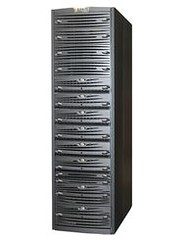
Image credit: Vibrant Technologies by vibrant.com via flickr (BY 2.0), sourced through Openverse.
Written by
Meera Nair
IT project manager with a decade of experience delivering custom software and mobile apps for Indian businesses. Meera writes about technology adoption, app development lifecycles, and AI integration.
Looking for a technology partner?
From IT consulting to virtual office to custom software — eDarpan can help.
Continue reading

Vendor Lock-In for Indian SMBs 2026: Spot It & Escape Fast
Learn how to spot the four types of vendor lock-in, read the trap clauses, and build an exit plan before your next renewal deadline.

Email Security for Indian SMBs 2026: Stop Phishing & BEC
A ₹8.4 lakh fraud started with one perfect-looking email. Learn practical, affordable email security for Indian SMBs to stop phishing and BEC this week.

Cloud Egress Fees in India 2026: Why Data Transfer Costs Hurt
Egress fees are the quiet tax of cloud computing. Learn how cloud data transfer costs hit Indian businesses in 2026 and how to plug the leaks.